


Endothelial function after high-sugar-food ingestion improves with endurance exercise performed on the previous day
- PMID: 18614723
- PMCID: PMC2585377
- DOI: 10.1093/ajcn/88.1.51
Endothelial function after high-sugar-food ingestion improves with endurance exercise performed on the previous day
Abstract
Background: Endothelial function deteriorates after glucose ingestion. This may be attributed to hyperglycemia-induced oxidative stress. Acute endurance exercise might improve postprandial endothelial function by enhancing glucoregulation and reducing postprandial hyperglycemia.
Objective: The objective was to determine whether endurance exercise performed 17 h before high-sugar-food ingestion attenuates postprandial impairment in endothelial function.
Design: Healthy men and women (n = 13; age: 48 +/- 17 y) were studied on 2 occasions: after > or = 48 h with no exercise and 17 h after a 60-min bout of endurance exercise. During each trial, brachial artery flow mediated dilation (FMD) was used to assess endothelial function before and after the ingestion of a candy bar and soft drink. Glucose, insulin, and thiobarbituric acid-reactive substances (TBARS), a marker of oxidative stress, were measured in blood obtained during each FMD measurement. The insulin sensitivity index was calculated from the glucose and insulin data.
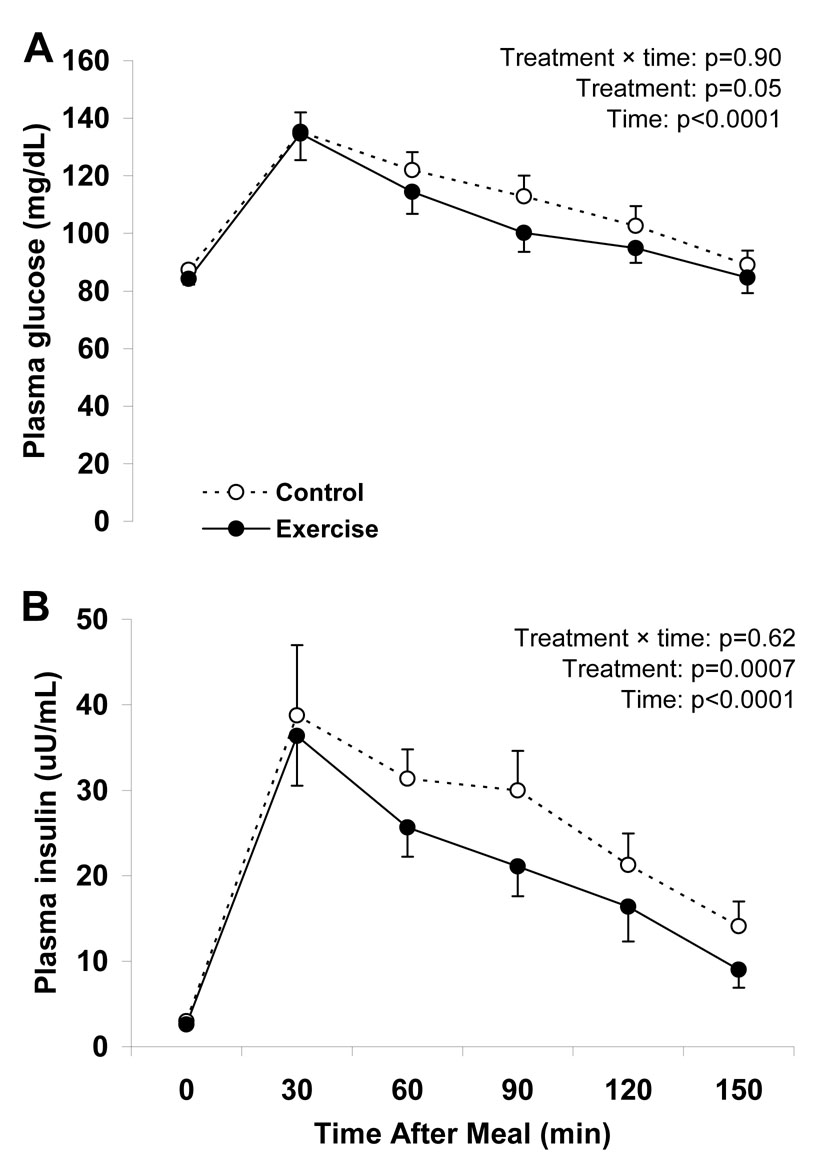
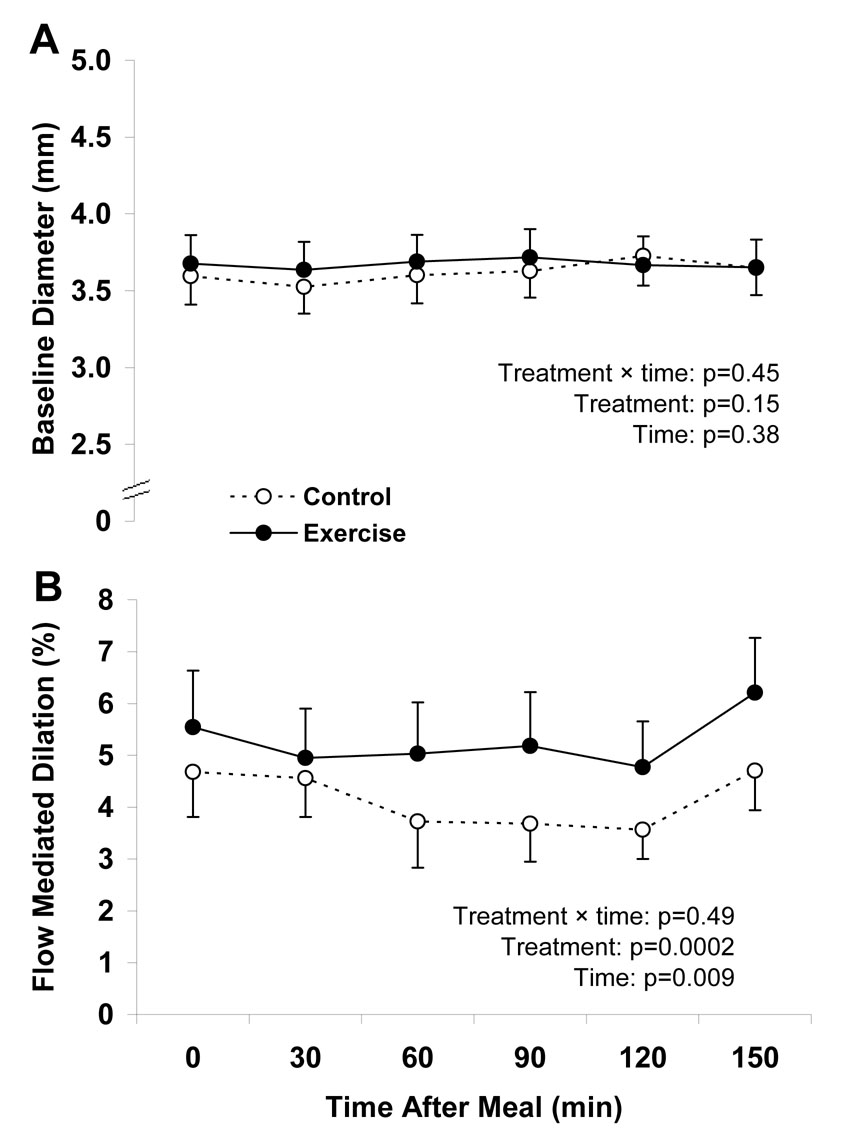
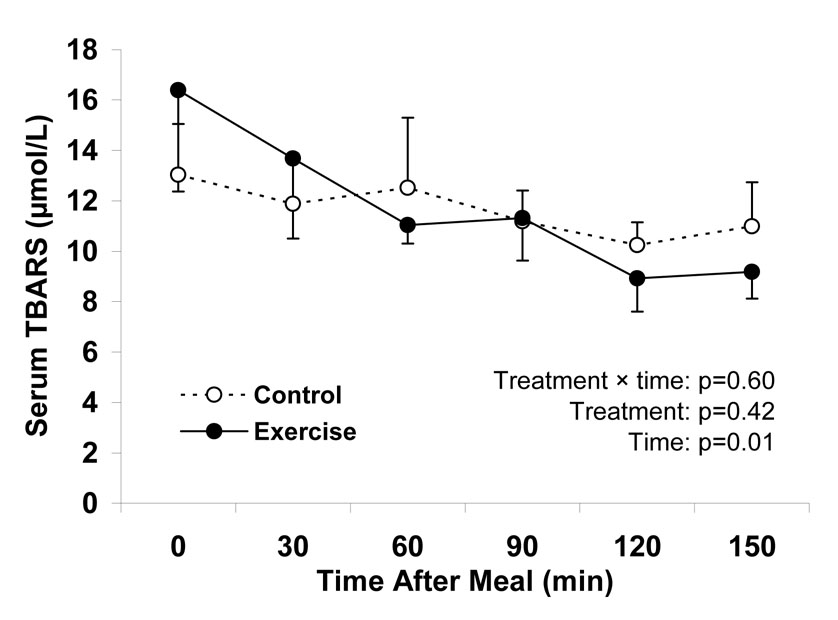
Results: FMD decreased significantly after food ingestion in both trials. However, prior exercise shifted the entire FMD curve upward (main treatment effect: P = 0.0002), which resulted in a greater area under the curve for FMD (774 +/- 122%.min) than did no exercise (607 +/- 122%.min) (P = 0.01). Prior exercise shifted the glucose and insulin curves downward (main treatment effects: P = 0.05 and P = 0.0007, respectively) and resulted in a significantly greater insulin sensitivity index (10.8 +/- 0.7) than did no exercise (9.2 +/- 0.7) (P = 0.01). TBARS did not differ significantly between trials.
Conclusion: Postprandial endothelial function was improved by endurance exercise performed approximately 17 h earlier. This effect was accompanied by exercise-induced improvements in insulin action and reductions in glycemia, but did not correspond with reductions in oxidative stress, as assessed by TBARS.
Figures
References
-
- Libby P. Inflammation and cardiovascular disease mechanisms. Am J Clin.Nutr. 2006;83:456S–460S. - PubMed
-
- Yeboah J, Crouse JR, Hsu FC, Burke GL, Herrington DM. Brachial flow-mediated dilation predicts incident cardiovascular events in older adults: the Cardiovascular Health Study. Circulation. 2007;115:2390–2397. - PubMed
-
- Gokce N, Keaney JF, Jr, Hunter LM, et al. Predictive value of noninvasively determined endothelial dysfunction for long-term cardiovascular events in patients with peripheral vascular disease. J Am Coll.Cardiol. 2003;41:1769–1775. - PubMed
-
- Akbari CM, Saouaf R, Barnhill DF, Newman PA, LoGerfo FW, Veves A. Endothelium-dependent vasodilatation is impaired in both microcirculation and macrocirculation during acute hyperglycemia. J.Vasc.Surg. 1998;28:687–694. - PubMed
-
- Lee IK, Kim HS, Bae JH. Endothelial dysfunction: its relationship with acute hyperglycaemia and hyperlipidemia. Int.J.Clin.Pract.Suppl. 2002:59–64. - PubMed
Publication types
MeSH terms
Substances
Grants and funding
LinkOut - more resources
Full Text Sources
Medical
