. 2008 Aug 14;454(7206):899-902.
doi: 10.1038/nature07117. Epub 2008 Jul 9.

A discontinuous hammerhead ribozyme embedded in a mammalian messenger RNA

Affiliations

A discontinuous hammerhead ribozyme embedded in a mammalian messenger RNA

Monika Martick et al. Nature. .

Abstract

Structured RNAs embedded in the untranslated regions (UTRs) of messenger RNAs can regulate gene expression. In bacteria, control of a metabolite gene is mediated by the self-cleaving activity of a ribozyme embedded in its 5' UTR. This discovery has raised the question of whether gene-regulating ribozymes also exist in eukaryotic mRNAs. Here we show that highly active hammerhead ribozymes are present in the 3' UTRs of rodent C-type lectin type II (Clec2) genes. Using a hammerhead RNA motif search with relaxed delimitation of the non-conserved regions, we detected ribozyme sequences in which the invariant regions, in contrast to the previously identified continuous hammerheads, occur as two fragments separated by hundreds of nucleotides. Notably, a fragment pair can assemble to form an active hammerhead ribozyme structure between the translation termination and the polyadenylation signals within the 3' UTR. We demonstrate that this hammerhead structure can self-cleave both in vitro and in vivo, and is able to reduce protein expression in mouse cells. These results indicate that an unrecognized mechanism of post-transcriptional gene regulation involving association of discontinuous ribozyme sequences within an mRNA may be modulating the expression of several CLEC2 proteins that function in bone remodelling and the immune response of several mammals.


Figures

Figure 1
Figure 1. Sequence arrangement and secondary structure model of the rodent Clec2d hammerhead ribozymes
The mouse ribozyme sequence is shown in black and the rat ribozyme sequence length, single nucleotide, and base pair differences are denoted in red. The stop codon is shown in white. The substrate and enzyme sequences are shown on orange and blue backgrounds, respectively. The insertion sequence separating two ribozyme parts is abridged with a thick arrow. The predicted cleavage site (white arrowhead) is 3′ of the active site cytosine (circled). The three-helical junction, composed of conserved (with the exception of 2.1 and 1.1) nucleotides (nt) that make catalytically important interactions, is shown in greater detail (together with canonical numbering scheme) in the inset. The small black arrowheads indicate conserved nucleotides of the catalytically important loop/bulge interactions.
Figure 2
Figure 2. The discontinuous hammerhead ribozyme-containing 3′ UTRs (hcu) self-cleave in vitro
Reverse transcriptase primer extensions of in vitro transcribed mouse Clec2d (D-hcu, lane 5) and Clec2e (E-hcu, lane 7) 3′ UTRs show that both RNAs are cleaved at a single location (open arrowheads).D-hcu cleavage site 5′ of U1.1 was identified by dideoxy sequencing of transcription products. Uncleaved E-hcu and triple mutant DM1-hcu are indicated with a black arrowhead. Asterisks indicate non-extended labelled primers.
Figure 3
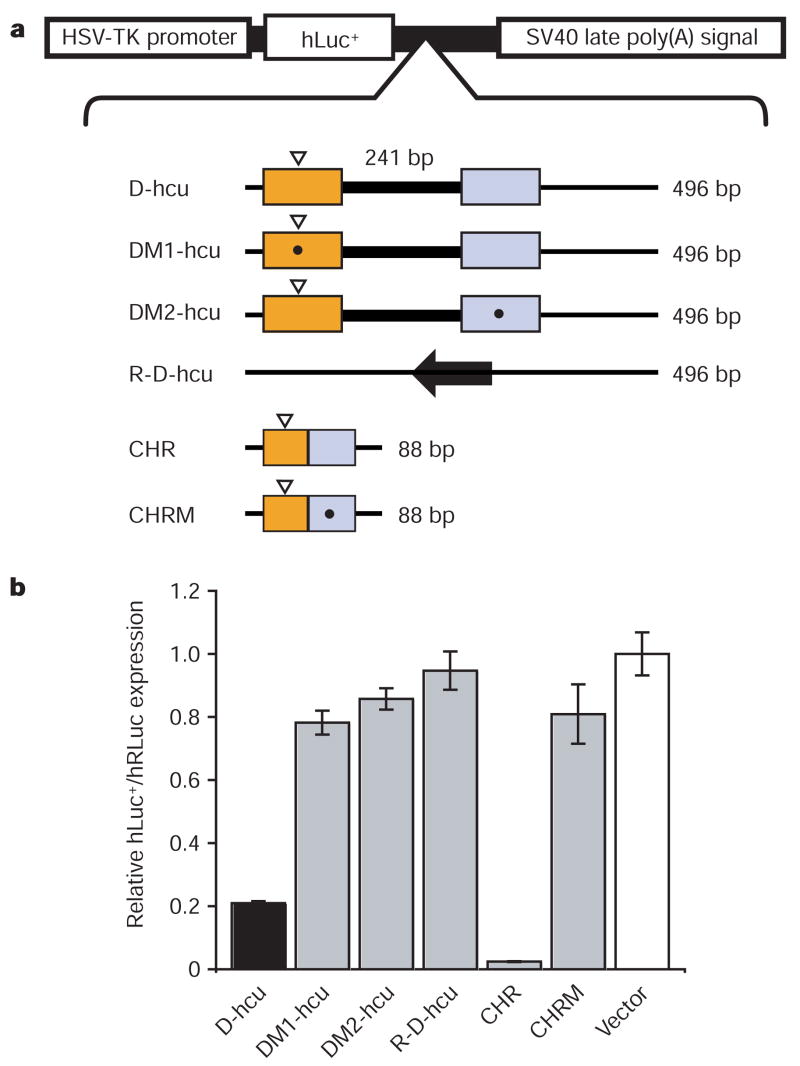
Figure 3. The discontinuous mouse Clec2 hammerhead ribozymes embedded in the 3′ UTRs downregulate protein expression in vivo
a, Layout of the constructs (top) and the schematic of hammerhead ribozyme-containing 3′ UTR (hcu) sequences used for expression. The colours of substrate (orange) and enzyme (blue) regions correspond to those of the structure in Fig. 1 and the insertion is highlighted by a thick line. The cleavage sites are indicated by white arrowheads and asterisks denote the positions of mutations. CHR (control hammerhead ribozyme) and CHRM (G8 to C8 mutant of CHR) are the controls; bp, base pairs. b, In vivo analysis of firefly luciferase protein expression from different ‘hcu’ constructs. Black denotes expression from the vector containing wild type 3′ UTR; grey represents mutants and controls; and white indicates a vector without an insert as a negative control. Relative firefly luciferase (hLuc+) expression was determined using a dual luciferase assay using the Renilla luciferase (hRLuc) expression for normalization. The results shown are means ± s.e.m. of triplicate experiments; the error bars for the vector value are averages of s.e.m. from three assays.
Figure 4
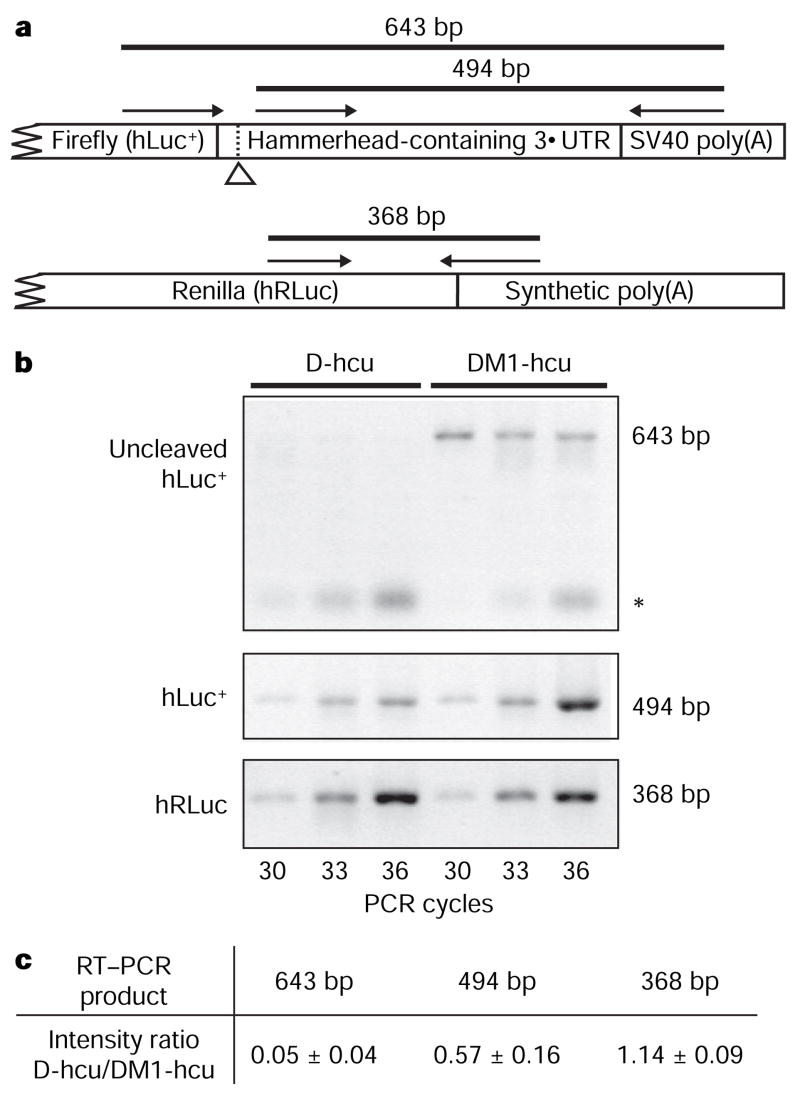
Figure 4. RT–PCR analysis of the in vivo expression products
a, Schematic of the relative positions of the RT–PCR primers. The hammerhead-specific cleavage site is indicated by an open arrowhead. The 368 base pair (bp) product acts as the internal control for transfection efficiency and the extent of transcription. b, RT–PCR of RNA isolated from NIH 3T3 cells that have been transfected with pD-hcu or pDM1-hcu. The asterisk indicates nonspecific PCR products. c, Quantification of the difference in PCR product intensity between D-hcu and DM1-hcu. The product intensity was used to determine the ratio of D-hcu/DM1-hcu at each listed cycle. Each value represents the mean ± s.d. of intensity ratios from three listed cycles.

References

    1. Winkler WC, et al. Control of gene expression by a natural metabolite-responsive ribozyme. Nature. 2004;428:281–286. - PubMed
    1. Khvorova A, Lescoute A, Westhof E, Jayasena SD. Sequence elements outside the hammerhead ribozyme catalytic core enable intracellular activity. Nature Struct Biol. 2003;10:708–712. - PubMed
    1. Martick M, Scott WG. Tertiary contacts distant from the active site prime a ribozyme for catalysis. Cell. 2006;126:309–320. - PMC - PubMed
    1. Zhou H, et al. Osteoclast inhibitory lectin, a family of new osteoclast inhibitors. J Biol Chem. 2002;277:48808–48815. - PubMed
    1. Plougastel B, Dubbelde C, Yokoyama WM. Cloning of Clr, a new family of lectin-like genes localized between mouse Nkrp1a and Cd69. Immunogenetics. 2001;53:209–214. - PubMed

Publication types