


Sulfur mustard research--strategies for the development of improved medical therapy
- PMID: 18615149
- PMCID: PMC2431646
Sulfur mustard research--strategies for the development of improved medical therapy
Abstract
Objective: Sulfur mustard (SM) is a bifunctional alkylating substance being used as chemical warfare agent (vesicant). It is still regarded as a significant threat in chemical warfare and terrorism. Exposure to SM produces cutaneous blisters, respiratory and gastrointestinal tract injury, eye lesions, and bone marrow depression. Victims of World War I as well as those of the Iran-Iraq war have suffered from devastating chronic health impairment. Even decades after exposure, severe long-term effects like chronic obstructive lung disease, lung fibrosis, recurrent corneal ulcer disease, chronic conjunctivitis, abnormal pigmentation of the skin, and different forms of cancer have been diagnosed.
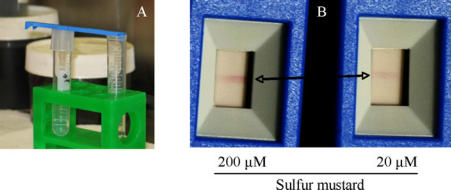
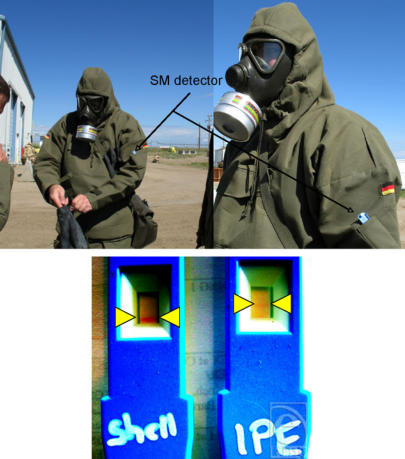
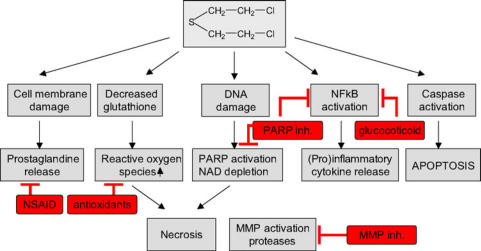
Methods: This review briefly summarizes the scientific literature and own results concerning detection, organ toxicity of SM, its proposed toxicodynamic actions, and strategies for the development of improved medical therapy.
Results: Despite extensive research efforts during the last century, efficient antidotes against SM have not yet been generated because its mechanism of action is not fully understood. However, deeper insights into these mechanisms gained in the last decade and promising developments of new drugs now offer new chances to minimize SM-induced organ damage and late effects.
Conclusion: Polymerase inhibitors, anti-inflammatory drugs, antioxidants, matrix metalloproteinase inhibitors, and probably regulators of DNA damage repair are identified as promising approaches to improve treatment.
Figures
References
-
- Niemann A. Über die Einwirkung des braunen Chlorschwefels auf Elaylgas. Annal d Chem u Pharm. 1860;113:288–92.
-
- Guthrie F. Über einige Derivate der Kohlenwasserstoffe CnHn. Annal Chem Pharm. 1860:266–88.
-
- Goodman LS, Wintrobe MM, Dameshek W, Goodman MJ, Gilman A, McLennan MT. Landmark article Sept. 21, 1946: Nitrogen mustard therapy. Use of methyl-bis(beta-chloroethyl)amine hydrochloride and tris(beta-chloroethyl)amine hydrochloride for Hodgkin's disease, lymphosarcoma, leukemia and certain allied and miscellaneous disorders. JAMA. 1984;251:2255–61. - PubMed
-
- Illig L. Die Behandlung der Psoriasis vulgaris mit Schwefel-Lost extern unter besonderer Berücksichtigung ihres möglichen Carcinogenese-Risikos (1. Fortsetzung und Schluss). Zur Cancerogenitat von Schwefel-Lost im Tier-Versuch und beim Menschen. Z Hautkr. 1977;52:1035–44. - PubMed
-
- Patel PS. Overcoming the force and power of immunity: a history of immunosuppression in kidney transplantation. J Nephrol. 2006;19(suppl 10):S137–S43. - PubMed
LinkOut - more resources
Full Text Sources