


Kinase domain point mutations in Philadelphia chromosome-positive acute lymphoblastic leukemia emerge after therapy with BCR-ABL kinase inhibitors
- PMID: 18615627
- PMCID: PMC4204653
- DOI: 10.1002/cncr.23666
Kinase domain point mutations in Philadelphia chromosome-positive acute lymphoblastic leukemia emerge after therapy with BCR-ABL kinase inhibitors
Abstract
Background: BCR-ABL kinase domain (KD) mutations are detected in approximately 45% of patients with imatinib-resistant chronic myeloid leukemia. Patterns of KD mutations in Philadelphia chromosome (Ph)-positive acute lympho- blastic leukemia (ALL) are less well studied.
Methods: The authors assessed KD mutations in patients with recurrent Ph-positive ALL after treatments that included 1 or more kinase inhibitors (n = 24 patients) or no prior kinase inhibitor (KI) therapy (n = 12 patients).
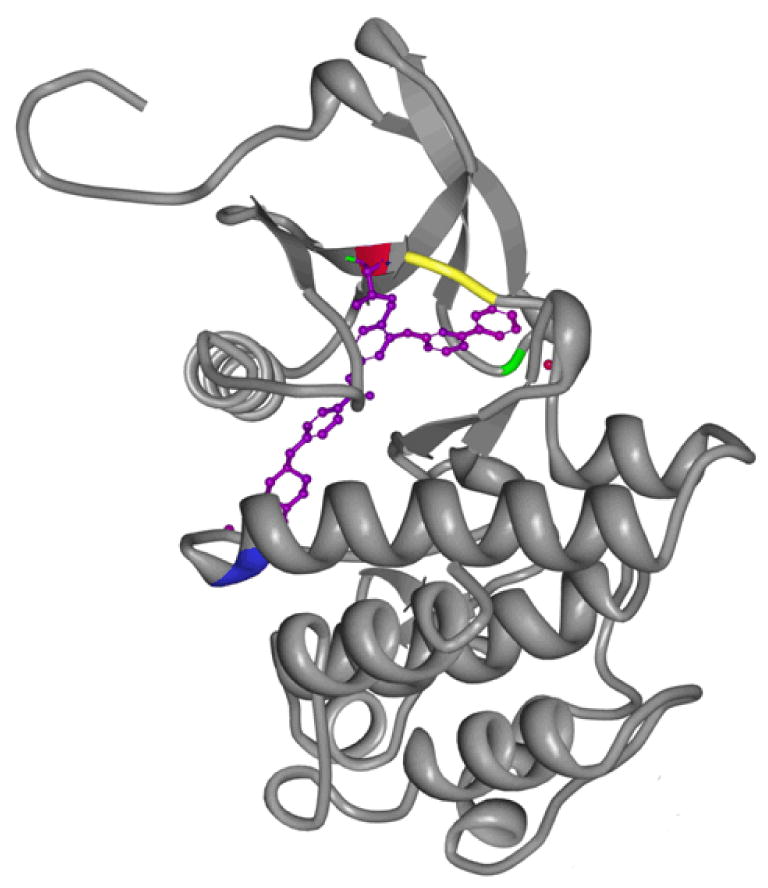
Results: ABL KD mutations were detected by direct sequencing in 15 of 17 patients (88%) who had recurrent Ph-positive ALL and received prior imatinib (n = 16) or dasatinib (n = 1) treatment and in 6 of 7 patients (86%) who had resistant/recurrent tumors treated with >or=2 KIs compared with 0 of 12 patients with recurrent Ph-positive ALL who never received KIs. A restricted set of mutations was observed, mostly Y253H and T315I, and were detected on average 10 months after KI initiation, and mutations were not detected in the initial tumor samples before KI therapy in 12 patients who were assessed. Using a more sensitive pyrosequencing method, mutations were not detected at codons 315 and 253 in the diagnostic samples from those 12 patients or in 30 patients with Ph-positive ALL who never developed recurrent disease.
Conclusions: ABL KD mutations, especially at codons 315 and 253, emerged at the time of disease recurrence in the vast majority of patients who had Ph-positive ALL and received maintenance KI therapy. Thus, the authors concluded that ongoing KI exposure may alter the patterns of recurrence and favor the outgrowth of clones with KI-resistant mutations.
(c) 2008 American Cancer Society.
Figures

References
-
- Jabbour E, Kantarjian H, Jones D, Talpaz M, Bekele N, O'Brien S, et al. Frequency and clinical significance of BCR-ABL mutations in patients with chronic myeloid leukemia treated with imatinib mesylate. Leukemia. 2006;20(10):1767–73. Available from http://www.ncbi.nlm.nih.gov/entrez/query.fcgi?cmd=Retrieve&db=PubMed&dop.... - PubMed
-
- Lahaye T, Riehm B, Berger U, Paschka P, Muller MC, Kreil S, et al. Response and resistance in 300 patients with BCR-ABL-positive leukemias treated with imatinib in a single center: a 4.5-year follow-up. Cancer. 2005;103(8):1659–69. Available from http://www.ncbi.nlm.nih.gov/entrez/query.fcgi?cmd=Retrieve&db=PubMed&dop.... - PubMed
-
- Al-Ali HK, Heinrich MC, Lange T, Krahl R, Mueller M, Muller C, et al. High incidence of BCR-ABL kinase domain mutations and absence of mutations of the PDGFR and KIT activation loops in CML patients with secondary resistance to imatinib. Hematol J. 2004;5(1):55–60. Available from http://www.ncbi.nlm.nih.gov/entrez/query.fcgi?cmd=Retrieve&db=PubMed&dop.... - PubMed
-
- Talpaz M, Shah NP, Kantarjian H, Donato N, Nicoll J, Paquette R, et al. Dasatinib in imatinib-resistant Philadelphia chromosome-positive leukemias. N Engl J Med. 2006;354(24):2531–41. Available from http://www.ncbi.nlm.nih.gov/entrez/query.fcgi?cmd=Retrieve&db=PubMed&dop.... - PubMed
-
- Quintas-Cardama A, Kantarjian H, Jones D, Nicaise C, O'Brien S, Giles F, et al. Dasatinib (BMS-354825) is active in Philadelphia chromosome-positive chronic myelogenous leukemia after imatinib and nilotinib (AMN107) therapy failure. Blood. 2007;109(2):497–9. Available from http://www.ncbi.nlm.nih.gov/entrez/query.fcgi?cmd=Retrieve&db=PubMed&dop.... - PubMed
Publication types
MeSH terms
Substances
Grants and funding
LinkOut - more resources
Full Text Sources
Other Literature Sources
Molecular Biology Databases
Miscellaneous
