


Intracellular microbes and haemophagocytosis
- PMID: 18616693
- PMCID: PMC2758559
- DOI: 10.1111/j.1462-5822.2008.01192.x
Intracellular microbes and haemophagocytosis
Abstract
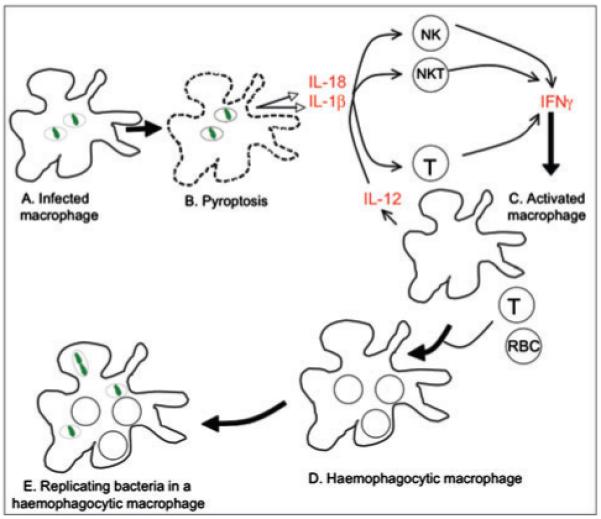
Haemophagocytosis (hemophagocytosis) is the phenomenon of activated macrophage consumption of red and white blood cells, including professional phagocytes and lymphocytes. It can occur in patients with severe cases of intracellular microbial infection, including avian influenza, leishmaniasis, tuberculosis and typhoid fever. While well-known to physicians since at least the mid-1800s, haemophagocytosis has been little studied due to a paucity of tractable animal and cell culture models. Recently, haemophagocytosis has been described in a mouse model of typhoid fever, and it was noted that the infectious agent, Salmonella enterica, resides within haemophagocytic macrophages in mice. In addition, a cell culture model for haemophagocytosis revealed that S. enterica preferentially replicate in haemophagocytic macrophages. This review describes how, at the molecular and cellular levels, S. enterica may promote and take advantage of haemophagocytosis to establish long-term systemic infections in mammals. The role, relevance and possible molecular mechanisms of haemophagocytosis are discussed within the context of other microbial infections and of genetic deficiencies in which haemophagocytosis occurs and is associated with morbidity.
Figures
References
-
- Beauvillain C, Delneste Y, Scotet M, Peres A, Gascan H, Guermonprez P, et al. Neutrophils efficiently cross-prime naive T cells in vivo. Blood. 2007;110:2965–2973. - PubMed
-
- Berg RE, Forman J. The role of CD8 T cells in innate immunity and in antigen non-specific protection. Curr Opin Immunol. 2006;18:338–343. - PubMed
-
- Berntman E, Rolf J, Johansson C, Anderson P, Cardell SL. The role of CD1d-restricted NK T lymphocytes in the immune response to oral infection with Salmonella typhimurium. Eur J Immunol. 2005;35:2100–2109. - PubMed
-
- Brennan MA, Cookson BT. Salmonella induces macrophage death by caspase-1-dependent necrosis. Mol Microbiol. 2000;38:31–40. - PubMed
-
- Brown S, Heinisch I, Ross E, Shaw K, Buckley CD, Savill J. Apoptosis disables CD31-mediated cell detachment from phagocytes promoting binding and engulfment. Nature. 2002;418:200–203. - PubMed
Publication types
MeSH terms
Substances
Grants and funding
LinkOut - more resources
Full Text Sources
