


Endogenous small RNAs and antibacterial immunity in plants
- PMID: 18619960
- PMCID: PMC5912937
- DOI: 10.1016/j.febslet.2008.06.053
Endogenous small RNAs and antibacterial immunity in plants
Abstract
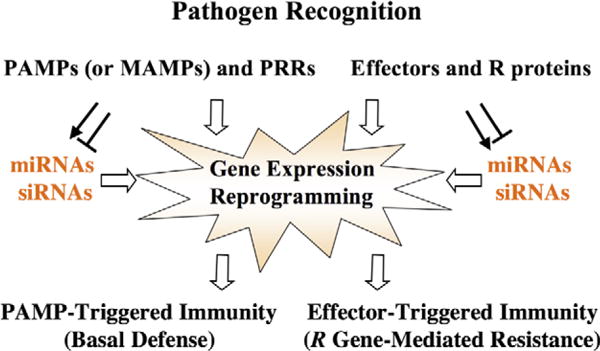
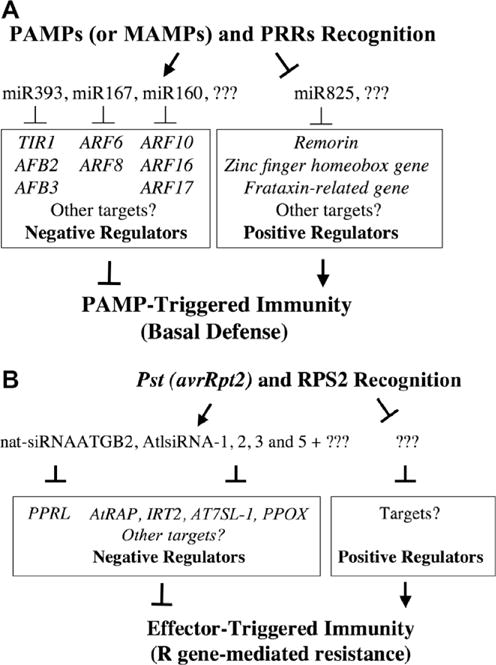
Small RNAs are non-coding regulatory RNA molecules that control gene expression by mediating mRNA degradation, translational inhibition, or chromatin modification. Virus-derived small RNAs induce silencing of viral RNAs and are essential for antiviral defense in both animal and plant systems. The role of host endogenous small RNAs on antibacterial immunity has only recently been recognized. Host disease resistance and defense responses are achieved by activation and repression of a large array of genes. Certain endogenous small RNAs in plants, including microRNAs (miRNAs) and small interfering RNAs (siRNAs), are induced or repressed in response to pathogen attack and subsequently regulate the expression of genes involved in disease resistance and defense responses by mediating transcriptional or post-transcriptional gene silencing. Thus, these small RNAs play an important role in gene expression reprogramming in plant disease resistance and defense responses. This review focuses on the recent findings of plant endogenous small RNAs in antibacterial immunity.
Figures
References
-
- Jones JDG, Dangl JL. The plant immune system. Nature. 2006;444(7117):323–329. - PubMed
-
- Chisholm ST, et al. Host–microbe interactions: shaping the evolution of the plant immune response. Cell. 2006;124(4):803–814. - PubMed
-
- Dangl JL, Jones JDG. Plant pathogens and integrated defence responses to infection. Nature. 2001;411(6839):826–833. - PubMed
-
- Parker JE, et al. Genetic analysis of plant disease resistance pathways. Rice Biotechnology: Improving Yield, Stress Tolerance and Grain Quality. 2001:153–164.
Publication types
MeSH terms
Substances
Grants and funding
LinkOut - more resources
Full Text Sources
