


Conditional variable importance for random forests
- PMID: 18620558
- PMCID: PMC2491635
- DOI: 10.1186/1471-2105-9-307
Conditional variable importance for random forests
Abstract
Background: Random forests are becoming increasingly popular in many scientific fields because they can cope with "small n large p" problems, complex interactions and even highly correlated predictor variables. Their variable importance measures have recently been suggested as screening tools for, e.g., gene expression studies. However, these variable importance measures show a bias towards correlated predictor variables.
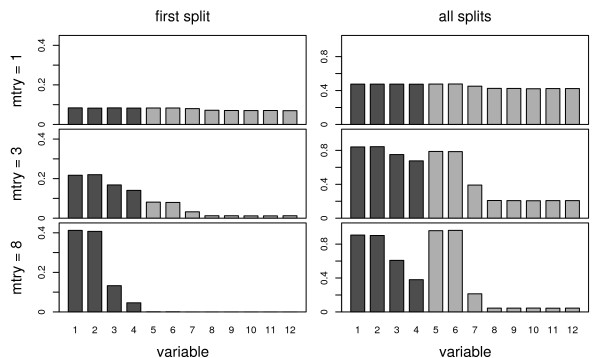
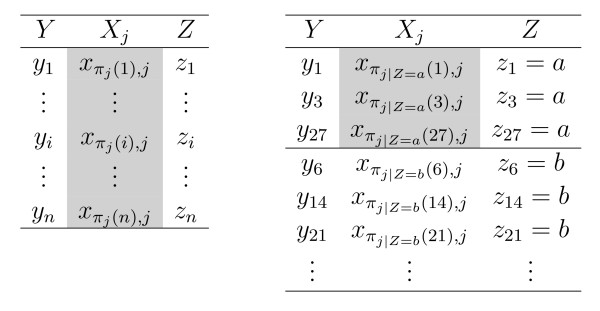
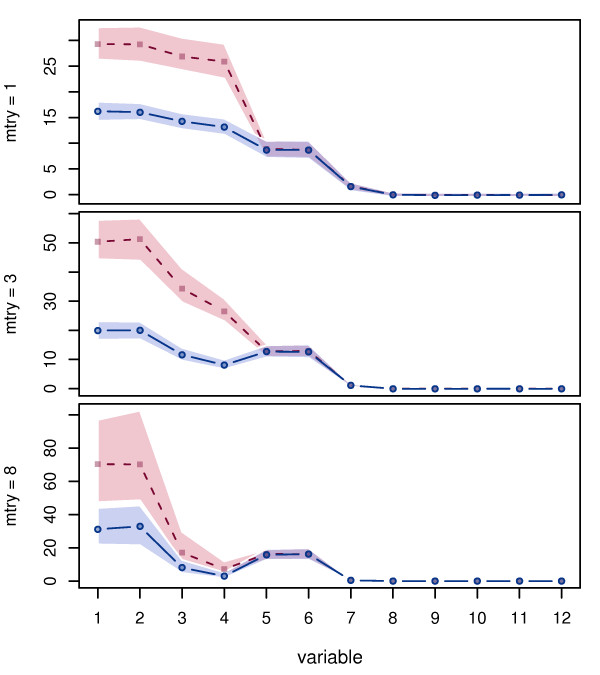
Results: We identify two mechanisms responsible for this finding: (i) A preference for the selection of correlated predictors in the tree building process and (ii) an additional advantage for correlated predictor variables induced by the unconditional permutation scheme that is employed in the computation of the variable importance measure. Based on these considerations we develop a new, conditional permutation scheme for the computation of the variable importance measure.
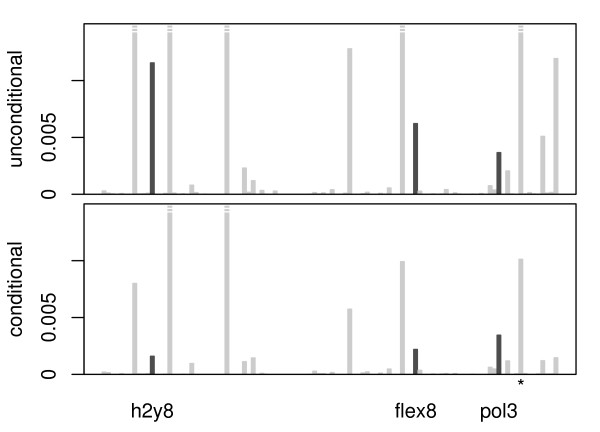
Conclusion: The resulting conditional variable importance reflects the true impact of each predictor variable more reliably than the original marginal approach.
Figures
References
-
- Breiman L. Random Forests. Machine Learning. 2001;45:5–32. doi: 10.1023/A:1010933404324. - DOI
Publication types
MeSH terms
LinkOut - more resources
Full Text Sources
Other Literature Sources
