


Human prostate stromal cells stimulate increased PSA production in DHEA-treated prostate cancer epithelial cells
- PMID: 18621129
- PMCID: PMC2570207
- DOI: 10.1016/j.jsbmb.2008.06.008
Human prostate stromal cells stimulate increased PSA production in DHEA-treated prostate cancer epithelial cells
Abstract
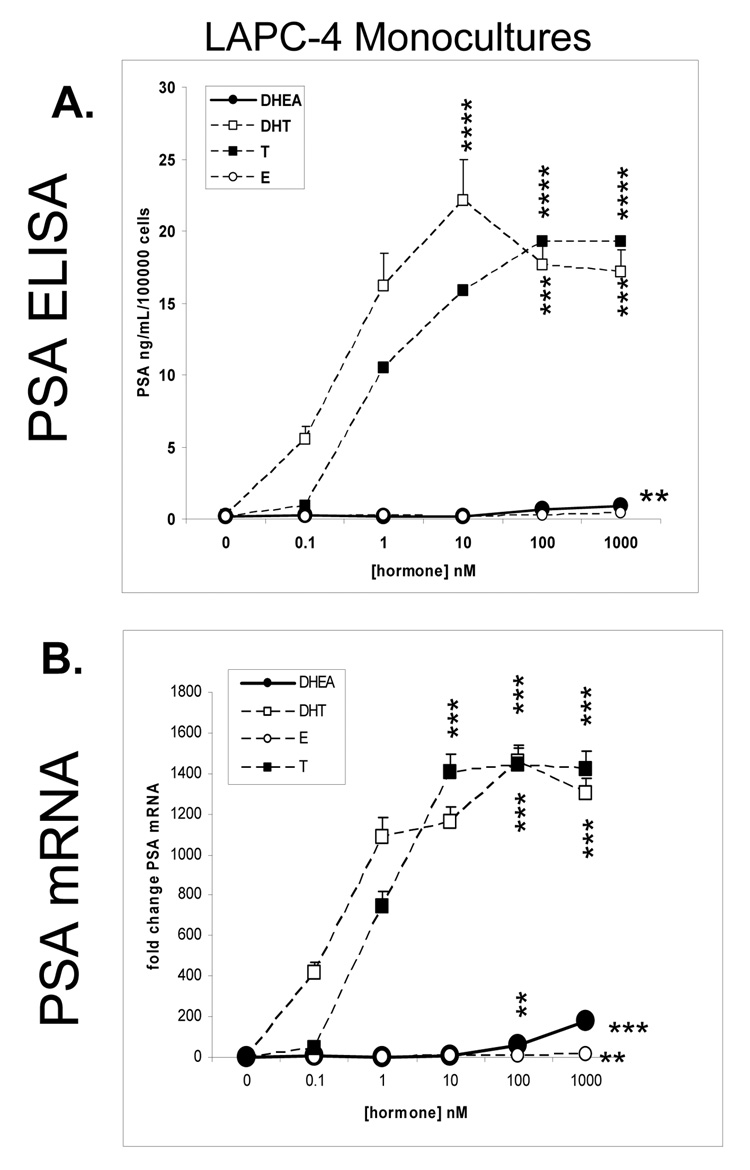
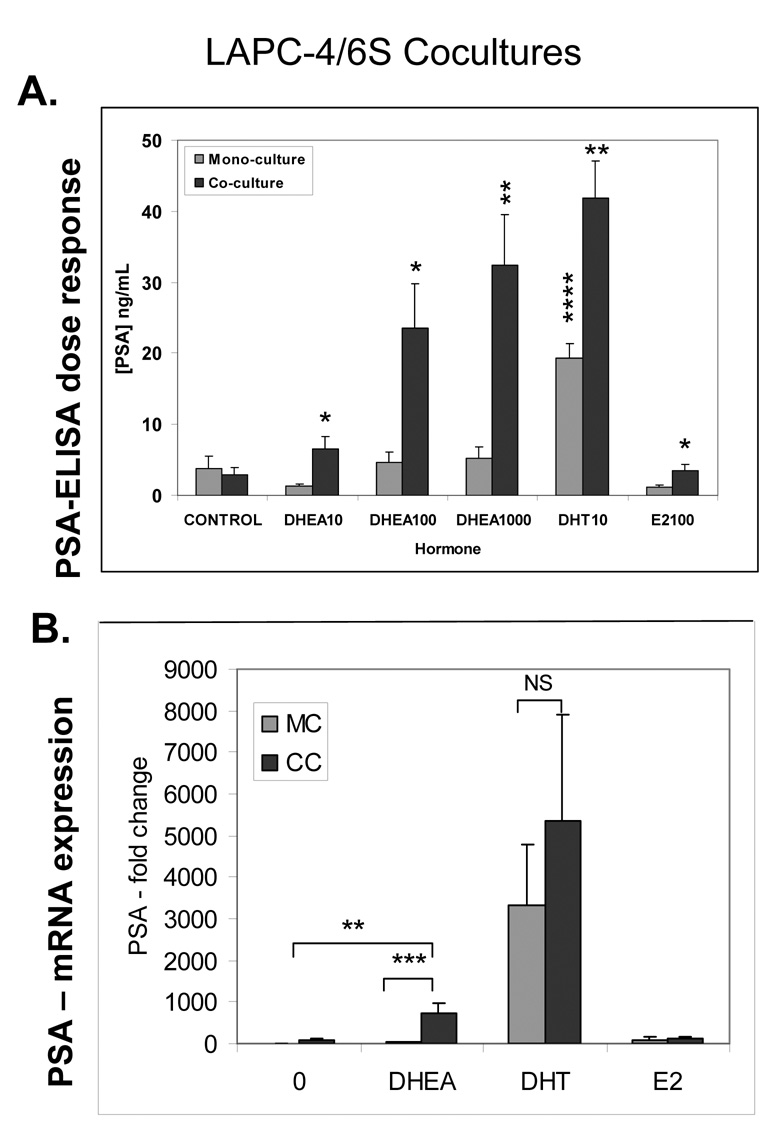
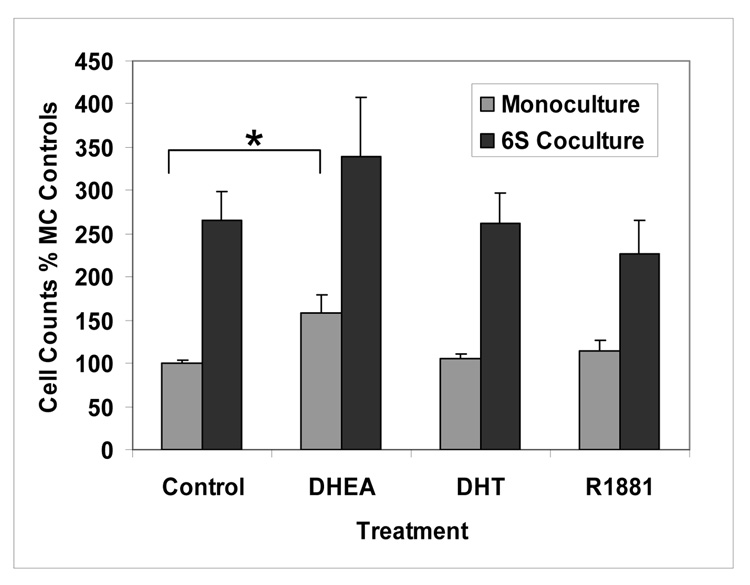
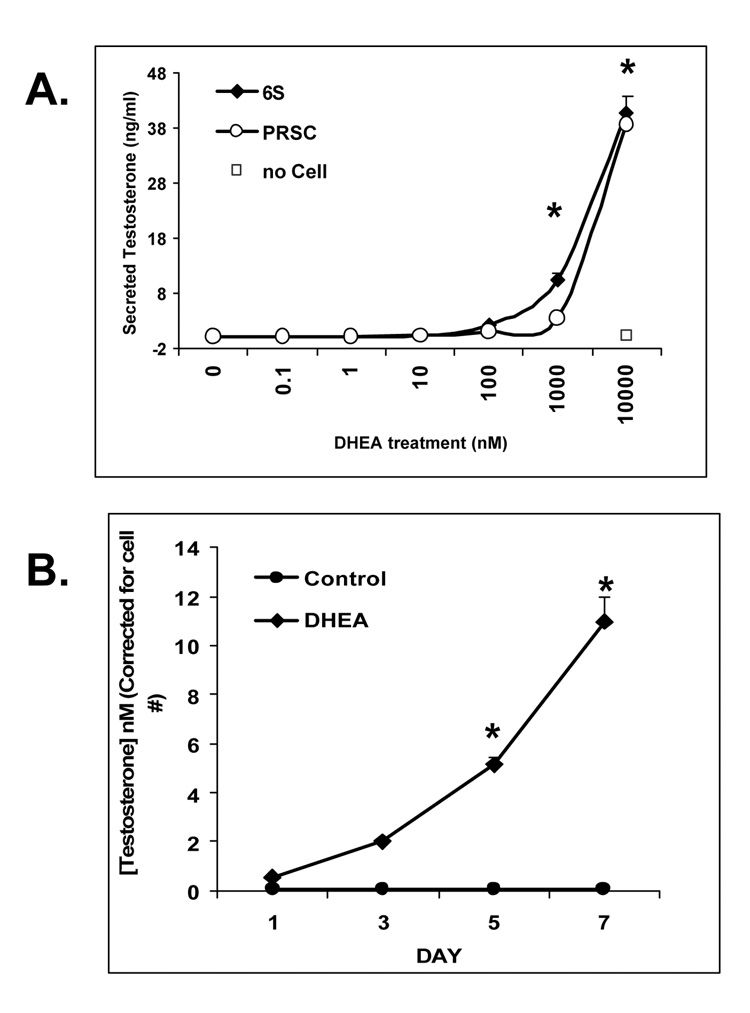
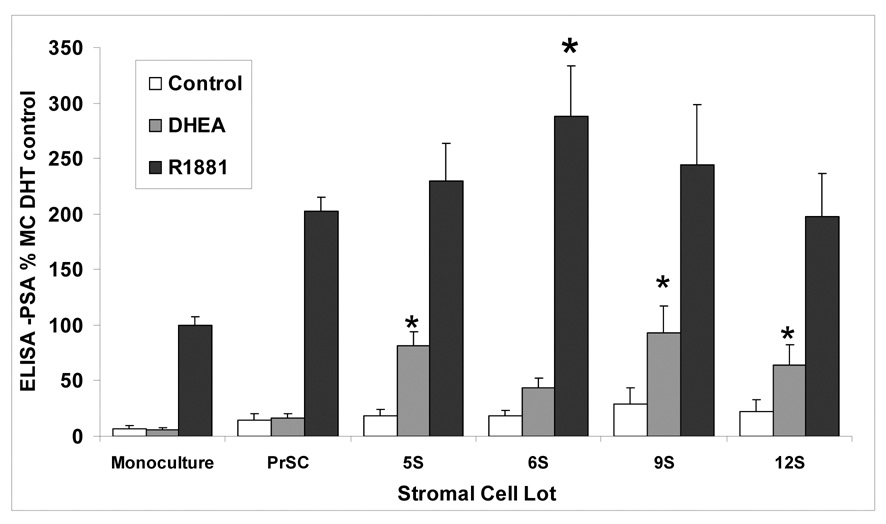
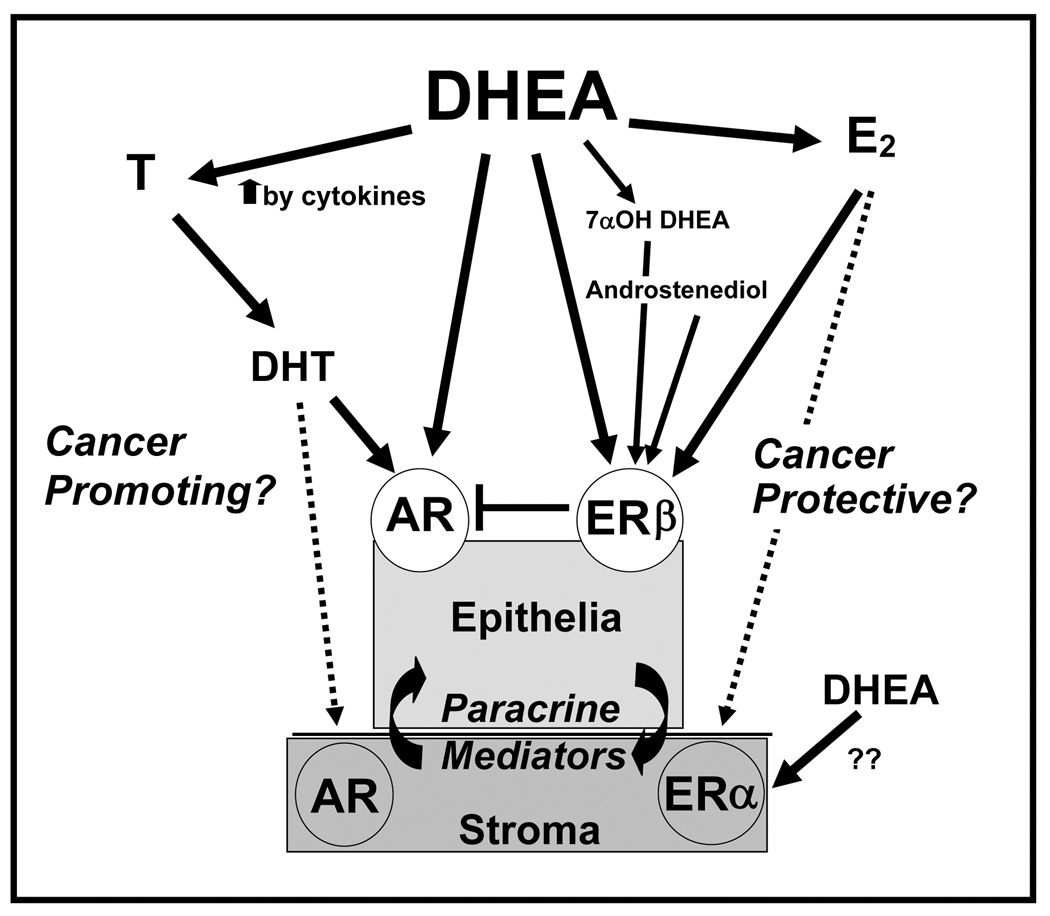
Dehydroepiandrosterone (DHEA) is commonly used as a dietary supplement and may affect prostate pathophysiology when metabolized to androgens and/or estrogens. Human prostate LAPC-4 cancer cells with a wild type androgen receptor (AR) were treated with DHEA, androgens dihydrotestosterone (DHT), T, or R1881), and E2 and assayed for prostate specific antigen (PSA) protein and gene expression. In LAPC-4 monocultures, DHEA and E2 induced little or no increase in PSA protein or mRNA expression compared to androgen-treated cells. When prostate cancer-associated (6S) stromal cells were added in coculture, DHEA stimulated LAPC-4 cell PSA protein secretion to levels approaching induction by DHT. Also, DHEA induced 15-fold more PSA mRNA in LAPC-4 cocultures than in monocultures. LAPC-4 proliferation was increased 2-3-fold when cocultured with 6S stromal cells regardless of hormone treatment. DHEA-treated 6S stromal cells exhibited a dose- and time-dependent increase in T secretion, demonstrating stromal cell metabolism of DHEA to T. Coculture with non-cancerous stroma did not induce LAPC-4 PSA production, suggesting a differential modulation of DHEA effect in a cancer-associated prostate stromal environment. This coculture model provides a research approach to reveal detailed endocrine, intracrine, and paracrine signaling between stromal and epithelial cells that regulate tissue homeostasis within the prostate, and the role of the tumor microenvironment in cancer progression.
Figures
References
-
- Belanger A, Candas B, Dupont A, Cusan L, Diamond P, Gomez JL, Labrie F. Changes in serum concentrations of conjugated and unconjugated steroids in 40-to 80-year-old men. J Clin Endocrinol Metab. 1994;79:1086–1090. - PubMed
-
- Alesci S, Manoli I, Blackman MR. Dehydrodepiandrosterone (DHEA) In: Coates P, Blackman MR, Cragg G, Levine M, Moss J, White J, editors. Encyclopedia of Dietary Supplements. 1st ed. New York, NY: Marcel Dekker, Inc.; 2005. pp. 167–176.
-
- Klein H, Bressel M, Kastendieck H, Voigt KD. Androgens, adrenal androgen precursors, and their metabolism in untreated primary tumors and lymph node metastases of human prostatic cancer. Am J Clin Oncol. 1988;11 Suppl 2:S30–S36. - PubMed
-
- Voigt KD, Bartsch W. Intratissular androgens in benign prostatic hyperplasia and prostatic cancer. J Steroid Biochem. 1986;25:749–757. - PubMed
-
- Labrie F, Belanger A, Luu-The V, Labrie C, Simard J, Cusan L, Gomez JL, Candas B. DHEA and the intracrine formation of androgens and estrogens in peripheral target tissues: its role during aging. Steroids. 1998;63:322–328. - PubMed
Publication types
MeSH terms
Substances
Grants and funding
LinkOut - more resources
Full Text Sources
Medical
Research Materials
Miscellaneous
