


Neutrophil depletion causes a fatal defect in murine pulmonary Staphylococcus aureus clearance
- PMID: 18621398
- PMCID: PMC2605623
- DOI: 10.1016/j.jss.2008.02.009
Neutrophil depletion causes a fatal defect in murine pulmonary Staphylococcus aureus clearance
Abstract
Background: Staphylococcus aureus is the most common cause of healthcare-associated pneumonia. Despite the significant morbidity and mortality associated with the disease, animal models of S. aureus pneumonia are rare.
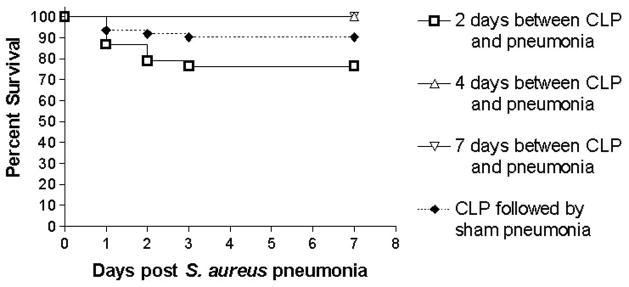
Materials and methods: We examined the pathogenicity of four different strains of S. aureus (both methicillin-sensitive and -resistant as well as Panton-Valentine leukocidin-positive and -negative) in four strains of immunocompetent inbred and outbred mice (FVB/N, C57Bl/6, BALB/c, ND4; n = 148). The immunological basis for the development of murine S. aureus pneumonia was then determined by selectively depleting neutrophils, lymphocytes, or pulmonary macrophages prior to the onset of infection. An additional cohort of animals was rendered immunosuppressed by induction of abdominal sepsis via cecal ligation and puncture 2, 4, or 7 d prior to the onset of pneumonia.
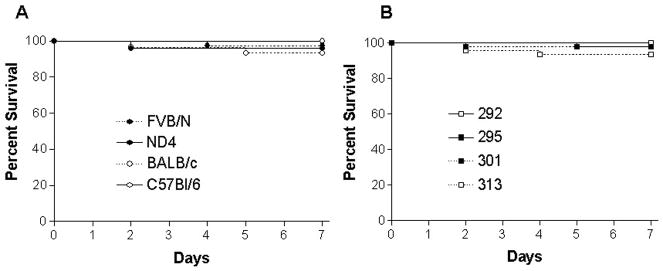
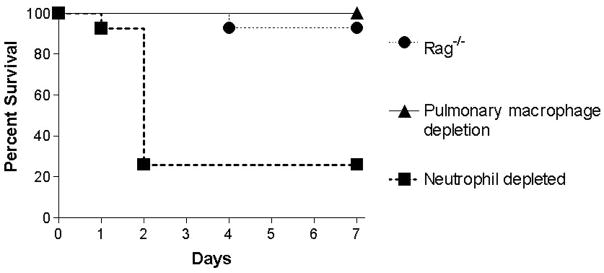
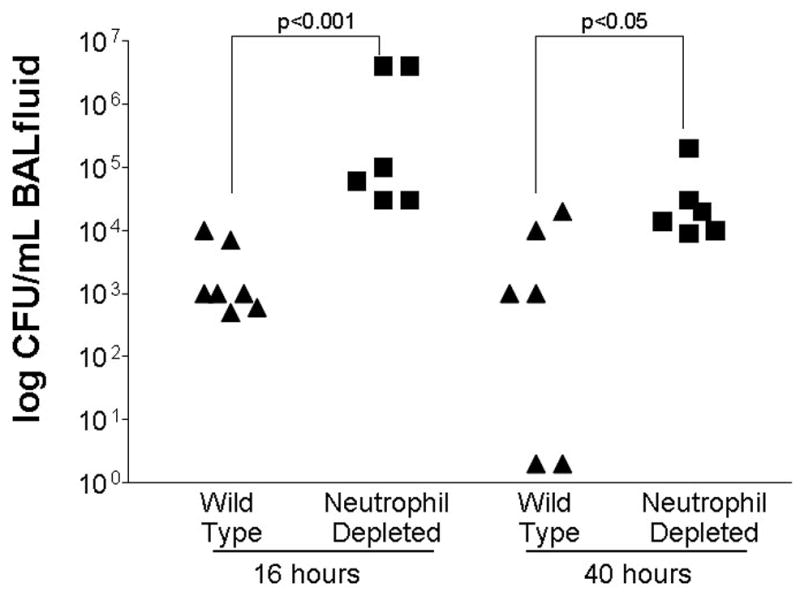
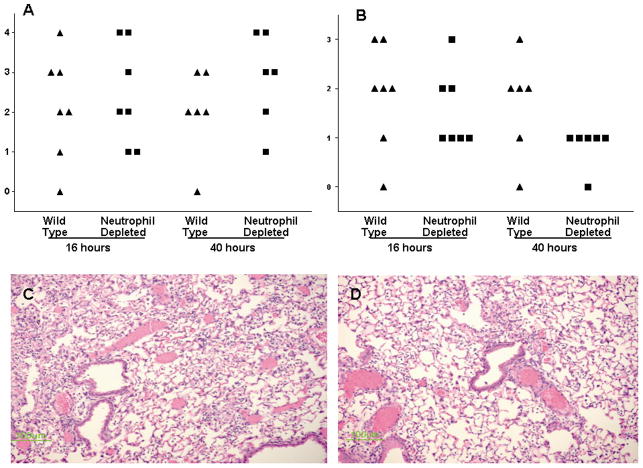
Results: Nearly all immunocompetent mice survived, regardless of which strain of S. aureus was used or which strain of mouse was infected. Among animals with immune depletion or prior immunosuppression, survival was decreased only following neutrophil depletion (26% versus 90% alive at 7 d, P < 0.0001). Compared to immunocompetent animals, neutrophil-depleted mice with S. aureus pneumonia had delayed pulmonary bacterial clearance at 16 and 40 h but had no difference in levels of bacteremia. Neutrophil-depleted mice also had elevated levels of pulmonary monocyte chemotactic protein-1 (822 pg/mL versus 150 pg/mL, P < 0.05). In contrast, pulmonary histological appearance was similar in both groups as was dry/wet lung weight.
Conclusions: These results suggest that neutrophils play a critical role in the host response to S. aureus pneumonia, and the survival differences observed in neutrophil-depleted mice are associated with alterations in bacterial clearance and pulmonary cytokine response.
Figures
References
-
- Kollef MH, Shorr A, Tabak YP, Gupta V, Liu LZ, Johannes RS. Epidemiology and outcomes of health-care-associated pneumonia: results from a large US database of culture-positive pneumonia. Chest. 2005 December;128(6):3854–62. - PubMed
-
- Guidelines for the management of adults with hospital-acquired, ventilator-associated, and healthcare-associated pneumonia. Am J Respir Crit Care Med. 2005 February 15;171(4):388–416. - PubMed
-
- Rello J, Ollendorf DA, Oster G, Vera-Llonch M, Bellm L, Redman R, Kollef MH. Epidemiology and outcomes of ventilator-associated pneumonia in a large US database. Chest. 2002 December;122(6):2115–21. - PubMed
-
- Gillet Y, Issartel B, Vanhems P, Lina G, Vandenesch F, Etienne J, Floret D. Severe staphylococcal pneumonia in children. Arch Pediatr. 2001 September;8(Suppl 4):742s–6s. - PubMed
-
- Zetola N, Francis JS, Nuermberger EL, Bishai WR. Community-acquired meticillin-resistant Staphylococcus aureus: an emerging threat. Lancet Infect Dis. 2005 May;5(5):275–86. - PubMed
Publication types
MeSH terms
Grants and funding
LinkOut - more resources
Full Text Sources
Research Materials
