


Racial and geographic differences in mammography screening in St. Louis City: a multilevel study
- PMID: 18622709
- PMCID: PMC2527433
- DOI: 10.1007/s11524-008-9301-z
Racial and geographic differences in mammography screening in St. Louis City: a multilevel study
Abstract
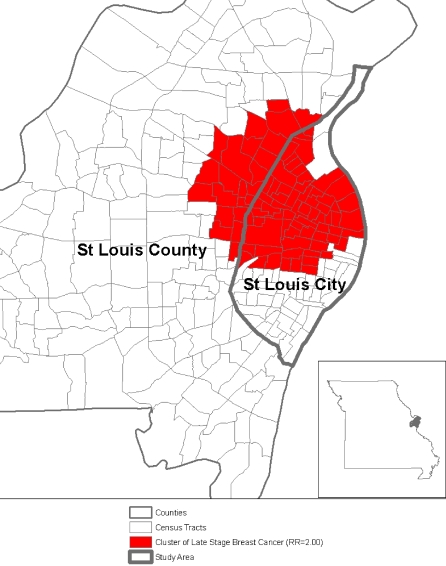
To examine racial differences in mammography use and its determinants in the City of St. Louis, MO, USA, we recruited women age 40 or older using random-digit dialing to (1) examine the difference in mammography use between white women and African American women and (2) identify individual- and census-tract-level risk factors of nonadherence to mammography. During telephone interviews, we inquired about mammography use and several demographic, psychosocial, and health behavior variables. We determined the residential census tracts of study subjects using a geographic information system. The rate of mammography use was 68.0% among white women and 74.7% among African American women (P = 0.022). African American women were more likely to have mammograms than white woman (adjusted odds ratio [OR] = 1.71; 95% confidence interval [CI] = 1.09-2.69). System-level barriers to mammography and heavy smoking were associated with lower mammography use among both white and African American women. Personal-experience barriers to mammography and no physician recommendation also were independently associated with mammography use among white women. White women residing within a historic geographic cluster area of late-stage breast cancer were less likely to have mammograms (adjusted OR = 0.42, 95% CI = 0.22-0.80), while African American women residing within a historic geographic cluster area of late-stage breast cancer were equally likely to have mammograms (adjusted OR = 0.79, 95% CI = 0.28-2.24). Neither individual- nor census-tract-level socioeconomic status was associated with mammography screening. These findings suggest that there may be a greater need for increasing mammography use among white women, especially in the historic cluster area of late-stage breast cancer in St. Louis.
Figures
References
-
- Jemal A, Siegel R, Ward E, et al. Cancer statistics, 2007. CA Cancer J Clin. 2007;57:43–66. - PubMed
-
- Blackman DK, Bennett EM, Miller DS. Trends in self-reported use of mammograms (1989–1997) and Papanicolaou tests (1991–1997)—Behavioral Risk Factor Surveillance System. Morb Mortal Wkly Rep CDC Surveill Summ. 1999;48:1–22. - PubMed
Publication types
MeSH terms
Grants and funding
LinkOut - more resources
Full Text Sources
Medical
