


Neuropsychological characteristics as predictors of SSRI treatment response in depressed subjects
- PMID: 18629432
- PMCID: PMC3767987
- DOI: 10.1007/s00702-008-0084-x
Neuropsychological characteristics as predictors of SSRI treatment response in depressed subjects
Abstract
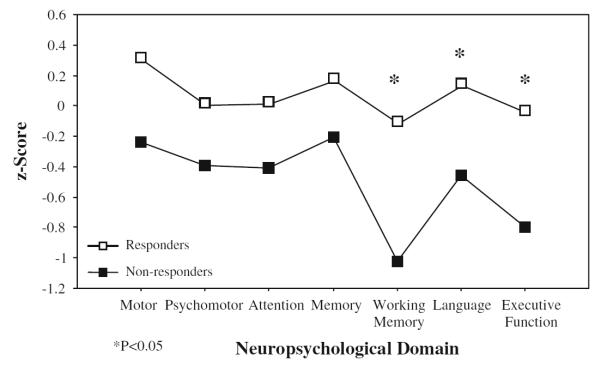
Studies suggest that neuropsychological measures may provide prognostic information regarding SSRI treatment response, yet it is unclear which specific cognitive domains are the most effectual predictors. The aim of this study was to characterize the cognitive profile associated with SSRI nonresponse using a comprehensive set of neuropsychological tests. Participants (N = 32) met criteria for current major depressive episode. Assessment followed pre-treatment medication washout. Clinical response was measured after 3-month open-label SSRI treatment. Groups did not differ by demographic characteristics, intelligence or depression severity. Responders outperformed nonresponders across all cognitive domains, with the largest differences observed in executive, language and working memory functions. Results indicate poorer global cognitive functioning is predictive of treatment nonresponse. Deficits were most pronounced in tests demanding greater mental search and manipulation rather than speeded motor output. Cognitive slowing may mediate the working memory and executive function deficits found in nonresponders. These findings can inform exploration for pharmacogenetic endophenotypes.
Figures
References
-
- Alexopoulos GS, Kiosses DN, Heo M, Murphy CF, Shanmugham B, Gunning-Dixon F. Executive dysfunction and the course of geriatric depression. Biol Psychiatry. 2005;58:204–210. - PubMed
-
- Baldwin R, Jeffries S, Jackson A, Sutcliffe C, Thacker N, Scott M, Burns A. Treatment response in late-onset depression: relationship to neuropsychological, neuroradiological and vascular risk factors. Psychol Med. 2004;4:125–136. - PubMed
-
- Caligiuri MP, Gentili V, Eberson S, Kelsoe J, Rapaport M, Gillin JC. A quantitative neuromotor predictor of antidepressant non-response in patients with major depression. J Affect Disord. 2003;77:135–141. - PubMed
-
- Downing RW, Rickels K. Predictors of amitriptyline response in outpatient depressives. J Nerv Ment Dis. 1972;154:248–263. - PubMed
-
- Dunkin JJ, Leuchter AF, Cook IA, Kasl-Godley JE, Abrams M, Rosenberg-Thompson S. Executive dysfunction predicts nonresponse to fluoxetine in major depression. J Affect Disord. 2000;60:13–23. - PubMed
Publication types
MeSH terms
Substances
Grants and funding
LinkOut - more resources
Full Text Sources
Other Literature Sources
Medical
Miscellaneous
