


Interaction of nitric oxide with a functional model of cytochrome c oxidase
- PMID: 18632561
- PMCID: PMC2481353
- DOI: 10.1073/pnas.0804257105
Interaction of nitric oxide with a functional model of cytochrome c oxidase
Abstract
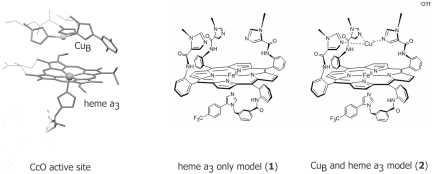
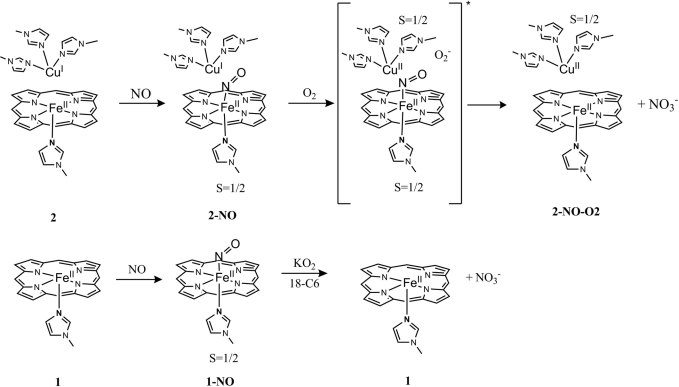
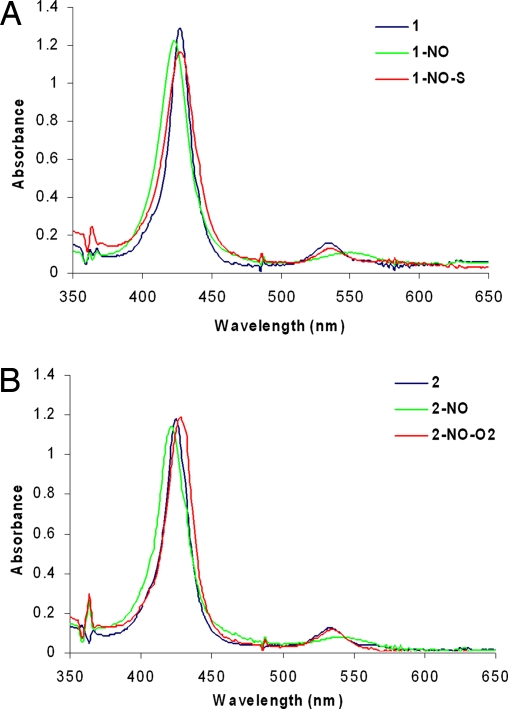
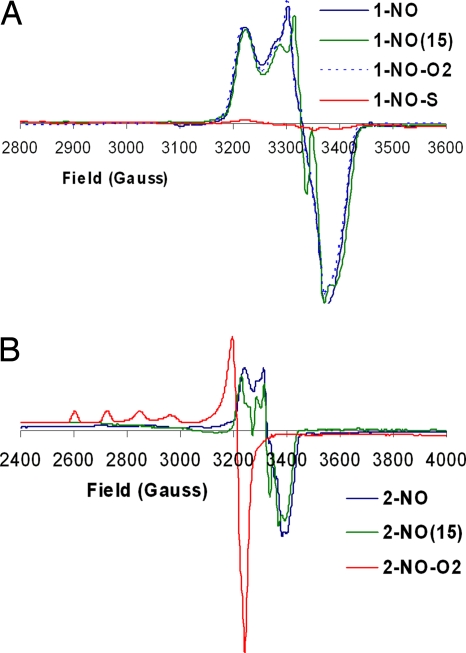
Cytochrome c oxidase (CcO) is a multimetallic enzyme that carries out the reduction of O2 to H2O and is essential to respiration, providing the energy that powers all aerobic organisms by generating heat and forming ATP. The oxygen-binding heme a(3) should be subject to fatal inhibition by chemicals that could compete with O2 binding. Near the CcO active site is another enzyme, NO synthase, which produces the gaseous hormone NO. NO can strongly bind to heme a(3), thus inhibiting respiration. However, this disaster does not occur. Using functional models for the CcO active site, we show how NO inhibition is avoided; in fact, it is found that NO can protect the respiratory enzyme from other inhibitors such as cyanide, a classic poison.
Conflict of interest statement
The authors declare no conflict of interest.
Figures
References
-
- Ferguson-Miller S, Babcock GT. Heme/copper terminal oxidases. Chem Rev. 1996;96:2889–2907. - PubMed
-
- Iwata S, Ostermeier C, Ludwig B, Michel H. Structure at 2.8 Å resolution of cytochrome c oxidase from Paracoccus denitrificans. Nature. 1995;376:660–669. - PubMed
-
- Yoshikawa S, et al. Redox-coupled crystal structural changes in bovine heart cytochrome c oxidase. Science. 1998;280:1723–1729. - PubMed
-
- Petersen L. The effect of inhibitors on the oxygen kinetics of cytochrome c oxidase. Biochim Biophys Acta. 1977;460:299–307. - PubMed
-
- Ghafourifar P, Richter C. Nitric oxide synthase activity in mitochondria. FEBS Lett. 1997;418:291–296. - PubMed
Publication types
MeSH terms
Substances
Grants and funding
LinkOut - more resources
Full Text Sources
