Ability of mature dendritic cells to interact with regulatory T cells is imprinted during maturation
- PMID: 18632653
- PMCID: PMC2905229
- DOI: 10.1158/0008-5472.CAN-07-6818
Ability of mature dendritic cells to interact with regulatory T cells is imprinted during maturation
Abstract
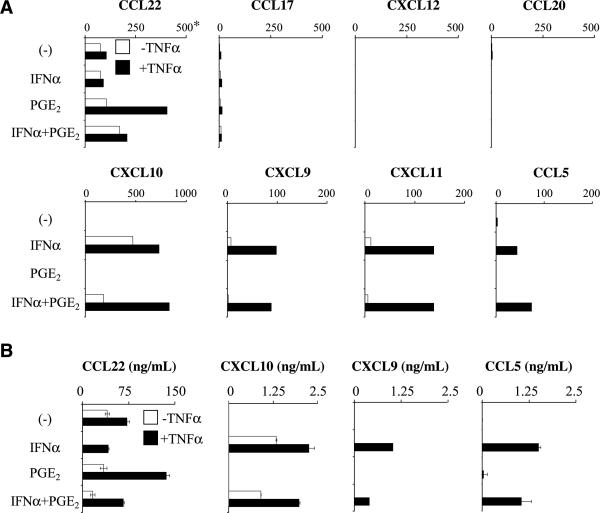
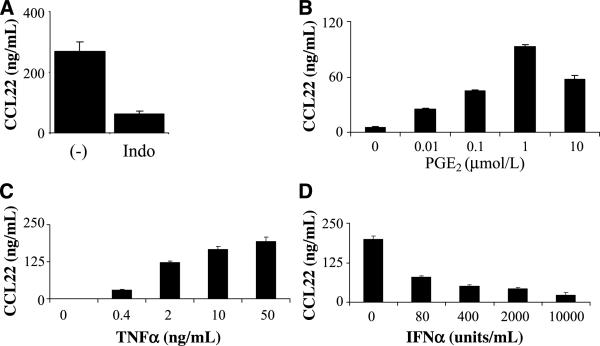
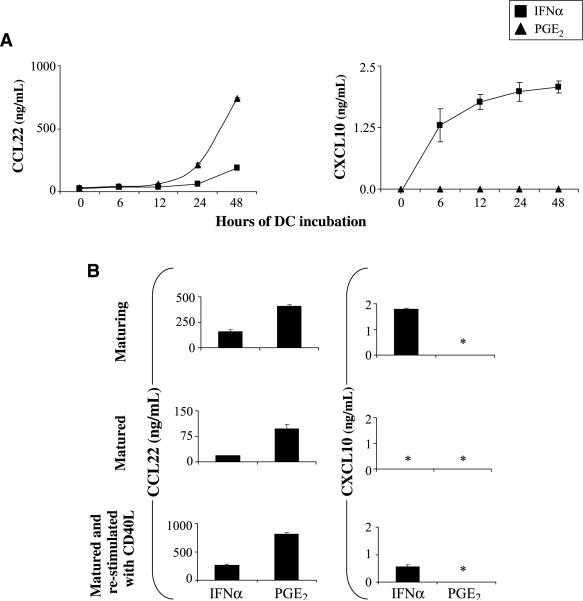
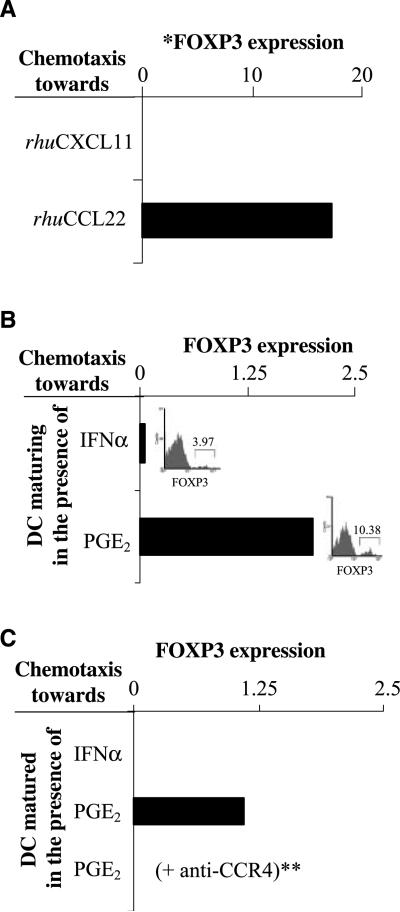
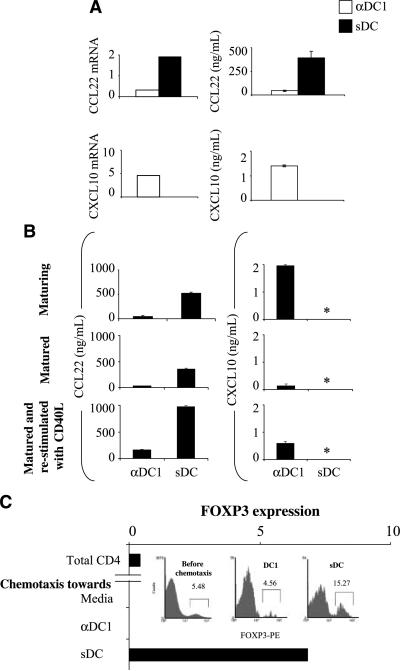
Preferential activation of regulatory T (Treg) cells limits autoimmune tissue damage during chronic immune responses but can also facilitate tumor growth. Here, we show that tissue-produced inflammatory mediators prime maturing dendritic cells (DC) for the differential ability of attracting anti-inflammatory Treg cells. Our data show that prostaglandin E(2) (PGE(2)), a factor overproduced in chronic inflammation and cancer, induces stable Treg-attracting properties in maturing DC, mediated by CCL22. The elevated production of CCL22 by PGE(2)-matured DC persists after the removal of PGE(2) and is further elevated after secondary stimulation of DC in a neutral environment. This PGE(2)-induced overproduction of CCL22 and the resulting attraction of FOXP3(+) Tregs are counteracted by IFN alpha, a mediator of acute inflammation, which also restores the ability of the PGE(2)-exposed DC to secrete the Th1-attracting chemokines: CXCL9, CXCL10, CXCL11, and CCL5. In accordance with these observations, different DCs clinically used as cancer vaccines show different Treg-recruiting abilities, with PGE(2)-matured DC, but not type 1-polarized DC, generated in the presence of type I and type II IFNs, showing high Treg-attracting activity. The current data, showing that the ability of mature DC to interact with Treg cells is predetermined at the stage of DC maturation, pave the way to preferentially target the regulatory versus proinflammatory T cells in autoimmunity and transplantation, as opposed to intracellular infections and cancer.
Figures
References
-
- Zou W. Regulatory T cells, tumour immunity and immunotherapy. Nat Rev Immunol. 2006;6:295–307. - PubMed
-
- Curiel TJ, Coukos G, Zou L, et al. Specific recruitment of regulatory T cells in ovarian carcinoma fosters immune privilege and predicts reduced survival. Nat Med. 2004;10:942–9. - PubMed
-
- Hirahara K, Liu L, Clark RA, Yamanaka K, Fuhlbrigge RC, Kupper TS. The majority of human peripheral blood CD4+CD25highFoxp3+ regulatory T cells bear functional skin-homing receptors. J Immunol. 2006;177:4488–94. - PubMed
Publication types
MeSH terms
Substances
Grants and funding
LinkOut - more resources
Full Text Sources
Other Literature Sources
Research Materials