


Association of gadolinium based magnetic resonance imaging contrast agents and nephrogenic systemic fibrosis
- PMID: 18635232
- PMCID: PMC4128001
- DOI: 10.1016/j.juro.2008.05.005
Association of gadolinium based magnetic resonance imaging contrast agents and nephrogenic systemic fibrosis
Abstract
Purpose: We investigated the recently discovered association between gadolinium based magnetic resonance imaging contrast agents and the development of nephrogenic systemic fibrosis in patients with chronic kidney disease or acute kidney injury.
Materials and methods: A systematic review of the PubMed database and publicly available patient databases was performed to characterize nephrogenic systemic fibrosis and its possible association with exposure to gadolinium based magnetic resonance imaging contrast agents.
Results: Data from case series reports, nephrogenic systemic fibrosis patient databases, nephrogenic systemic fibrosis case reporting to the Food and Drug Administration after gadolinium contrast agent exposure and retrospective case control studies suggest a strong association between the use of gadolinium based magnetic resonance imaging contrast agents and the subsequent development of nephrogenic systemic fibrosis in patients with renal disease. These data also suggest that the risk of nephrogenic systemic fibrosis depends on the degree of renal dysfunction, dose of contrast agent, gadolinium contrast agent stability and severity of concomitant illness. Thus, the occurrence of nephrogenic systemic fibrosis after gadolinium contrast agent exposure may vary from negligible up to 2% to 5% in select high risk clinical situations.
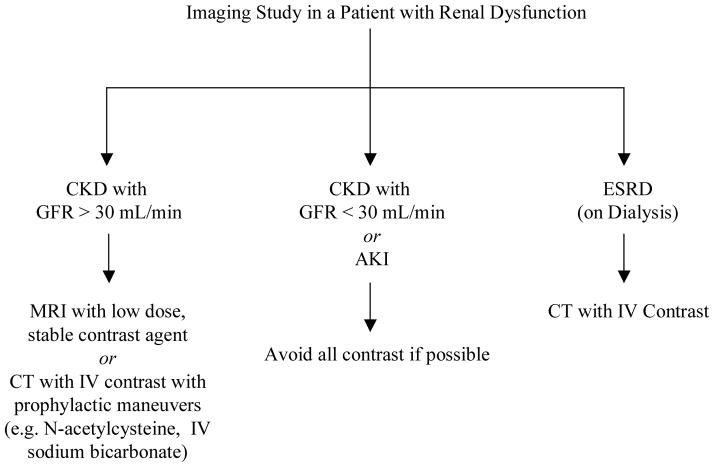
Conclusions: Magnetic resonance imaging using gadolinium based contrast agents must be performed judiciously in patients with renal dysfunction, carefully weighing on a case by case basis the benefits of magnetic resonance imaging and the risk of nephrogenic systemic fibrosis as well as the disadvantages of undergoing alternative or foregoing imaging studies.
Figures
References
-
- Cowper SE, Robin HS, Steinberg SM, Su LD, Gupta S, LeBoit PE. Scleromyxoedema-like cutaneous diseases in renal-dialysis patients. Lancet. 2000;356:1000. - PubMed
-
- Cowper SE, Su LD, Bhawan J, Robin HS, LeBoit PE. Nephrogenic fibrosing dermopathy. Am J Dermatopathol. 2001;23:383. - PubMed
-
- DeHoratius DM, Cowper SE. Nephrogenic systemic fibrosis: an emerging threat among renal patients. Semin Dial. 2006;19:191. - PubMed
-
- Grobner T, Prischl FC. Gadolinium and nephrogenic systemic fibrosis. Kidney Int. 2007;72:260. - PubMed
-
- Swaminathan S, Shah SV. New insights into nephrogenic systemic fibrosis. J Am Soc Nephrol. 2007;18:2636. - PubMed
Publication types
MeSH terms
Substances
Grants and funding
LinkOut - more resources
Full Text Sources
Medical
