. 2008 Sep 15;586(18):4441-52.
doi: 10.1113/jphysiol.2008.155291. Epub 2008 Jul 17.

Role of the commissural inhibitory system in vestibular compensation in the rat

Affiliations

Role of the commissural inhibitory system in vestibular compensation in the rat

Filip Bergquist et al. J Physiol. .

Abstract

We investigated the role of the vestibular commissural inhibitory system in vestibular compensation (VC, the behavioural recovery that follows unilateral vestibular loss), using in vivo microdialysis to measure GABA levels in the bilateral medial vestibular nucleus (MVN) at various times after unilateral labyrinthectomy (UL). Immediately after UL, in close correlation with the appearance of the characteristic oculomotor and postural symptoms, there is a marked increase in GABA release in the ipsi-lesional MVN. This is not prevented by bilateral flocculectomy, indicating that it is due to hyperactivity of vestibular commissural inhibitory neurones. Over the following 96 h, as VC occurs and the behavioural symptoms ameliorate, the ipsi-lesional GABA levels return to near-normal. Contra-lesional GABA levels do not change significantly in the initial stages of VC, but decrease at late stages so that when static symptoms have abated there remains a significant difference between the MVNs of the two sides. We also investigated the role of the commissural inhibition in Bechterew's phenomenon, by reversibly inactivating the intact contra-lesional labyrinth in compensating animals through superfusion of local anaesthetic on the round window. Transient inactivation of the intact labyrinth elicited the lateralized behaviour described by Bechterew, but did not alter the GABA levels in either MVN, suggesting the involvement of distinct cellular mechanisms. These findings indicate that an imbalanced commissural inhibitory system is a root cause of the severe oculomotor and postural symptoms of unilateral vestibular loss, and that re-balancing of commissural inhibition occurs in parallel with the subsequent behavioural recovery during VC.


Figures
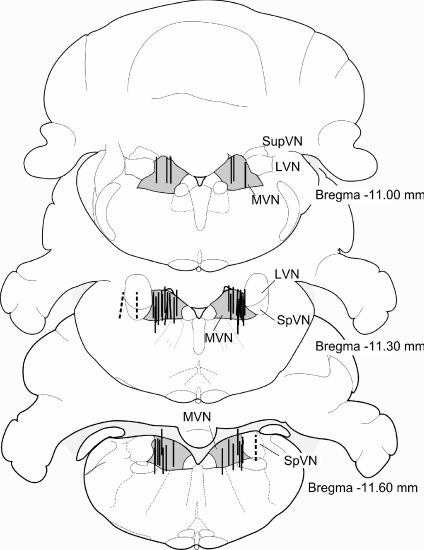
Figure 1
Figure 1. Locations of microdialysis probes
The locations of the active membrane parts of the microdialysis probes, reconstructed from photographs of brain sections at the end of each experiment, are indicated by lines. Measurements from microdialysis probes where at least 2/3 of the microdialysis membrane was located within the MVN were included in the analysis. Excluded probe locations are shown as dashed lines.
Figure 2
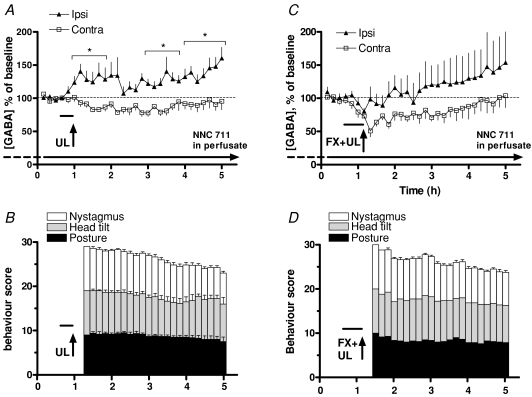
Figure 2. GABA release in ipsi-lesional and contra-lesional MVN after unilateral labyrinthectomy (A and B), and after unilateral labyrinthectomy preceded by a bilateral flocculectomy (C and D)
A, GABA concentrations in microdialysate samples from the ipsi- and contra-lesional MVNs during a unilateral labyrinthectomy (UL, vertical arrow) and the following 4 h. Two-way ANOVA of data stratified in 1 h bins showed a significant effect of side (F = 15.13, d.f. = 1, P = 0.0016; Bonferroni corrected t tests, ipsi versus contra *P < 0.05). B, simultaneous scoring of behavioural symptoms. No vestibular symptoms were observed before UL, but pronounced symptoms of unilateral vestibular loss occurred immediately after the animals recovered from the anaesthesia induced for the UL procedure. C, GABA concentrations in microdialysates from the ipsi- and contra-lesional MVNs over the first 4 h, when the UL was immediately preceded by a bilateral flocculectomy (FX). Two-way ANOVA of data stratified in 1 h bins showed a significant effect of side (F = 5.03, d.f. = 1, P = 0.0306; Bonferroni corrected t tests did not show significant differences in GABA release between sides for any given time point). D, simultaneous scoring of behavioural symptoms. The average durations of the UL and UL + FX procedures are indicated by horizontal bars. The GAT1 inhibitor (NNC 711) was present in the perfusion fluid to inhibit GABA re-uptake and enhance the detection of synaptically released GABA (horizontal arrow).
Figure 3
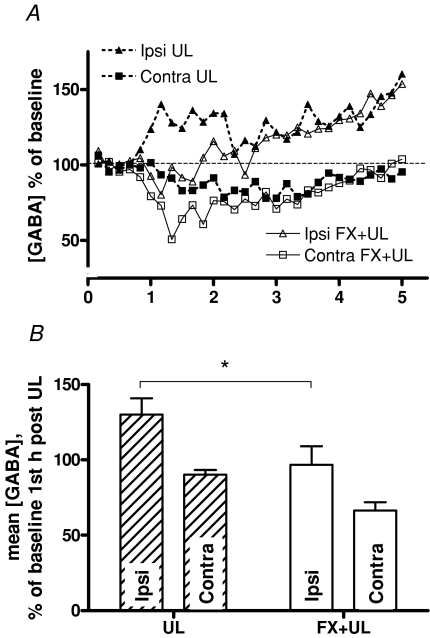
Figure 3. The influence of the flocculus on GABA release after a unilateral labyrinthectomy
A, comparison of the data shown in Fig. 2A and C. Except for the first 1–1.5 h after UL, the GABA release in MVNs of UL-animals and MVNs of animals labyrinthectomised after a bilateral flocculectomy was very similar. Error bars have been omitted for clarity. B, mean GABA release during the first hour post-UL in the ipsi-lesional and contra-lesional MVNs in UL animals and FX + UL animals. GABA release in the ipsi-lesional MVN post-UL was significantly lower after flocculectomy (one-way ANOVA, F = 9.96, P = 0.0002; *P < 0.05 Bonferroni corrected t test for GABAipsi ULversus GABAipsi FX+UL).
Figure 4
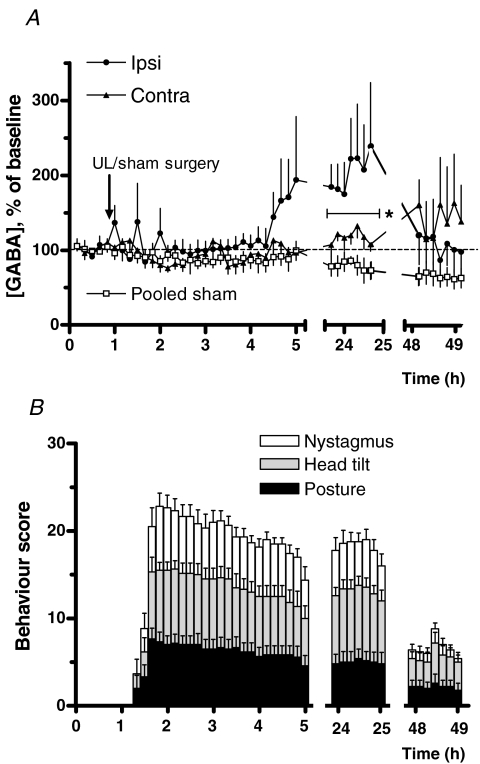
Figure 4. GABA release in the ipsi-lesional and contra-lesional MVN during vestibular compensation
A, GABA concentrations, in the absence of NNC 711, in microdialysates from the ipsi- and contra-lesional MVNs sampled over 48 h post-UL (n = 6 day 1 post UL, n = 5 days 2–3 post UL). Without GAT1 inhibition, an increase in ipsilesional GABA was only detectable 3–4 h post-UL (compare Fig. 2A and C). A significant effect of side was found in two-way ANOVA (F = 10.38, d.f. = 1, P = 0.0023, *P < 0.05 Bonferroni corrected t test ipsi versus contra). The corresponding microdialysates measurements after a sham surgery procedure (n = 5) showed no difference between sides (two-way ANOVA, F = 0.443, d.f. = 1, P = 0.51). Pooled measurements after sham surgery are indicated by open squares. B, simultaneous behavioural scores for each sampling time. Note the reduction in nystagmus and improvement in postural and head-tilt symptoms on day 2, indicating the progress of vestibular compensation.
Figure 5
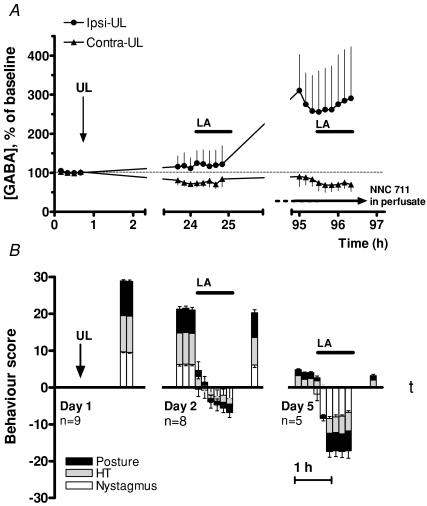
Figure 5. GABA release in the bilateral MVN during Bechterew's phenomenon
A, effects of the reversible inactivation of the intact, contra-lesional labyrinth on GABA concentrations in microdialysis perfusates from ipsi- and contra-lesional MVNs at 24 h and 95 h post-UL. B, simultaneous behavioural scores. The GAT-1 inhibitor NNC 711 was only used in the final sampling session (horizontal arrow). Horizontal bars (LA) indicate the time during which the contra-lesional labyrinth was inactivated by infusion of ropivacain onto the round window. Note that the ropivacain infusion began after the first 30 min in each recording session, allowing three microdialysis samples to be collected before the induction of the Bechterew phenomenon. As in the previous experiment, at 24 h post UL higher GABA concentrations were found in the ipsi-lesional than the contra-lesional MVN even in the absence of NNC 711, but this difference was not significant for the three samples collected before labyrinth inactivation. On day 5 (95 h post UL), in the presence of NNC 711, ipsi-lesional GABA levels before inactivation were significantly higher than contra-lesional levels (two-way ANOVA, F = 22, d.f. = 1, P = 0.0002). Inactivation of the contra-lesional labyrinth caused a complete reversal of the direction of the lateralized symptoms on day 2, and emergence of a vestibular deafferentation syndrome directed towards the inactivated labyrinth on day 5 (Bechterew's phenomenon). The behavioural reversal was not associated with changes in GABA concentrations in the MVN on either side, with or without GAT inhibition (A).
Figure 6
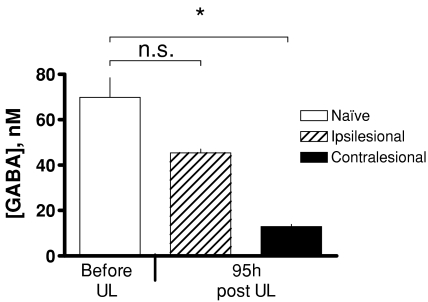
Figure 6. GABA levels in the MVN after 5 days of vestibular compensation
Mean absolute concentrations of GABA (± s.e.m.) measured in the presence of NNC 711, in the MVN of naïve animals (before UL or FX + UL, first three microdialysis samples in Fig. 2A and C) and those measured in the ipsi-lesional and contra-lesional MVN after 95 h of compensation post-UL (data from the first three samples taken in the final recording session in Fig. 5). Ipsi-lesional GABA levels after 95 h of compensation are not significantly different from those in the naïve MVN, while those in the contra-lesional MVN are significantly lower.

References

    1. Yu H, An Y, Jiang H, Jin Q, Jin Y. Changes of amino acid concentrations in the rat medial vestibular nucleus following unilateral labyrinthectomy. Sheng Li Xue Bao. 2007;59:71–78. - PubMed
    1. Bagnall MW, Stevens RJ, du Lac S. Transgenic mouse lines subdivide medial vestibular nucleus neurons into discrete, neurochemically distinct populations. J Neurosci. 2007;27:2318–2330. - PMC - PubMed
    1. Baker D, Xi Z, Shen H, Swanson C, Kalivas P. The origin and neuronal function of in vivo nonsynaptic glutamate. J Neurosci. 2002;22:9134–9141. - PMC - PubMed
    1. Barmack NH, Qian ZY, Kim HJ, Yoshimura J. Activity-dependent distribution of protein kinase C-delta within rat cerebellar Purkinje cells following unilateral labyrinthectomy. Exp Brain Res. 2001;141:6–20. - PubMed
    1. Beraneck M, Hachemaoui M, Idoux E, Ris L, Uno A, Godaux E, Vidal PP, Moore LE, Vibert N. Long-term plasticity of ipsilesional medial vestibular nucleus neurons after unilateral labyrinthectomy. J Neurophysiol. 2003;90:184–203. - PubMed

Publication types

Substances

LinkOut - more resources