


Genetic variants in major histocompatibility complex-linked genes associate with pediatric liver transplant rejection
- PMID: 18639552
- PMCID: PMC2956436
- DOI: 10.1053/j.gastro.2008.05.080
Genetic variants in major histocompatibility complex-linked genes associate with pediatric liver transplant rejection
Abstract
Background & aims: Limited access to large samples precludes genome-wide association studies of rare but complex traits. To localize candidate genes with family-based genome-wide association, a novel exploratory analysis was first tested on 1774 major histocompatibility complex single nucleotide polymorphisms (SNPs) in 240 DNA samples from 80 children with primary liver transplantation and their biologic parents.
Methods: Initially, 57 SNPs with large differences (P < .05) in minor allele frequencies were selected when parents of children with early rejection (rejectors) were compared with parents of nonrejectors.
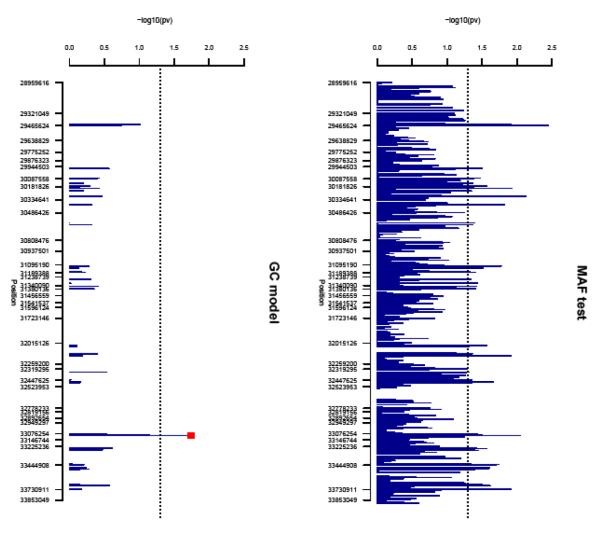
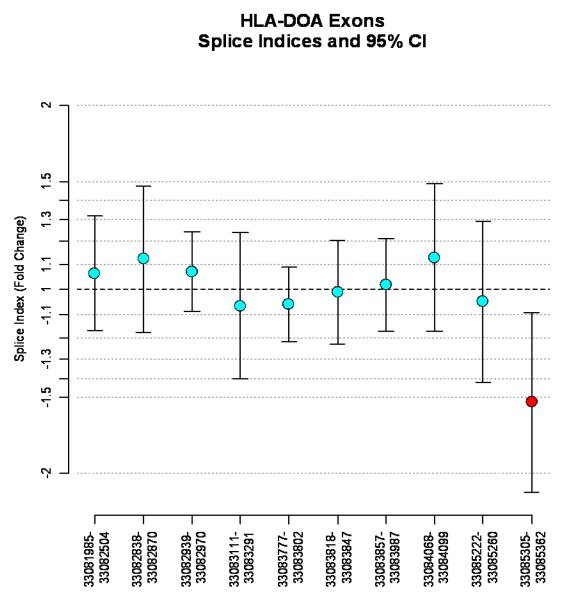
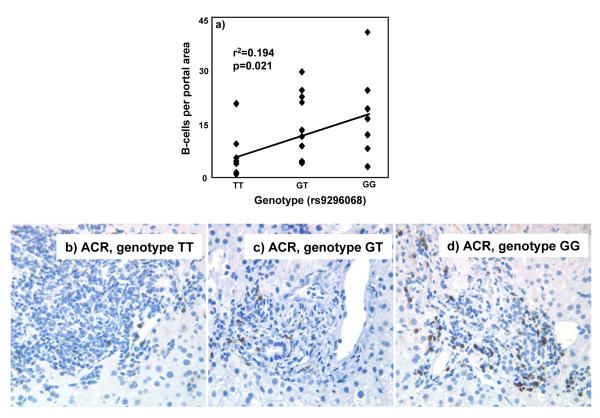
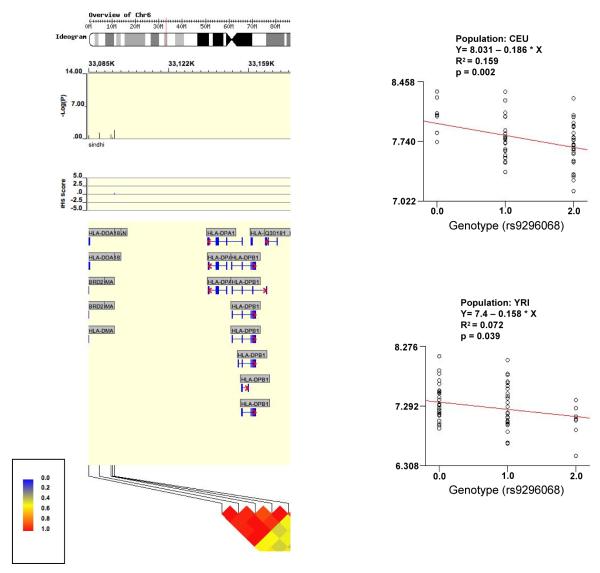
Results: In hypothesis testing of selected SNPs, the gamete competition statistic identified the minor allele G of the SNP rs9296068, near HLA-DOA, as being significantly different (P = .018) between outcome groups in parent-to-child transmission. Subsequent simple association testing confirmed over- and undertransmission of rs9296068 based on the most significant differences between outcome groups, of 1774 SNPs tested (P = .002), and allele (G) frequencies that were greater among rejectors (51.4% vs 36.8%, respectively, P = .015) and lower among nonrejectors (26.8% vs 36.8%, respectively, P = .074) compared with 400 normal control Caucasian children. In early functional validation, rejectors demonstrated significant repression of the first HLA-DOA exon closest to rs9296068. Also, intragraft B lymphocytes, whose antigen-presenting function is selectively inhibited by HLA-DOA were 3-fold more numerous during rejection among rejectors with the risk allele, than those without.
Conclusions: The minor allele of the SNP rs9296068 is significantly associated with liver transplantation rejection and with enhanced B-lymphocyte participation in rejection, likely because of a dysfunctional HLA-DOA gene product.
Figures
References
-
- Martin SR, Atkison P, Anand R, Lindblad AS, SPLIT Research Group Studies of Pediatric Liver Transplantation 2002: patient and graft survival and rejection in pediatric recipients of a first liver transplant in the United States and Canada. Pediatr Transplant. 2004;8(3):273–83. - PubMed
-
- Ireland J, Carlton VEH, Falkowski M, Moorhead M, Tran K, Useche F, Hardenbol P, Erbilgin A, Fitzgerald R, Willis TD, Faham M. Large-scale characterization of public database SNPs causing non-synonymous changes in three ethnic groups. Human Genetics. 2006;119:75–83. - PubMed
-
- Hutchinson IV, Pravica V, Sinnot PJ. Genetic regulation of cytokine synthesis: consequences on acute and chronic organ allograft rejection. Graft. 1998;1:15.
Publication types
MeSH terms
Substances
Grants and funding
LinkOut - more resources
Full Text Sources
Medical
Molecular Biology Databases
Research Materials
