


Antiangiogenic effects of noscapine enhance radioresponse for GL261 tumors
- PMID: 18640497
- PMCID: PMC2572218
- DOI: 10.1016/j.ijrobp.2008.04.020
Antiangiogenic effects of noscapine enhance radioresponse for GL261 tumors
Erratum in
- Int J Radiat Oncol Biol Phys. 2009 Jun 1;74(2):655-6
Abstract
Purpose: To assess the effects of noscapine, a tubulin-binding drug, in combination with radiation in a murine glioma model.
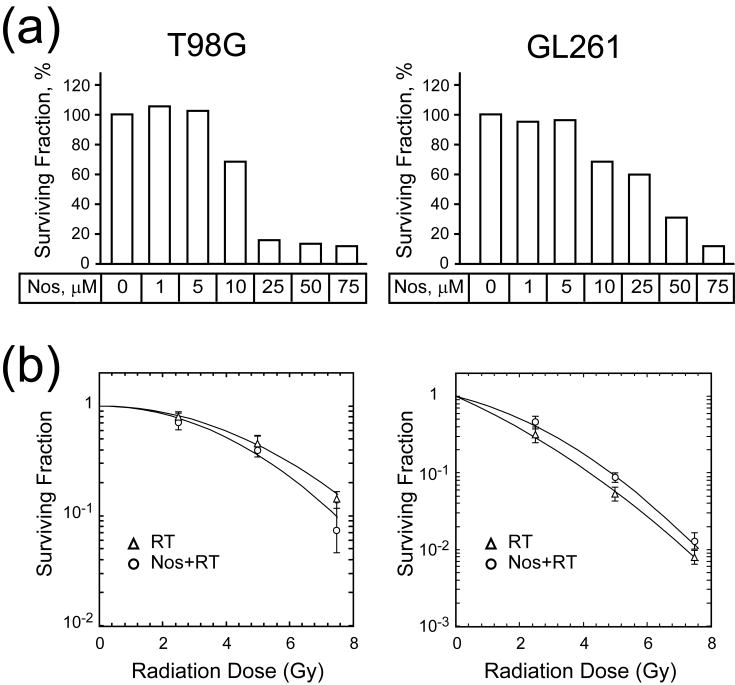
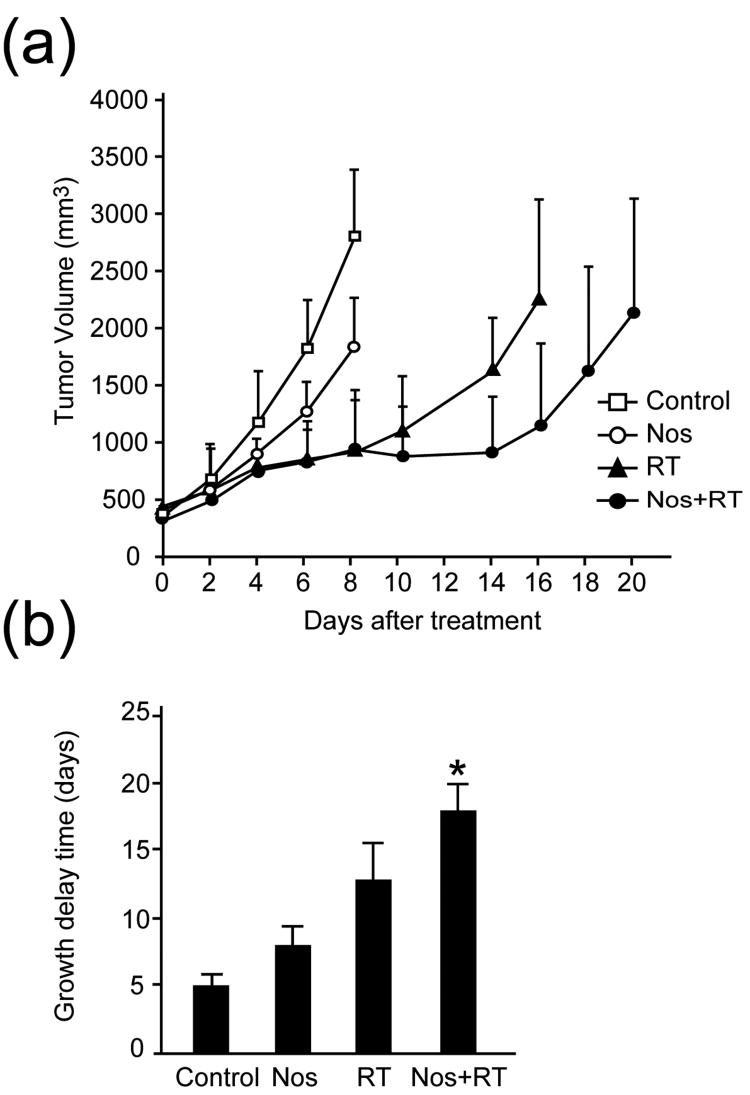
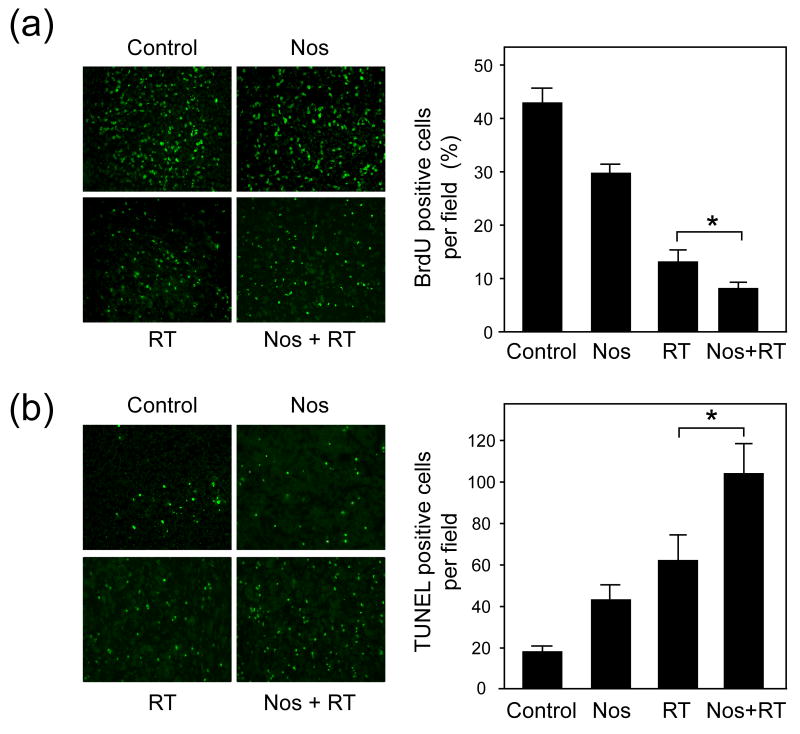
Methods and materials: The human T98G and murine GL261 glioma cell lines treated with noscapine, radiation, or both were assayed for clonogenic survival. Mice with established GL261 hind limb tumors were treated with noscapine, radiation, or both to evaluate the effect of noscapine on radioresponse. In a separate experiment with the same treatment groups, 7 days after radiation, tumors were resected and immunostained to measure proliferation rate, apoptosis, and angiogenic activity.
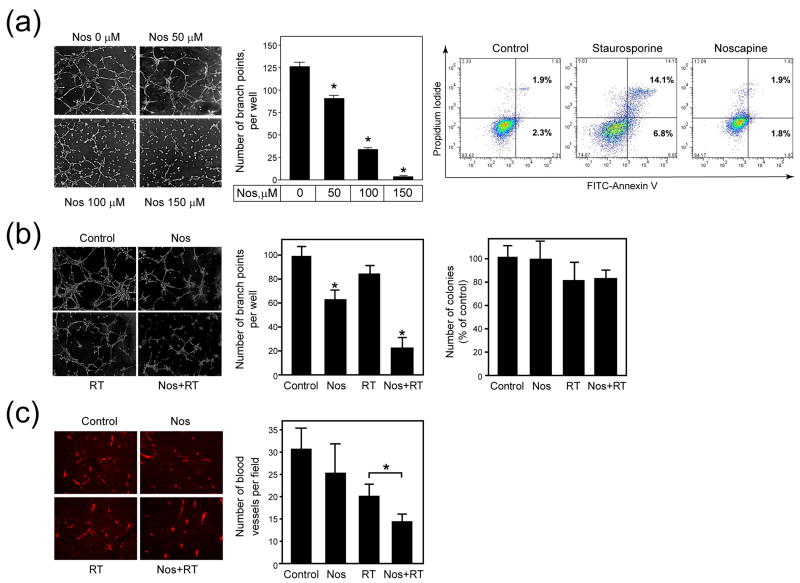
Results: Noscapine reduced clonogenic survival without enhancement of radiosensitivity in vitro. Noscapine combined with radiation significantly increased tumor growth delay: 5, 8, 13, and 18 days for control, noscapine alone, radiation alone, and the combination treatment, respectively (p < 0.001). To assess the effect of the combination of noscapine plus radiation on the tumor vasculature, tubule formation by the murine endothelial 2H11 cells was tested. Noscapine with radiation significantly inhibited tubule formation compared with radiation alone. By immunohistochemistry, tumors treated with the combination of noscapine plus radiation showed a decrease in BrdU incorporation, an increase in apoptosis by terminal deoxynucleotidyl transferase-mediated deoxyuridine triphosphate nick end labeling, and a decrease in tumor vessel density compared with tumors treated with radiation alone.
Conclusion: Noscapine enhanced the sensitivity of GL261 glioma tumors to radiation, resulting in a significant tumor growth delay. An antiangiogenic mechanism contributed to the effect. These findings are clinically relevant, particularly in view of the mild toxicity profile of this drug.
Conflict of interest statement
Conflict of interest: none.
Figures
References
-
- Brem S, Brem H, Folkman J, et al. Prolonged tumor dormancy by prevention of neovascularization in the vitreous. Cancer Res. 1976;36:2807–12. - PubMed
-
- Hurwitz H, Fehrenbacher L, Novotny W, et al. Bevacizumab plus irinotecan, fluorouracil, and leucovorin for metastatic colorectal cancer. N Engl J Med. 2004;350:2335–42. - PubMed
-
- Reardon DA, Wen PY. Therapeutic advances in the treatment of glioblastoma: Rationale and potential role of targeted agents. Oncologist. 2006;11:152–64. - PubMed
-
- Teicher BA, Dupuis N, Kusomoto T, et al. Antiangiogenic agents can increase tumor oxygenation and response to radiation therapy. Rad Oncol Invest. 1995;2:269–76.
-
- Teicher BA. A systems approach to cancer therapy. (Antioncogenics + standard cytotoxics-->mechanism(s) of interaction) Cancer Metastasis Rev. 1996a;15:247–72. - PubMed
Publication types
MeSH terms
Substances
Grants and funding
LinkOut - more resources
Full Text Sources
