


Psychotherapy mediated by remote communication technologies: a meta-analytic review
- PMID: 18647396
- PMCID: PMC2496903
- DOI: 10.1186/1471-244X-8-60
Psychotherapy mediated by remote communication technologies: a meta-analytic review
Abstract
Background: Access to psychotherapy is limited by psychopathology (e.g. agoraphobia), physical disability, occupational or social constraints and/or residency in under-served areas. For these populations, interventions delivered via remote communication technologies (e.g. telephone, internet) may be more appropriate. However, there are concerns that such delivery may influence the therapeutic relationship and thus reduce therapy effectiveness. This review aimed to determine the clinical effectiveness of remotely communicated, therapist-delivered psychotherapy.
Methods: Systematic review (including electronic database searching and correspondence with authors) of randomised trials of individual remote psychotherapy. Electronic databases searched included MEDLINE (1966-2006), PsycInfo (1967-2006), EMBASE (1980-2006) and CINAHL databases (1982-2006). The Cochrane Central Register of Controlled Trials (CENTRAL) and the Cochrane Collaboration Depression, Anxiety and Neurosis Controlled Trials Register (CCDAN-CTR). All searches were conducted to include studies with a publication date to July 2006.
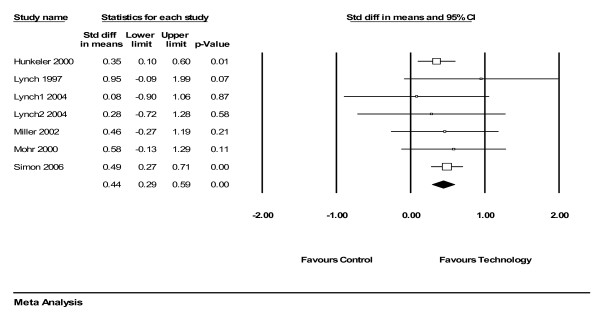
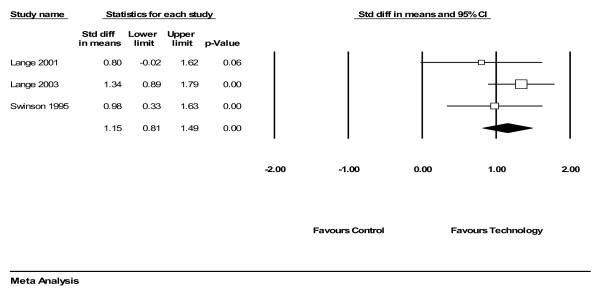
Results: Thirteen studies were identified, ten assessing psychotherapy by telephone, two by internet and one by videoconference. Pooled effect sizes for remote therapy versus control conditions were 0.44 for depression (95%CI 0.29 to 0.59, 7 comparisons, n = 726) and 1.15 for anxiety-related disorders (95%CI 0.81 to 1.49, 3 comparisons, n = 168). There were few comparisons of remote versus face-to-face psychotherapy.
Conclusion: Remote therapy has the potential to overcome some of the barriers to conventional psychological therapy services. Telephone-based interventions are a particularly popular research focus and as a means of therapeutic communication may confer specific advantages in terms of their widespread availability and ease of operation. However, the available evidence is limited in quantity and quality. More rigorous trials are required to confirm these preliminary estimates of effectiveness. Future research priorities should include overcoming the methodological shortcomings of published work by conducting large-scale trials that incorporate both clinical outcome and more process-orientated measures.
Figures
References
-
- Murray CJL, Lopez AD, (Eds) The global burden of disease and injury series, A comprehensive assessment of mortality and disability from diseases, injuries and risk factors in 1990 and projected to 2002. Vol. 1. Cambridge, MA: Harvard School of Public Health on behalf of the World Health Organization and the World Bank: Harvard University Press; 1996.
-
- American Psychiatric Association (APA) Practice guidelines for major depressive disorder in adults. Am J Psychiatry. 1993;150:S1–S26. - PubMed
-
- Department of Veteran Affairs (DVA) Clinical guideline for major depressive disorder. Washington, DC: Veterans Health Administration; 1993.
-
- Depression Guideline Panel . Depression in primary care: treatment of major depression. Rockville, Md.: US Dept. of Health and Human Services, Public Health Service, Agency for Health Care Policy and Research; 1993. - PubMed
-
- American Psychiatric Association (APA) Practice guideline for the treatment of patients with panic disorder. Am J Psychiatry. 1998;155:1–34. - PubMed
Publication types
MeSH terms
Grants and funding
LinkOut - more resources
Full Text Sources
Medical
