


Synchronized brain activity and neurocognitive function in patients with low-grade glioma: a magnetoencephalography study
- PMID: 18650489
- PMCID: PMC2666250
- DOI: 10.1215/15228517-2008-034
Synchronized brain activity and neurocognitive function in patients with low-grade glioma: a magnetoencephalography study
Abstract
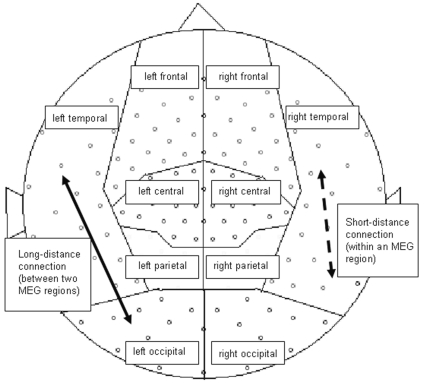
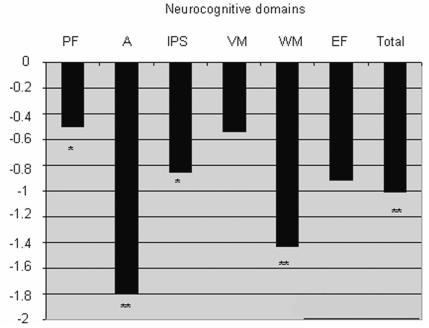
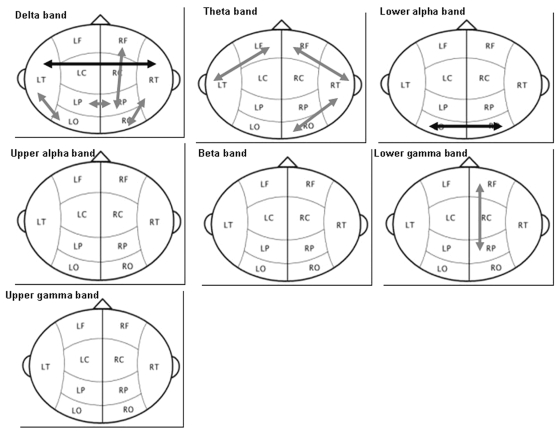
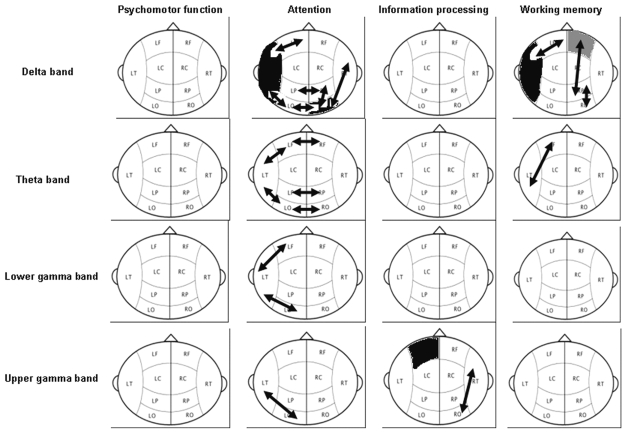
We investigated the mechanisms underlying neurocognitive dysfunction in patients with low-grade glioma (LGG) by relating functional connectivity revealed by magnetoencephalography to neurocognitive function. We administered a battery of standardized neurocognitive tests measuring six neurocognitive domains to a group of 17 LGG patients and 17 healthy controls, matched for age, sex, and educational level. Magnetoencephalography recordings were conducted during an eyes-closed "resting state," and synchronization likelihood (a measure of statistical correlation between signals) was computed from the delta to gamma frequency bands to assess functional connectivity between different brain areas. We found that, compared with healthy controls, LGG patients performed more poorly in psychomotor function, attention, information processing, and working memory. LGG patients also had significantly higher long-distance synchronization scores in the delta, theta, and lower gamma frequency bands than did controls. In contrast, patients displayed a decline in synchronization likelihood in the lower alpha frequency band. Within the delta, theta, and lower and upper gamma bands, increasing short- and long-distance connectivity was associated with poorer neurocognitive functioning. In summary, LGG patients showed a complex overall pattern of differences in functional resting-state connectivity compared with healthy controls. The significant correlations between neurocognitive performance and functional connectivity in various frequencies and across multiple brain areas suggest that the observed neurocognitive deficits in these patients can possibly be attributed to differences in functional connectivity due to tumor and/or treatment.
Figures

References
-
- Shaw EG, Scheithauer BW, O’Fallon JR. Management of supratentorial low-grade gliomas. Oncology. 1993;7(7):97–104. - PubMed
-
- Leighton C, Fisher B, Bauman G, et al. Supratentorial low-grade glioma in adults: an analysis of prognostic factors and timing of radiation. J Clin Oncol. 1997;15(4):1294–1301. - PubMed
-
- Zülch KJ. Histological Typing of Tumors of the Central Nervous System. Geneva: World Health Organization; 1979.
-
- Shaw EG, Scheithauer BW, Dinapoli RP. Low-grade hemispheric astrocytomas. In: Black PM, Loeffler JS, editors. Cancer of the Nervous System. Cambridge: Blackwell Science; 1997. pp. 441–463.
-
- Olson JD, Riedel E, DeAngelis LM. Long-term outcome of low-grade oligodendroglioma and mixed glioma. Neurology. 2000;54(7):1442–1448. - PubMed
Publication types
MeSH terms
LinkOut - more resources
Full Text Sources
Medical
