Chronic middle cerebral artery occlusion: a hemodynamic and metabolic study with positron-emission tomography
- PMID: 18653680
- PMCID: PMC8118924
- DOI: 10.3174/ajnr.A1234
Chronic middle cerebral artery occlusion: a hemodynamic and metabolic study with positron-emission tomography
Abstract
Background and purpose: Chronic middle cerebral artery (MCA) occlusion is more common than generally thought. It is important to assess the cerebral hemodynamic status in patients with this chronic condition. We investigated the cerebral hemodynamic and metabolic disturbances in these patients in relation to the development of the collateral vasculature.
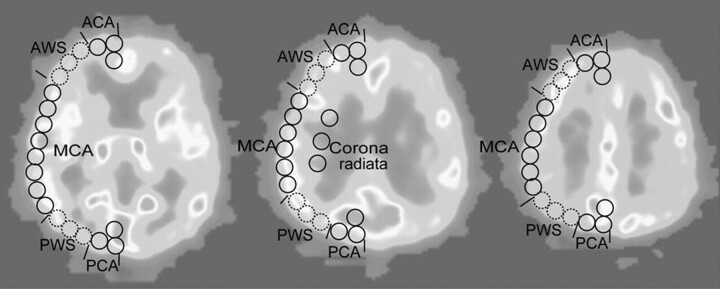
Materials and methods: We studied 13 patients with chronic unilateral MCA occlusion who had a minor or no stroke by using positron-emission tomography (PET). PET was performed by the oxygen 15 ((15)O) gas steady-state inhalation method. The intracranial arteries were evaluated by digital subtraction angiography. We divided the patients into 2 subgroups according to whether they had a normal or increased oxygen extraction fraction (OEF) in the occluded MCA territory and compared the 2 groups.
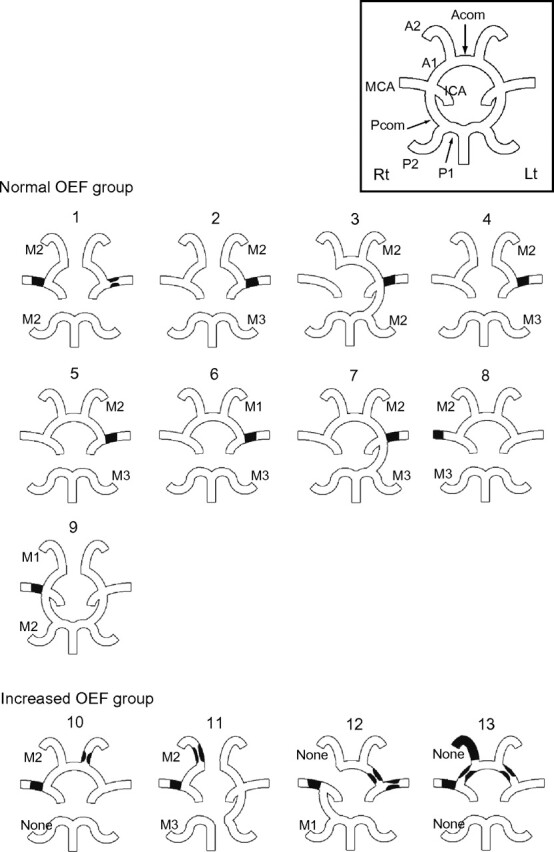
Results: Of the 13 patients, 9 were classified into the normal OEF and 4 were classified into the increased OEF group. In the increased OEF group, the mean OEF values were also increased in the territories of the ipsilateral anterior cerebral artery, ipsilateral posterior cerebral artery, and contralateral MCA. The patients in the increased OEF group had more than 1 steno-occlusive lesion in the major intracranial arteries (P = .008). Three of the 4 patients in the increased OEF group also had vascular lesions in the collateral pathways to the MCA territory.
Conclusion: Most patients with chronic MCA occlusion did not show severe hemodynamic impairment. Those with increased OEF tended to have other areas of severe hemodynamic impairment and other vascular lesions, especially in the collateral pathways.
Figures
References
-
- Olsen TS, Skriver EB, Herning M. Cause of cerebral infarction in the carotid territory: its relation to the size and the location of the infarct and to the underlying vascular lesion. Stroke 1985;16:459–66 - PubMed
-
- Zanette EM, Roberti C, Mancini G, et al. Spontaneous middle cerebral artery reperfusion in ischemic stroke: a follow-up study with transcranial Doppler. Stroke 1995;26:430–33 - PubMed
-
- Lhermitte F, Gautier JC, Derouesne C. Nature of occlusions of the middle cerebral artery. Neurology 1970;20:82–88 - PubMed
-
- Fisher CM. Cerebral ischemia: less familiar types. Clin Neurosurg 1971;18:267–336 - PubMed
Publication types
MeSH terms
Substances
LinkOut - more resources
Full Text Sources