


Role of mesenchymal stromal cells in solid organ transplantation
- PMID: 18656340
- PMCID: PMC2576746
- DOI: 10.1016/j.trre.2008.05.002
Role of mesenchymal stromal cells in solid organ transplantation
Abstract
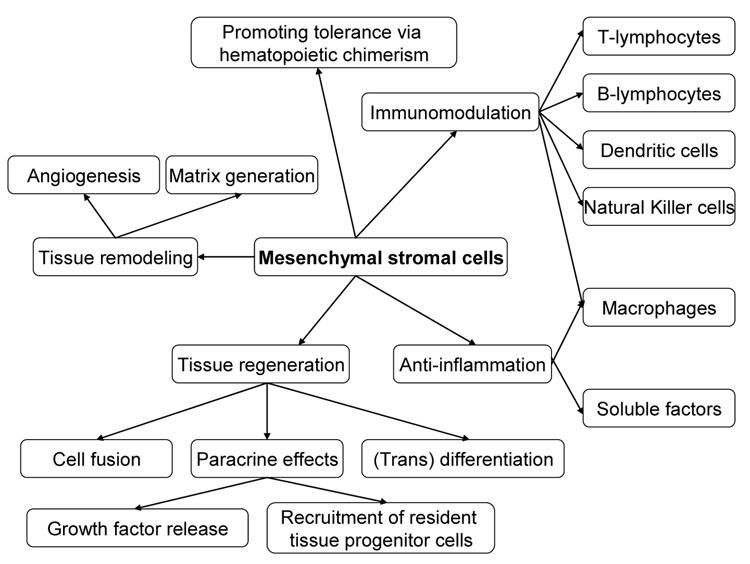
Mesenchymal stromal cells (MSCs) originally isolated from bone marrow have been derived from almost every tissue in the body. These multipotent cells can be differentiated in vitro and in vivo into various cell types of mesenchymal origin, such as bone, fat, and cartilage. Furthermore, under some experimental conditions, these cells can differentiate into a wider variety of cell types. Upon systemic administration, ex vivo expanded MSCs preferentially home to damaged tissues and participate in regeneration processes through their diverse biological properties. In vitro and in vivo data suggest that MSCs have low inherent immunogenicity and modulate/suppress immunologic responses through interactions with different immune cells. Ease of isolation and ex vivo expansion of MSCs, combined with their intriguing differentiation and immunomodulatory potential, and their impressive record of safety in clinical trials make these cells prime candidates for cellular therapy. Mesenchymal stromal cells derived from bone marrow are currently being evaluated for a wide range of clinical applications including for treatment of immune dysregulation disorders such as acute graft-versus-host disease after allogeneic hematopoietic stem cell transplantation. In the future, MSCs might potentially provide novel therapeutic options for treatment/prevention of rejection and/or repair of organ allografts through their multifaceted properties.
Figures
References
-
- Friedenstein AJ, Petrakova KV, Kurolesova AI, Frolova GP. Heterotopic of bone marrow.Analysis of precursor cells for osteogenic and hematopoietic tissues. Transplantation. 1968;6(2):230–247. - PubMed
-
- Dexter TM. Stromal cell associated haemopoiesis. J Cell Physiol Suppl. 1982;1:87–94. - PubMed
-
- Tavassoli M, Friedenstein A. Hemopoietic stromal microenvironment. Am J Hematol. 1983;15(2):195–203. - PubMed
-
- Caplan AI. Mesenchymal stem cells. J.Orthop.Res. 1991;9(5):641–650. - PubMed
-
- Friedenstein AJ, Chailakhjan RK, Lalykina KS. The development of fibroblast colonies in monolayer cultures of guinea-pig bone marrow and spleen cells. Cell Tissue Kinet. 1970;3(4):393–403. - PubMed
Publication types
MeSH terms
Grants and funding
LinkOut - more resources
Full Text Sources
Other Literature Sources
Medical
