


Double-membrane gap junction internalization requires the clathrin-mediated endocytic machinery
- PMID: 18656476
- PMCID: PMC2552409
- DOI: 10.1016/j.febslet.2008.07.024
Double-membrane gap junction internalization requires the clathrin-mediated endocytic machinery
Abstract
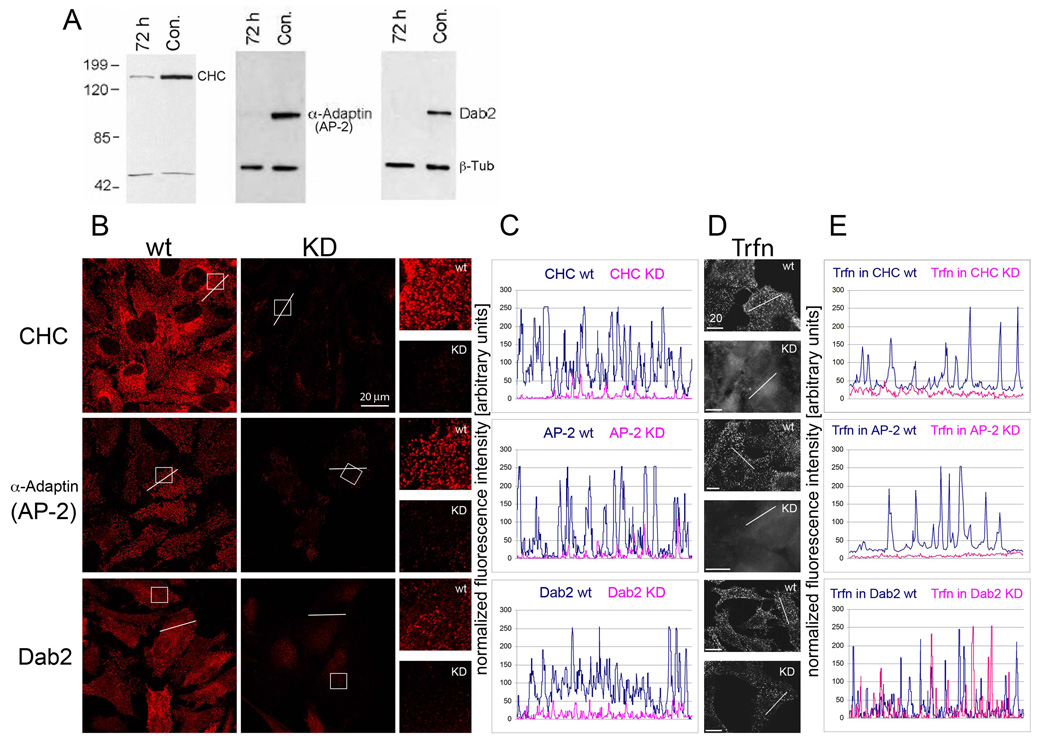
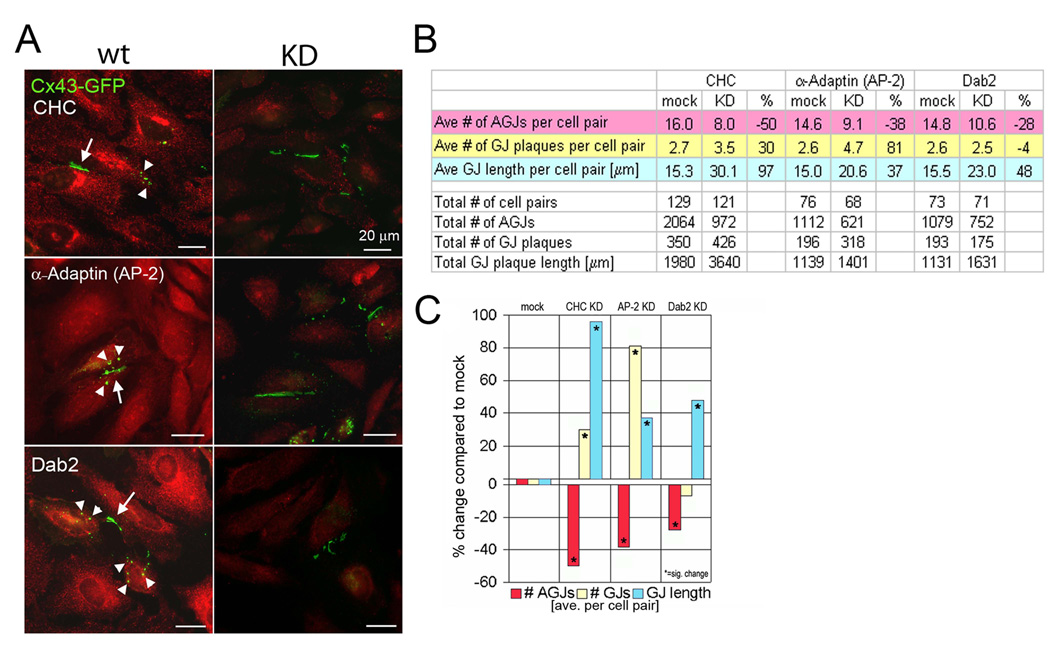
Direct cell-cell communication mediated by plasma membrane-spanning gap junction (GJ) channels is vital to all aspects of cellular life. Obviously, GJ intercellular communication (GJIC) requires precise regulation, and it is known that controlled biosynthesis and degradation, and channel opening and closing (gating) are exploited. We discovered that cells internalize GJs in response to various stimuli. Here, we report that GJ internalization is a clathrin-mediated endocytic process that utilizes the vesicle-coat protein clathrin, the adaptor proteins adaptor protein complex 2 and disabled 2, and the GTPase dynamin. To our knowledge, we are first to report that the endocytic clathrin machinery can internalize double-membrane vesicles into cells.
Figures

References
-
- Fotin A, Cheng Y, Sliz P, Grigorieff N, Harrison SC, Kirchhausen T, Walz T. Molecular model for a complete clathrin lattice from electron cryomicroscopy. Nature. 2004;432:573–579. - PubMed
-
- Veiga E, Cossart P. Listeria hijacks the clathrin-dependent endocytic machinery to invade mammalian cells. Nat. Cell Biol. 2005;7:894–900. - PubMed
Publication types
MeSH terms
Substances
Grants and funding
LinkOut - more resources
Full Text Sources
Miscellaneous
