


Comparative outcomes study using the volar locking plating system for distal radius fractures in both young adults and adults older than 60 years
- PMID: 18656749
- PMCID: PMC4386628
- DOI: 10.1016/j.jhsa.2008.02.016
Comparative outcomes study using the volar locking plating system for distal radius fractures in both young adults and adults older than 60 years
Abstract
Purpose: Despite the high prevalence and impact of distal radius fractures (DRFs) on older patients, the currently available literature regarding DRFs in older adults lacks adequate comparative treatment data. The purpose of this prospective, controlled outcomes study is to compare outcomes using the volar locking plating system (VLPS) for DRFs in both older and younger adults and to assert the eligibility of older patients for surgical management with the VLPS.
Methods: Consecutive, eligible patients were enrolled into our prospective study over a 2-year period on the basis of strict inclusion and exclusion criteria. Subjects were entered into 2 cohorts based on age: 20-40 years and >60 years. Patient outcomes and complication rates were evaluated at 3, 6, and 12 months after surgery. Outcome measures included the Michigan Hand Outcomes Questionnaire (MHQ), grip strength, active wrist and forearm range of motion, the Jebsen-Taylor test, and radiographic parameters.
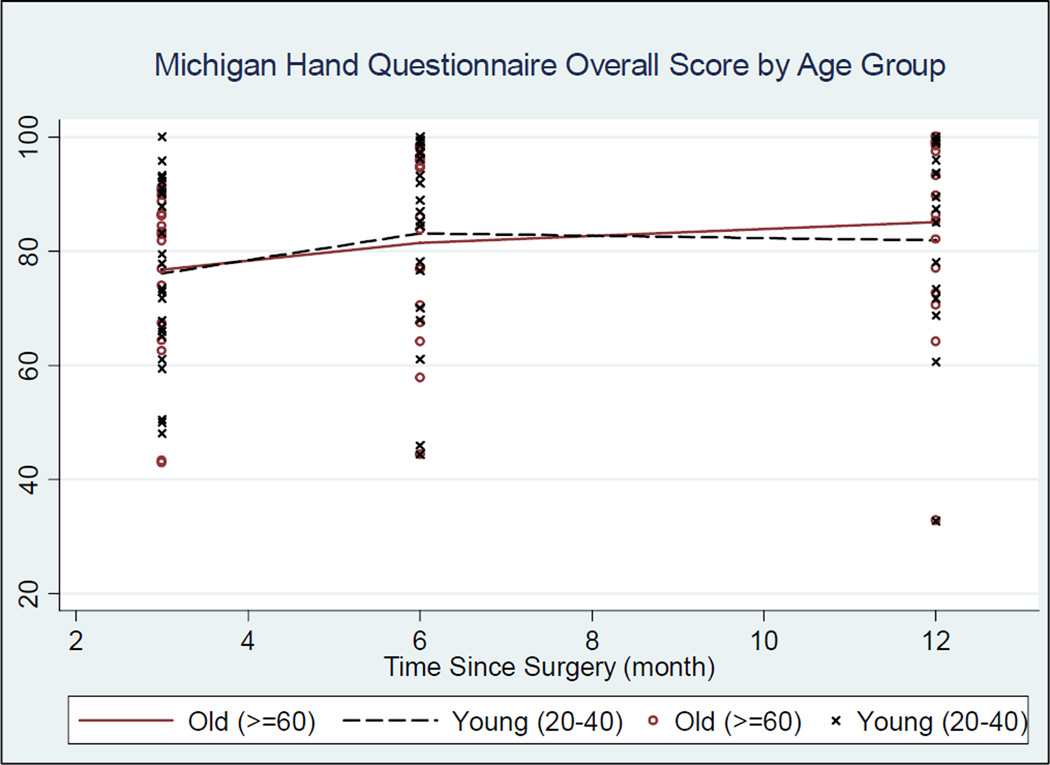
Results: Fifty-five patients (30 young and 25 older adults) with unilateral, inadequately reduced DRFs were enrolled and received surgical treatment with the VLPS. We observed no statistically significant difference in any of the outcomes for all 3 follow-up periods, except the Jebsen-Taylor test, which displayed a trend toward a worse outcome in the older-age cohort. Whereas older patients continued to improve throughout their 12-month postoperative visits, younger patients achieved their maximum recovery during the 6-month follow-up period, suggesting different recovery patterns. At the 12-month assessment, older patients were able to achieve a higher mean MHQ score than their younger counterparts (normalized mean: 85% and 82%, respectively). Complication rates were similar between the 2 groups for all 3 time periods, with most occurring on or before the 3-month postoperative visit.
Conclusions: This study indicates that the VLPS is successful in managing DRFs in older patients without increased complications compared to younger patients. For older patients without prohibitive surgical risks, internal fixation using the VLPS yields comparable outcomes to younger patients. However, these conclusions do not necessarily apply to other surgical techniques used to manage DRFs in older adults.
Type of study/level of evidence: Therapeutic II.
Figures
References
-
- Weinstein JN, Birkmeyer JD, editors. The Dartmouth Atlas of Musculoskeletal Health Care. Chicago, IL: American Hospital Publishing; 2000. - PubMed
-
- Cummings SR, Black DM, Rubin SM. Lifetime risks of hip, Colles’, or vertebral fracture and coronary heart disease among white postmenopausal women. Arch Intern Med. 1989;149:2445–2448. - PubMed
-
- Ray NF, Chan JK, Thamer M, Melton LJ., III Medical expenditures for the treatment of osteoporotic fractures in the United States in 1995: report from the National Osteoporosis Foundation. J Bone Miner Res. 1997;12:24–35. - PubMed
-
- Federal Interagency Forum on Aging-Related Statistics. [Accessed 2006 Aug 31];Older Americans 2000: Key Indicators of Well-Being [Web Page] Available at: http://www.agingstats.gov/chartbook2000/population.html.
-
- Smith DW, Henry MH. Volar fixed-angle plating of the distal radius. J Am Acad Orthop Surg. 2005;13:28–36. - PubMed
Publication types
MeSH terms
Grants and funding
LinkOut - more resources
Full Text Sources
Medical
Research Materials
