


pH-controlled drug loading and release from biodegradable microcapsules
- PMID: 18657478
- PMCID: PMC3699869
- DOI: 10.1016/j.nano.2008.06.004
pH-controlled drug loading and release from biodegradable microcapsules
Abstract
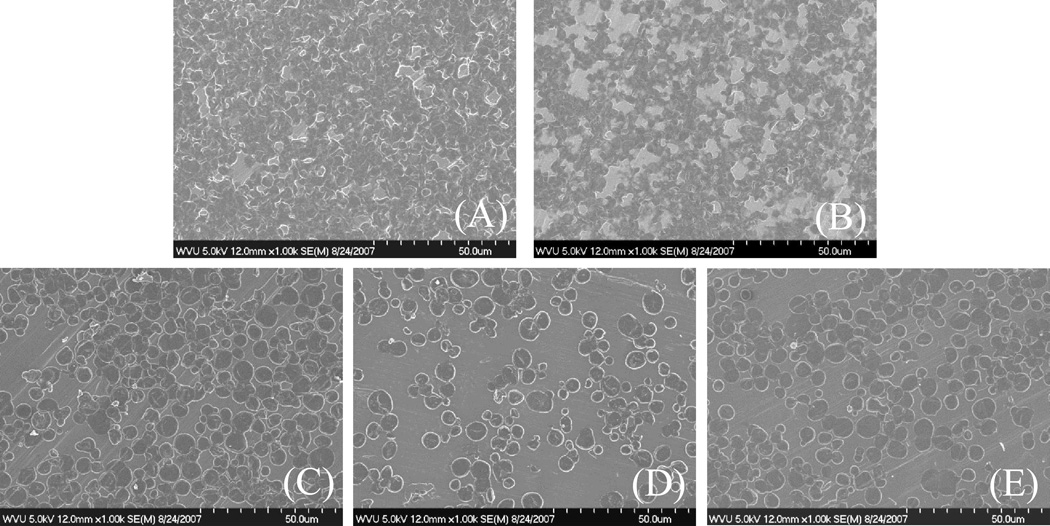
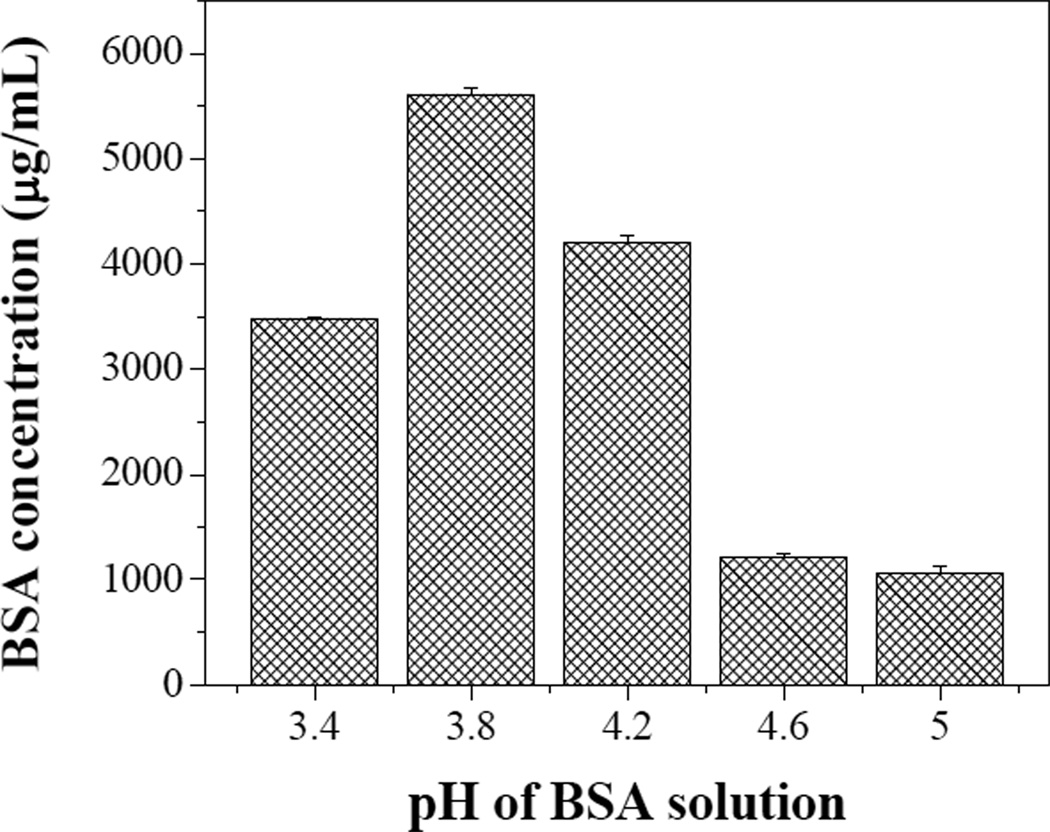
Microcapsules made of biopolymers are of both scientific and technological interest and have many potential applications in medicine, including their use as controlled drug delivery devices. The present study makes use of the electrostatic interaction between polycations and polyanions to form a multilayered microcapsule shell and also to control the loading and release of charged drug molecules inside the microcapsule. Micron-sized calcium carbonate (CaCO3) particles were synthesized and integrated with chondroitin sulfate (CS) through a reaction between sodium carbonate and calcium nitrate tetrahydrate solutions suspended with CS macromolecules. Oppositely charged biopolymers were alternately deposited onto the synthesized particles using electrostatic layer-by-layer self-assembly, and glutaraldehyde was introduced to cross-link the multilayered shell structure. Microcapsules integrated with CS inside the multilayered shells were obtained after decomposition of the CaCO3 templates. The integration of a matrix (i.e., CS) permitted the subsequent selective control of drug loading and release. The CS-integrated microcapsules were loaded with a model drug, bovine serum albumin labeled with fluorescein isothiocyanate (FITC-BSA), and it was shown that pH was an effective means of controlling the loading and release of FITC-BSA. Such CS-integrated microcapsules may be used for controlled localized drug delivery as biodegradable devices, which have advantages in reducing systemic side effects and increasing drug efficacy.
Conflict of interest statement
No commercial associations, current and within the past five years, that might pose a potential, perceived or real conflict of interest, were reported by the authors of this paper.
Figures
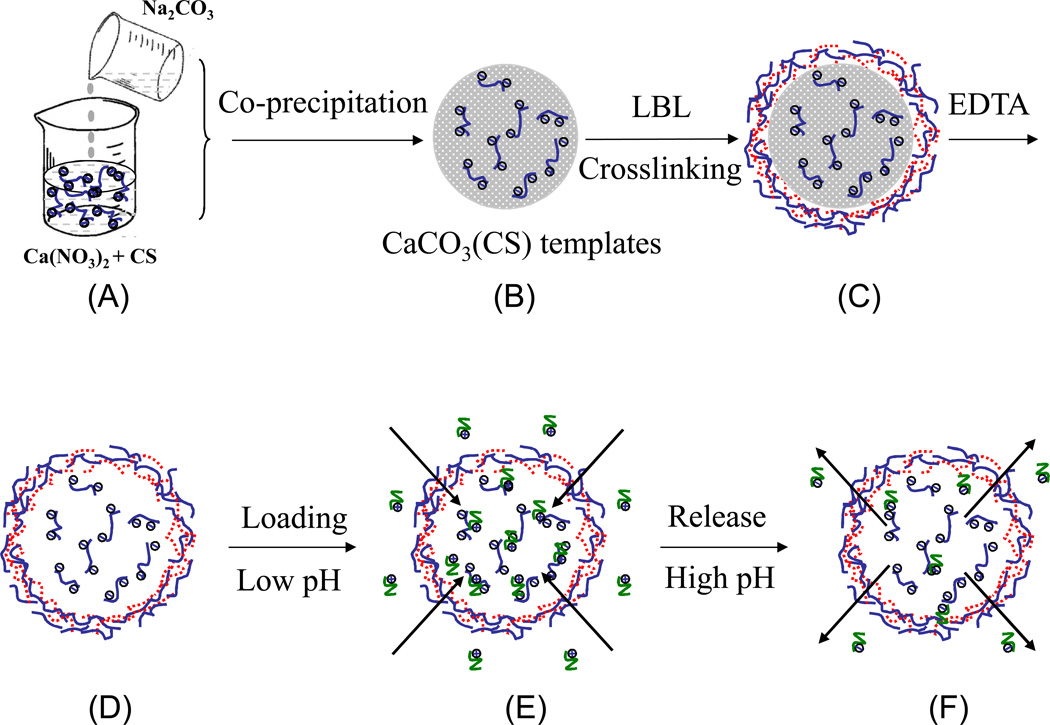
 CS,
CS,  crosslinked multilayered shell,
  BSA. The net charge of BSA is positive below its pI (pH 5.0) and negative above its pI.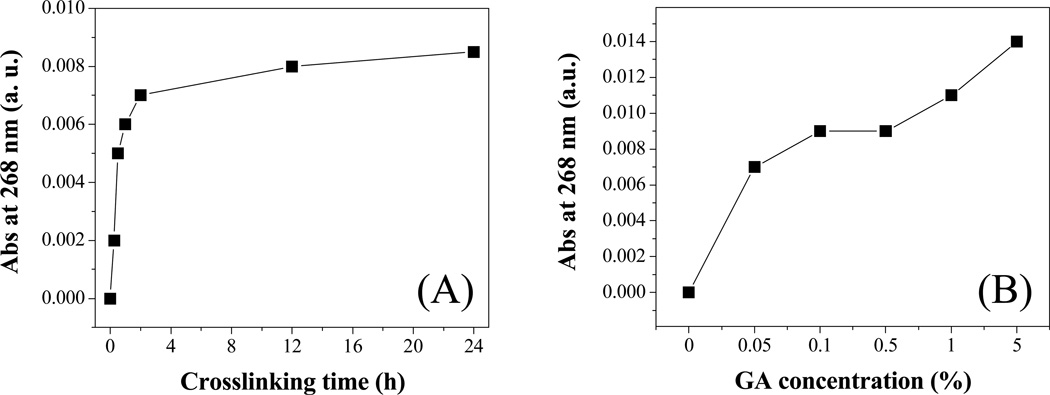
References
-
- Langer R, Tirrell DA. Designing materials for biology and medicine. Nature. 2004;428(6982):487–492. - PubMed
-
- Caruso F, Caruso R, Möhwald H. Nanoengineering of inorganic and hybrid hollow spheres by colloidal templating. Science. 1998;282:1111–1114. - PubMed
-
- Donath E, Sukhorukov GB, Caruso F, Davis SA, Möhwald H. Novel hollow polymer shells by colloid-templated assembly of polyelectrolytes. Angew Chem Int Ed. 1998;37:2202–2205. - PubMed
-
- De Geest BG, Sanders NN, Sukhorukov GB, Demeester J, De Smedt SC. Release mechanisms for polyelectrolyte capsules. Chem Soc Rev. 2007;36(4):636–649. - PubMed
-
- Peyratout CS, Dähne L. Tailor-made polyelectrolyte microcapsules: From multilayers to smart containers. Angew Chem Int Ed. 2004;43(29):3762–3783. - PubMed
Publication types
MeSH terms
Substances
Grants and funding
LinkOut - more resources
Full Text Sources
Other Literature Sources
