


Antibiotic use in post-adenotonsillectomy morbidity: a randomized prospective study
- PMID: 18661005
- PMCID: PMC9442118
- DOI: 10.1016/s1808-8694(15)30565-6
Antibiotic use in post-adenotonsillectomy morbidity: a randomized prospective study
Abstract
Tonsillectomy with or without adenoidectomy still is one of the most commonly performed surgical procedures in the world, mostly in the pediatric population.
Aim: to study the impact of amoxicillin for 7 days in post-adenotonsillectomy recovery, comparing results with a control group.
Study type: prospective, randomized, controlled study with 120 patients.
Patients and methods: the patients were randomized according to surgery time to receive 7 days of amoxicillin associated with pain killers, or analgesic alone. During the first week of postoperative, we assessed the level of pain, oral intake acceptance, nausea and vomits, fever and return to daily activities.
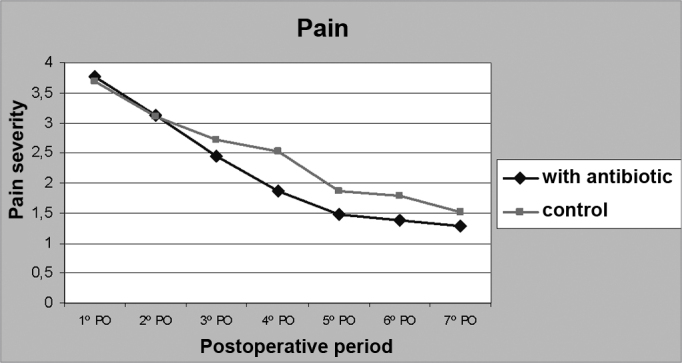
Results: It was only in the fourth post-operative day that the group receiving antibiotic agents showed a statistically significant difference as far as pain is concerned. There was no difference between the two groups for other data analyzed.
Conclusion: considering the results from our study and reviewing the literature on the use of antibiotic agents, we agree that there is no improvement in patient recovery after adenotonsillectomy with the use of amoxicillin for 7 days in the postoperative.
Figures
References
-
- Burkart CM, Steward DL. Antibiotics for Reduction of Posttonsilectomy Morbidity: A Meta-Analysis. Laryngoscope. 2005;115:997–1002. - PubMed
-
- Jones J, Handler SD, Guttenplan M, Potsic W, Weltmore R, Tom LWC, Marsh R. The Efficacy of Cefaclor vs Amoxicillin on Recovery After Tonsillectomy in Chindren. Arch Otolaryngol Head Neck Surg. 1990;116:590–593. - PubMed
-
- Vieira FMJ, Diniz FL, Figueiredo CR, Weckx LLM. Hemorragia na adenoidectomia e/ou amigdalectomia: estudo de 359 casos. Rev Bras Otorrininolaringol. 2003;69(3):338–341.
-
- Telian SA, Handler SD, Fleisher GR, Baranak CC, Weltmore RF, Potsic WP. The Effect of Antibiotic Therapy on Recovery After Tonsillectomy in Children. Arch Otolaryngol Head Neck Surg. 1986;112:610–615. - PubMed
-
- Al-Kindy SA. Do antibiotics decrease post-tonsillectomy morbidity? Saudi Med J. 2002;23:705–707. - PubMed
Uncited Reference
-
- Ranjit S, Brett RH, Lu PKS, Aw CY. The incidence and management of post-tonsilectomy haemorrhage: a Singaporean experience. Singapore Med J. 1999;40:622–626. - PubMed
Publication types
MeSH terms
Substances
LinkOut - more resources
Full Text Sources
Medical
