


Hepatitis E and pregnancy: understanding the pathogenesis
- PMID: 18662274
- PMCID: PMC2575020
- DOI: 10.1111/j.1478-3231.2008.01840.x
Hepatitis E and pregnancy: understanding the pathogenesis
Abstract
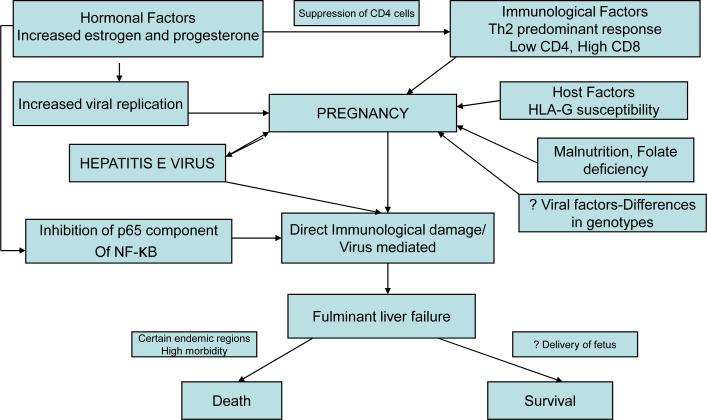
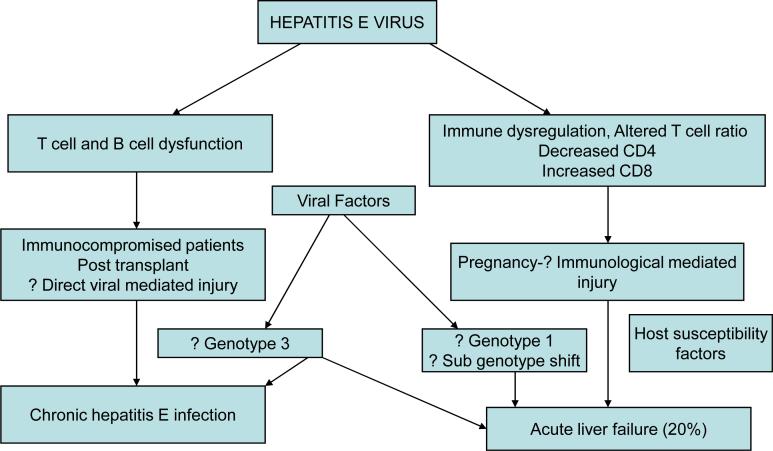
Hepatitis E virus (HEV) is a single-stranded RNA virus that causes large-scale epidemics of acute viral hepatitis, particularly in developing countries. In men and non-pregnant women, the disease is usually self-limited and has a case-fatality rate of less than <0.1%. However, in pregnant women, particularly from certain geographical areas in India, HEV infection is more severe, often leading to fulminant hepatic failure and death in a significant proportion of patients. In contrast, reports from Egypt, Europe and the USA have shown that the course and severity of viral hepatitis during pregnancy is not different from that in non-pregnant women. The reasons for this geographical difference are not clear. The high mortality rate in pregnancy has been thought to be secondary to the associated hormonal (oestrogen and progesterone) changes during pregnancy and consequent immunological changes. These immunological changes include downregulation of the p65 component of nuclear factor (NF-kappaB) with a predominant T-helper type 2 (Th2) bias in the T-cell response along with host susceptibility factors, mediated by human leucocyte antigen expression. Thus far, researchers were unable to explain the high HEV morbidity in pregnancy, why it is different from other hepatitis viruses such as hepatitis A with similar epidemiological features and the reason behind the difference in HEV morbidity in pregnant women in different geographical regions. The recent developments in understanding the immune response to HEV have encouraged us to review the possible mechanisms for these differences. Further research in the immunology of HEV and pregnancy is required to conquer this disease in the near future.
Figures
Comment in
-
Pathogenesis of Hepatitis E in pregnancy.Liver Int. 2008 Dec;28(10):1465; author reply 1466. doi: 10.1111/j.1478-3231.2008.01885.x. Liver Int. 2008. PMID: 19055645 No abstract available.
References
-
- Purcell R, Emerson S. Viral Hepatitis. In: Mandell GL, Douglas RG, Bennett JE, Dolin R, editors. Mandell, Douglas, and Bennet's principles and practice of infectious diseases. 6th ed. Elsevier/Churchill Livingstone; New York: 2005.
-
- Vishwanathan R. Infectious hepatitis in Delhi (1955−56): a critical study. Epidemiology. Indian J Med Res. 1957;45(Suppl 1):1–29.
-
- Wong DC, Purcell RH, Sreenivasan MA, Prasad SR, Pavri KM. Epidemic and endemic hepatitis in India: evidence for non-A, non-B hepatitis virus etiology. Lancet. 1980;2:876–79. - PubMed
-
- Khuroo MS. Study of an epidemic of non-A, non-B hepatitis. Possibility of another human hepatitis virus distinct from post transfusion non-A, non-B type. Am. J. Med. 1980;68:818–24. - PubMed
-
- Dawson GJ, Chau KH, Cabol CM, Yarbough PO, Reyes GR, Mushahwar IK. Solid-phase enzyme-linked immunosorbent assay for hepatitis E virus IgG and IgM antibodies utilizing recombinant antigens and synthetic peptides. J. Virol. Methods. 1992;38:175–86. - PubMed
Publication types
MeSH terms
Substances
Grants and funding
LinkOut - more resources
Full Text Sources
Other Literature Sources
Medical
