Lamotrigine does not prolong QTc in a thorough QT/QTc study in healthy subjects
- PMID: 18662287
- PMCID: PMC2526242
- DOI: 10.1111/j.1365-2125.2008.03250.x
Lamotrigine does not prolong QTc in a thorough QT/QTc study in healthy subjects
Abstract
Aim: To characterize the effects of lamotrigine on QT interval in healthy subjects.
Methods: Healthy subjects received a single oral dose of moxifloxacin (400 mg) or placebo in crossover design, followed by a dose-escalating regimen of lamotrigine (n = 76) over a 77-day period, or matched placebo (n = 76). Blood samples were taken for determination of moxifloxacin and lamotrigine concentrations and digital 12-lead ECGs were recorded. The relationships between individual QT values and respective individual moxifloxacin or lamotrigine concentrations were explored using population pharmacokinetic-pharmacodynamic (PK-PD) modelling.
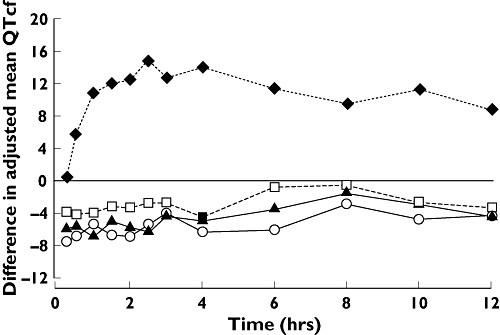
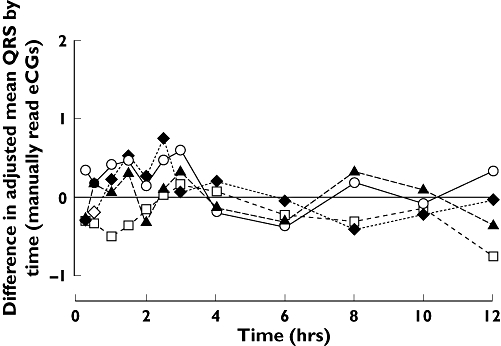
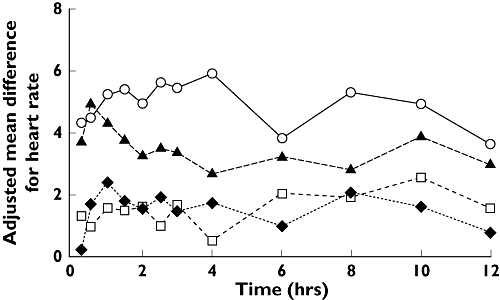
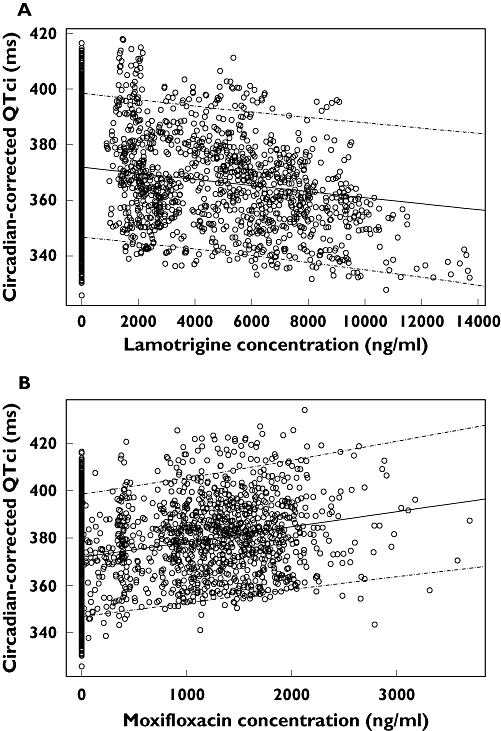
Results: Moxifloxacin was associated with a maximum mean increase from baseline in QTcF of 14.81 ms [90% confidence interval (CI) 13.50, 16.11] 2.5 h after dosing. Steady-state exposure to lamotrigine (50, 150 or 200 mg b.d.) was not associated with an increase in QTc interval. Small reductions in QTcF (maximum mean difference from placebo -7.48 ms, 90% CI -10.49, -4.46) and small increases in heart rate (maximum mean difference from placebo 5.94 bpm, 90% CI 3.81, 8.06) were observed with lamotrigine 200 mg b.d. vs. placebo. No effect of lamotrigine on QRS duration or blood pressure was observed. No outliers with QTcF > 450 ms, or with an increase from baseline of >60 ms were observed in the lamotrigine group. PK-PD modelling indicated statistically significant decreases in individually corrected QT intervals for lamotrigine and statistically significant increases in individually corrected QT intervals for moxifloxacin over the concentration ranges studied.
Conclusions: Therapeutic doses of lamotrigine (50-200 mg b.d.) were not associated with QT prolongation in healthy subjects.
Figures
Comment in
-
Lamotrigine does not prolong QTc in a thorough QT/QTc study in healthy subjects, Dixon et al. 2008; request for publication of PR interval data.Br J Clin Pharmacol. 2011 Jun;71(6):963. doi: 10.1111/j.1365-2125.2010.03856.x. Br J Clin Pharmacol. 2011. PMID: 21564166 Free PMC article. No abstract available.
References
-
- Hoffmann P, Warner B. Are hERG channel inhibition and QT interval prolongation all there is in drug-induced torsadogenesis? A review of emerging trends. J Pharmacol Toxicol Methods. 2006;53:87–105. - PubMed
-
- Danielsson BR, Lansdell K, Patmore L, Tomson T. Effects of antiepileptic drugs lamotrigine, topiramate and gabapentin on hERG potassium currents. Epilepsy Res. 2005;63:17–25. - PubMed
-
- Danielsson BR, Lansdell K, Patmore L, Tomson T. Phenytoin and phenobarbital inhibit human hERG potassium channels. Epilepsy Res. 2003;55:147–57. - PubMed
-
- Zünkler BJ. Human ether-a-go-go-related (HERG) gene and ATP-sensitive potassium channels as targets for adverse drug effects. Pharmacol Ther. 2006;112:12–37. - PubMed
-
- Johannessen SI, Battino D, Berry DJ, Bialer M, Krämer G, Tomson T, Patsalos PN. Therapeutic drug monitoring of the newer antiepileptic drugs. Ther Drug Monit. 2003;25:347–63. - PubMed
Publication types
MeSH terms
Substances
LinkOut - more resources
Full Text Sources