


Histopathology of nonsyndromic autosomal dominant midfrequency sensorineural hearing loss
- PMID: 18665028
- PMCID: PMC2587055
- DOI: 10.1097/MAO.0b013e3181778245
Histopathology of nonsyndromic autosomal dominant midfrequency sensorineural hearing loss
Abstract
Background: Autosomal dominant, nonsyndromic, midfrequency sensorineural hearing loss (SNHL) is a well-known clinical entity. There are no reported histopathologic studies of temporal bones from individuals with such a hearing loss.
Objectives: To describe the otopathology in 2 affected individuals from 2 different kindreds with nonsyndromic, dominant, midfrequency SNHL.
Material and methods: Both subjects belonged to multigenerational families with nonsyndromic, autosomal dominant SNHL showing a cookie-bite pattern. Temporal bones were removed at autopsy and studied by light microscopy. Cytocochleograms were constructed for hair cells, stria vascularis, and cochlear neuronal cells.
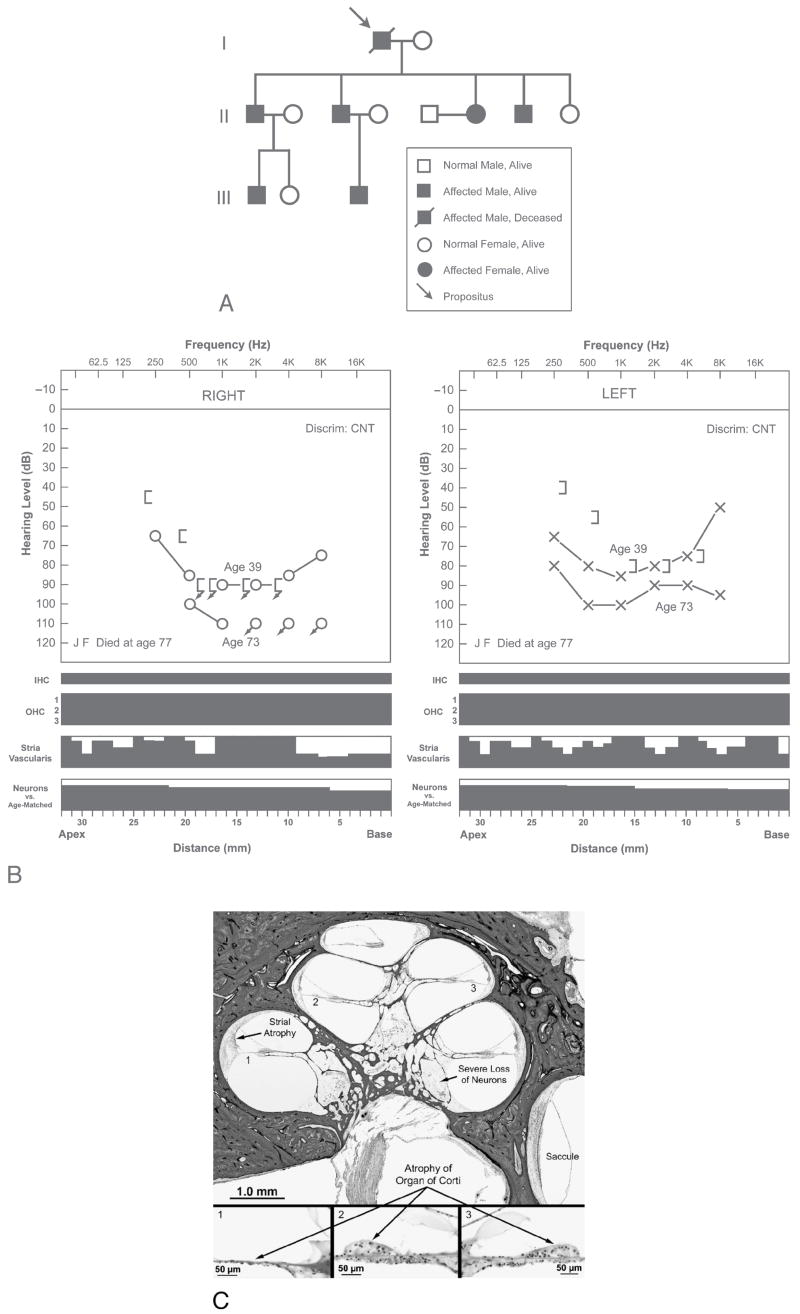
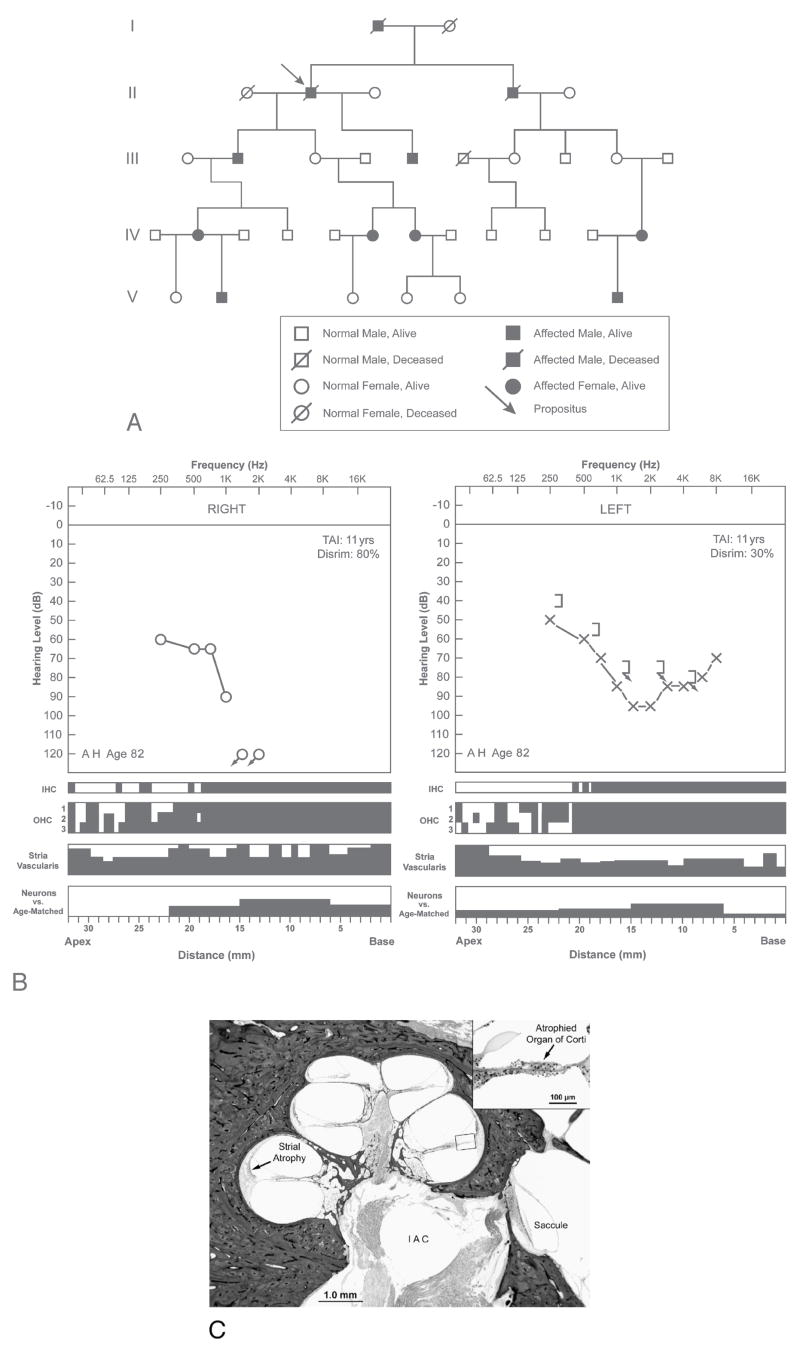
Results: Subject 1 (a 77-yr-old man) from Kindred A was diagnosed in early childhood with an SNHL that was progressive, reaching profound levels by adulthood. Both cochleae showed complete loss of inner and outer hair cells, moderate to severe diffuse atrophy of the stria vascularis, and severe loss of cochlear neurons, including the peripheral dendrites. The hearing loss in Subject 2 (an 82-yr-old man from Kindred B) began in late childhood, was slowly progressive, and involved the higher frequencies later in life. Histopathology showed loss of outer and inner hair cells in the basal turn of the cochlea, moderate to severe loss of stria vascularis, but relative preservation of peripheral dendrites and cochlear neurons.
Conclusion: The main histopathologic abnormalities were loss of hair cells, stria vascularis, and cochlear neurons in 1 case and loss of hair cells and stria vascularis in the second case. Our results are consistent with the hypothesis that dysfunction and loss of hair cells may have been the primary histopathologic correlate for the midfrequency hearing losses in these 2 subjects.
Figures
References
-
- Mårtensson B. Dominant hereditary nerve deafness. Acta Otolaryngol (Stockh) 1960;52:270–4. - PubMed
-
- Williams F, Roblee LA. Hereditary nerve deafness. A follow-up of four cases in one family. Arch Otolaryngol. 1962;75:69–77. - PubMed
-
- Paparella MM, Sugiura S, Hoshino T. Familial progressive sensorineural deafness. Arch Otolaryngol. 1969;90:44–51. - PubMed
-
- Konigsmark BW, Salman S, Haskins H, Mengel M. Dominant midfrequency hearing loss. Ann Otol Rhinol Laryngol. 1970;79:42–53. - PubMed
-
- Kunst H, Huybrechts C, Marres H, Huygen P, Van Camp G, Cremers C. The phenotype of DFNA13/COL11A2: nonsyndromic autosomal dominant mid-frequency and high-frequency sensorineural hearing impairment. Am J Otol. 2000;2:181–7. - PubMed
Publication types
MeSH terms
Substances
Grants and funding
LinkOut - more resources
Full Text Sources
