


Combination targeted therapy with sorafenib and bevacizumab results in enhanced toxicity and antitumor activity
- PMID: 18669456
- PMCID: PMC9089757
- DOI: 10.1200/JCO.2007.10.8332
Combination targeted therapy with sorafenib and bevacizumab results in enhanced toxicity and antitumor activity
Erratum in
- J Clin Oncol. 2008 Sep 10;26(26):4363. Figg, William D [added]
Abstract
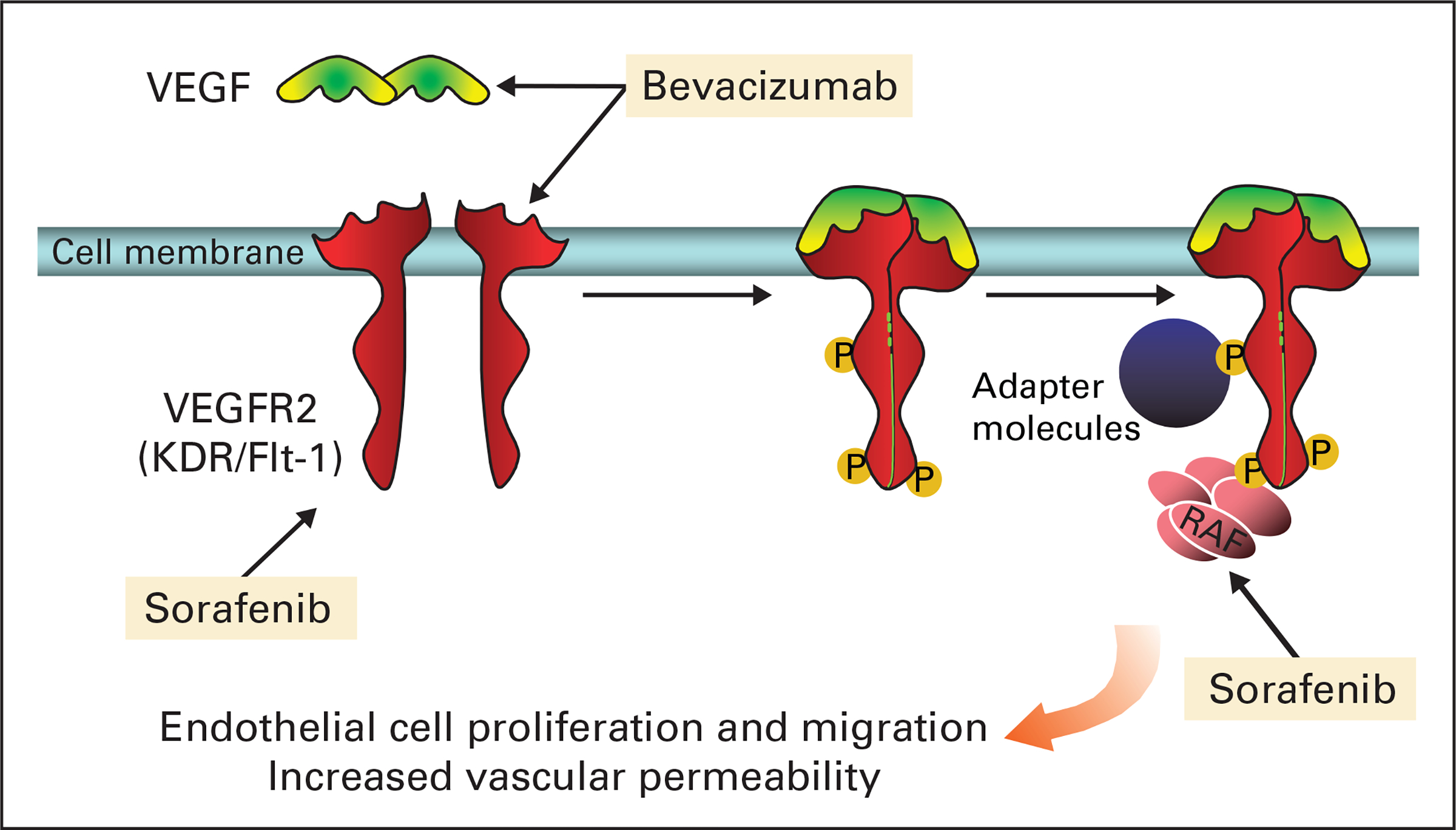
Purpose: Sorafenib inhibits Raf kinase and vascular endothelial growth factor (VEGF) receptor. Bevacizumab is a monoclonal antibody targeted against VEGF. We hypothesized that the complementary inhibition of VEGF signaling would have synergistic therapeutic effects.
Patients and methods: Patients had advanced solid tumors, Eastern Cooperative Oncology Group performance status of 0 to 1, and good end-organ function. A phase I dose-escalation trial of sorafenib and bevacizumab was initiated at below-recommended single-agent doses because of possible overlapping toxicity: sorafenib 200 mg orally twice daily and bevacizumab intravenously at 5 mg/kg (dose level [DL] 1) or 10 mg/kg (DL2) every 2 weeks. Additional patients were enrolled at the maximum-tolerated dose (MTD).
Results: Thirty-nine patients were treated. DL1 was the MTD and administered in cohort 2 (N = 27). Dose-limiting toxicity in DL2 was grade 3 proteinuria and thrombocytopenia. Adverse events included hypertension, hand-foot syndrome, diarrhea, transaminitis, and fatigue. Partial responses (PRs) were seen in six (43%) of 13 patients with ovarian cancer (response duration range, 4 to 22+ months) and one of three patients with renal cell cancer (response duration, 14 months). PR or disease stabilization >or= 4 months (median, 6 months; range, 4 to 22+ months) was seen in 22 (59%) of 37 assessable patients. The majority (74%) required sorafenib dose reduction to 200 mg/d at a median of four cycles (range, one to 12 cycles).
Conclusion: Combination therapy with sorafenib and bevacizumab has promising clinical activity, especially in patients with ovarian cancer. The rapidity and frequency of sorafenib dose reductions indicates that sorafenib at 200 mg twice daily with bevacizumab 5 mg/kg every 2 weeks may not be tolerable long term, and alternate sorafenib dosing schedules should be explored.
Conflict of interest statement
AUTHORS’ DISCLOSURES OF POTENTIAL CONFLICTS OF INTEREST
The author(s) indicated no potential conflicts of interest.
Figures
Comment in
-
Challenges and pitfalls of combining targeted agents in phase I studies.J Clin Oncol. 2008 Aug 1;26(22):3665-7. doi: 10.1200/JCO.2008.17.2676. J Clin Oncol. 2008. PMID: 18669449 No abstract available.
References
-
- Druker BJ, Talpaz M, Resta DJ, et al.: Efficacy and safety of a specific inhibitor of the BCR-ABL tyrosine kinase in chronic myeloid leukemia. N Engl J Med 344:1031–1037, 2001 - PubMed
-
- Demetri GD, von Mehren M, Blanke CD, et al.; Efficacy and safety of imatinib mesylate in advanced gastrointestinal stromal tumors. N Engl J Med 347: 472–480, 2002 - PubMed
-
- Lynch TJ, Bell DW, Sordella R, et al.: Activating mutations in the epidermal growth factor receptor underlying responsiveness of non-small-cell lung cancer to gefitinib. N Engl J Med 350:2129–2139, 2004 - PubMed
-
- Petricoin EF, Zoon KC, Kohn EC, et al.: Clinical proteomics: Translating benchside promise into bedside reality. Nat Rev Drug Discov 1:683–695, 2002 - PubMed
-
- Wilhelm SM, Carter C, Tang L, et al.: BAY 43–9006 exhibits broad spectrum oral antitumor activity and targets the RAF/MEK/ERK pathway and receptor tyrosine kinases involved in tumor progression and angiogenesis. Cancer Res 64:7099–7109 2004 - PubMed
Publication types
MeSH terms
Substances
Grants and funding
LinkOut - more resources
Full Text Sources
Medical
Research Materials
Miscellaneous
