


Recent insights into the role of autoimmunity in idiopathic dilated cardiomyopathy
- PMID: 18672201
- PMCID: PMC3050556
- DOI: 10.1016/j.cardfail.2008.02.016
Recent insights into the role of autoimmunity in idiopathic dilated cardiomyopathy
Abstract
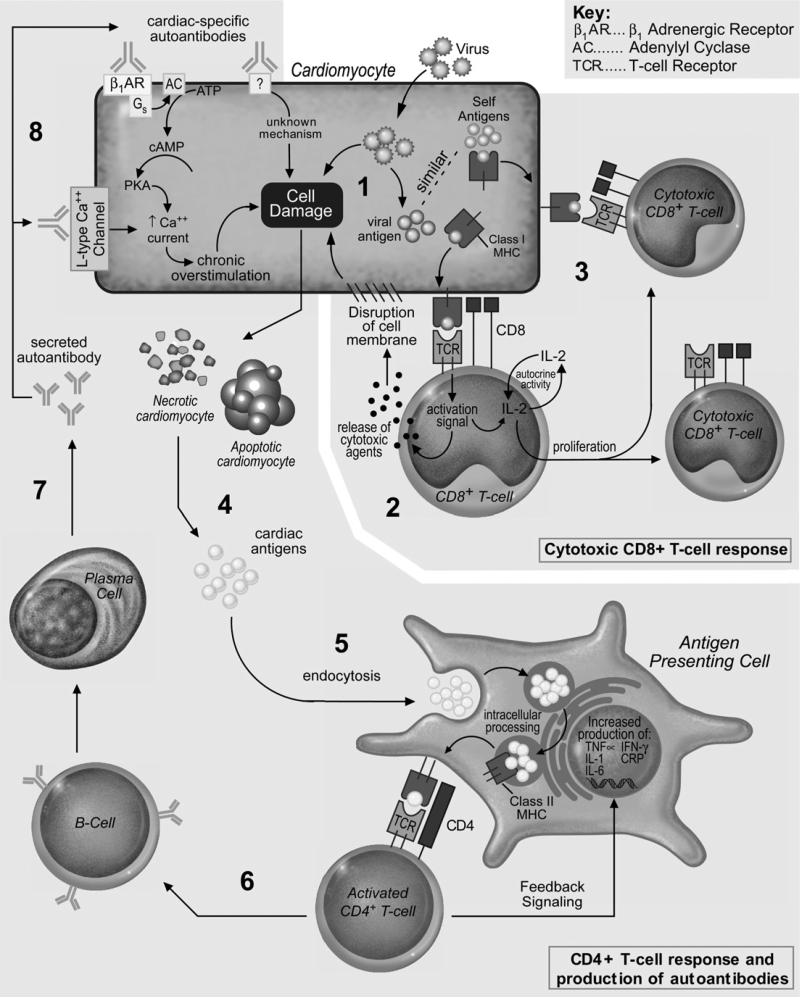
Dilated cardiomyopathy is a devastating disease associated with poor outcomes. Although the etiology of this disease remains largely unknown, so-called "idiopathic" dilated cardiomyopathy (iDCM) is associated with evidence of an autoimmune process that may be contributing to the pathophysiology of this disease. Indeed, iDCM shares many characteristics with other autoimmune diseases, including an association with systemic and organ-specific inflammation, an association with viral infections, a genetic predisposition, and a correlation with specific human leukocyte antigen subtypes. Additionally, numerous pathologic cardiac-specific autoantibodies have been associated with iDCM, including those against alpha-myosin, the beta(1)-adrenoceptor, and cardiac troponin I. This review highlights the emerging evidence regarding autoimmune characteristics of iDCM, and summarizes the data of specific immunomodulatory therapies used to target autoimmune mechanisms in the treatment of patients with this devastating disease.
Figures
References
-
- Maron BJ, Towbin JA, Thiene G, Antzelevitch C, Corrado D, Arnett D, et al. Contemporary definitions and classification of the cardiomyopathies: an American Heart Association Scientific Statement from the Council on Clinical Cardiology, Heart Failure and Transplantation Committee; Quality of Care and Outcomes Research and Functional Genomics and Translational Biology Interdisciplinary Working Groups; and Council on Epidemiology and Prevention. Circulation. 2006;113:1807–16. - PubMed
-
- Sampietro T, Neglia D, Bionda A, Dal Pino B, Bigazzi F, Puntoni M, et al. Inflammatory markers and serum lipids in idiopathic dilated cardiomyopathy. Am J Cardiol. 2005;96:1718–20. - PubMed
-
- Aretz HT. Myocarditis: the Dallas criteria. Hum Pathol. 1987;18:619–24. - PubMed
-
- Liu PP, Mason JW. Advances in the understanding of myocarditis. Circulation. 2001;104:1076–82. - PubMed
Publication types
MeSH terms
Grants and funding
LinkOut - more resources
Full Text Sources
Other Literature Sources
Medical
Research Materials
