


Transglutaminases and transglutaminase-catalyzed cross-links colocalize with the pathological lesions in Alzheimer's disease brain
- PMID: 18673368
- PMCID: PMC8094859
- DOI: 10.1111/j.1750-3639.2008.00197.x
Transglutaminases and transglutaminase-catalyzed cross-links colocalize with the pathological lesions in Alzheimer's disease brain
Abstract
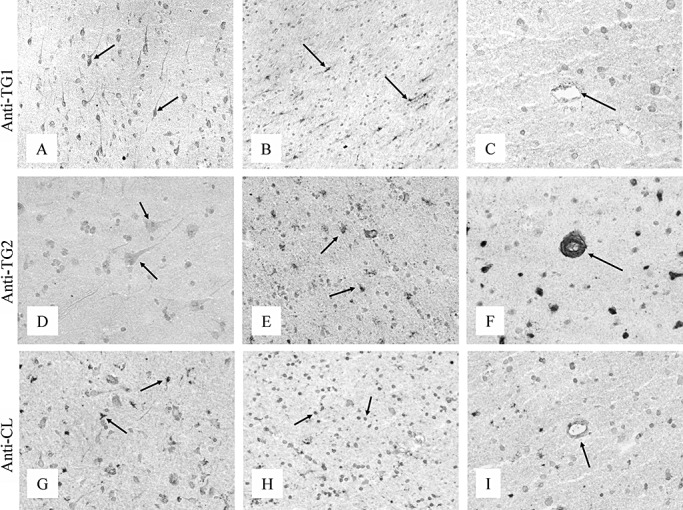
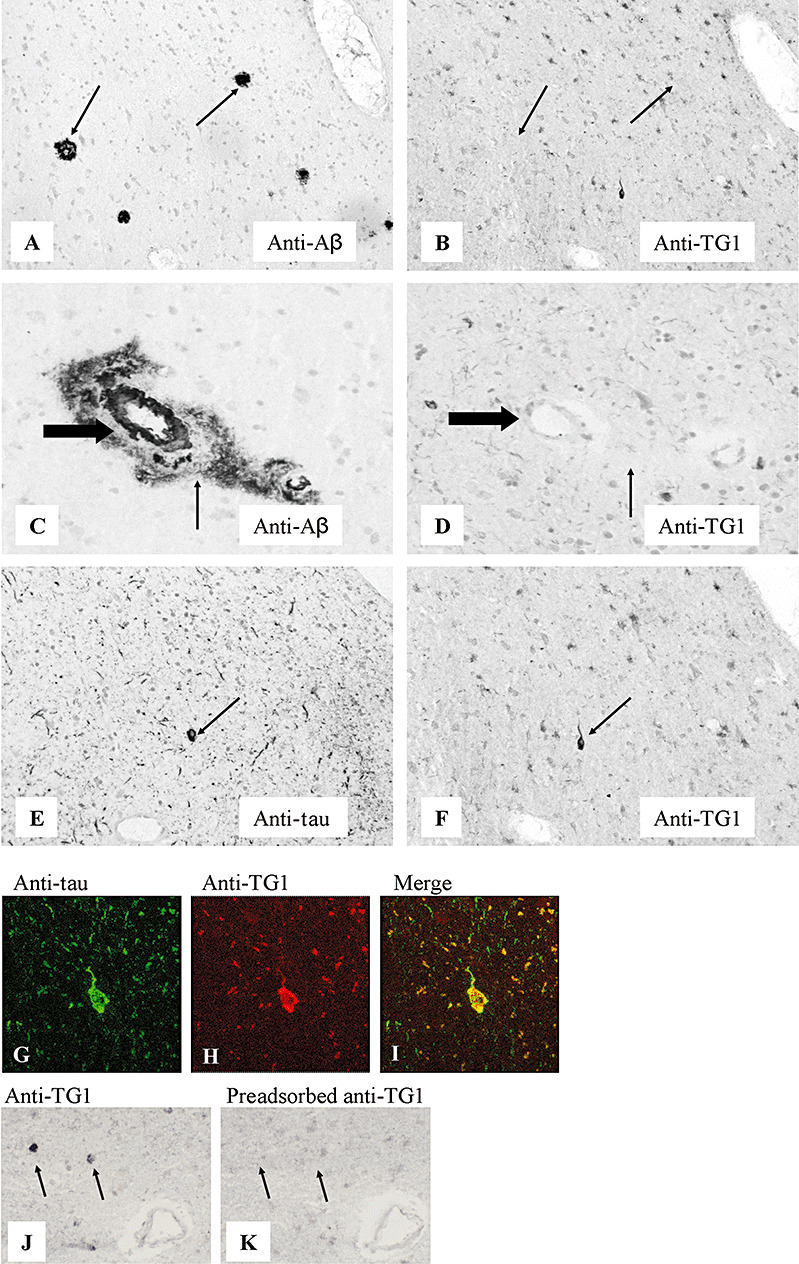
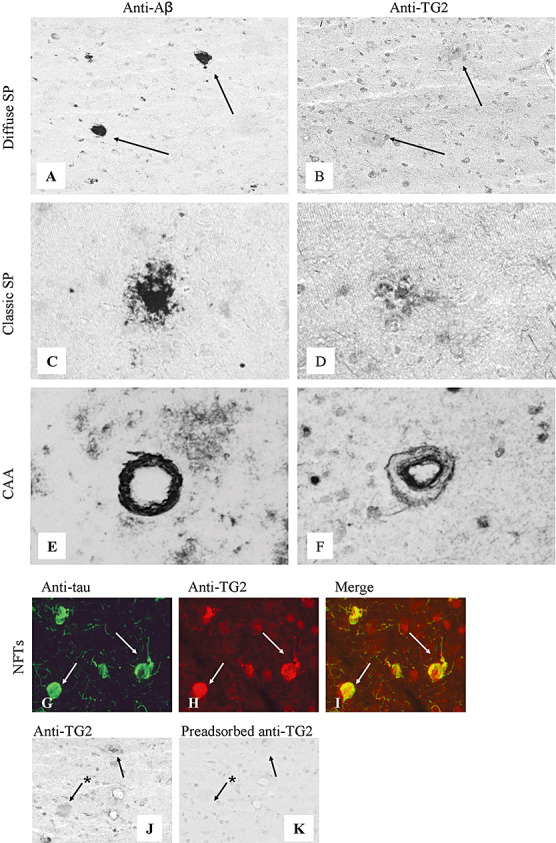
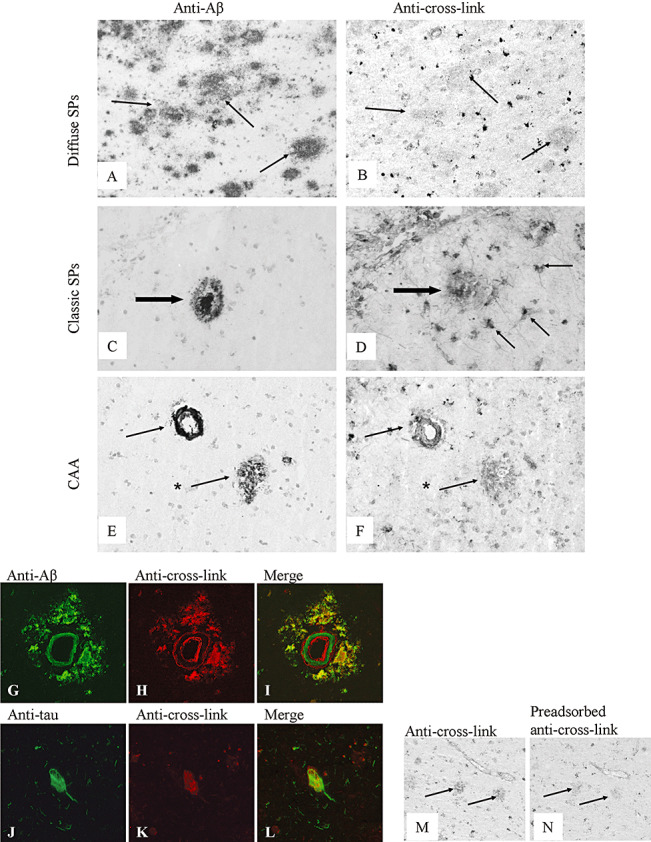
Alzheimer's disease (AD) is characterized by pathological lesions, in particular senile plaques (SPs), cerebral amyloid angiopathy (CAA) and neurofibrillary tangles (NFTs), predominantly consisting of self-aggregated proteins amyloid beta (Abeta) and tau, respectively. Transglutaminases (TGs) are inducible enzymes, capable of modifying conformational and/or structural properties of proteins by inducing molecular covalent cross-links. Both Abeta and tau are substrates for TG cross-linking activity, which links TGs to the aggregation process of both proteins in AD brain. The aim of this study was to investigate the association of transglutaminase 1 (TG1), transglutaminase 2 (TG2) and TG-catalyzed cross-links with the pathological lesions of AD using immunohistochemistry. We observed immunoreactivity for TG1, TG2 and TG-catalyzed cross-links in NFTs. In addition, both TG2 and TG-catalyzed cross-links colocalized with Abeta in SPs. Furthermore, both TG2 and TG-catalyzed cross-links were associated with CAA. We conclude that these TGs demonstrate cross-linking activity in AD lesions, which suggests that both TG1 and TG2 are likely involved in the protein aggregation processes underlying the formation of SPs, CAA and/or NFTs in AD brain.
Figures
References
-
- Aeschlimann D, Thomazy V (2000) Protein crosslinking in assembly and remodelling of extracellular matrices: the role of transglutaminases. Connect Tissue Res 41:1–27. - PubMed
-
- Akimov SS, Belkin AM (2001) Cell surface tissue transglutaminase is involved in adhesion and migration of monocytic cells on fibronectin. Blood 98:1567–1576. - PubMed
-
- Atwood CS, Moir RD, Huang X, Scarpa RC, Bacarra NM, Romano DM et al (1998) Dramatic aggregation of Alzheimer abeta by Cu(II) is induced by conditions representing physiological acidosis. J Biol Chem 273:12817–12826. - PubMed
-
- Baumgartner W, Weth A (2007) Transglutaminase 1 stabilizes beta‐actin in endothelial cells correlating with a stabilization of intercellular junctions. J Vasc Res 3:234–240. - PubMed
-
- Bonelli RM, Aschoff A, Niederwieser G, Heuberger C, Jirikowski G (2002) Cerebrospinal fluid tissue transglutaminase as a biochemical marker for Alzheimer's disease. Neurobiol Dis 11:106–110. - PubMed
Publication types
MeSH terms
Substances
LinkOut - more resources
Full Text Sources
Medical
Miscellaneous
