


Repeated exposure to cocaine alters the modulation of mesocorticolimbic glutamate transmission by medial prefrontal cortex Group II metabotropic glutamate receptors
- PMID: 18673447
- PMCID: PMC2574769
- DOI: 10.1111/j.1471-4159.2008.05593.x
Repeated exposure to cocaine alters the modulation of mesocorticolimbic glutamate transmission by medial prefrontal cortex Group II metabotropic glutamate receptors
Abstract
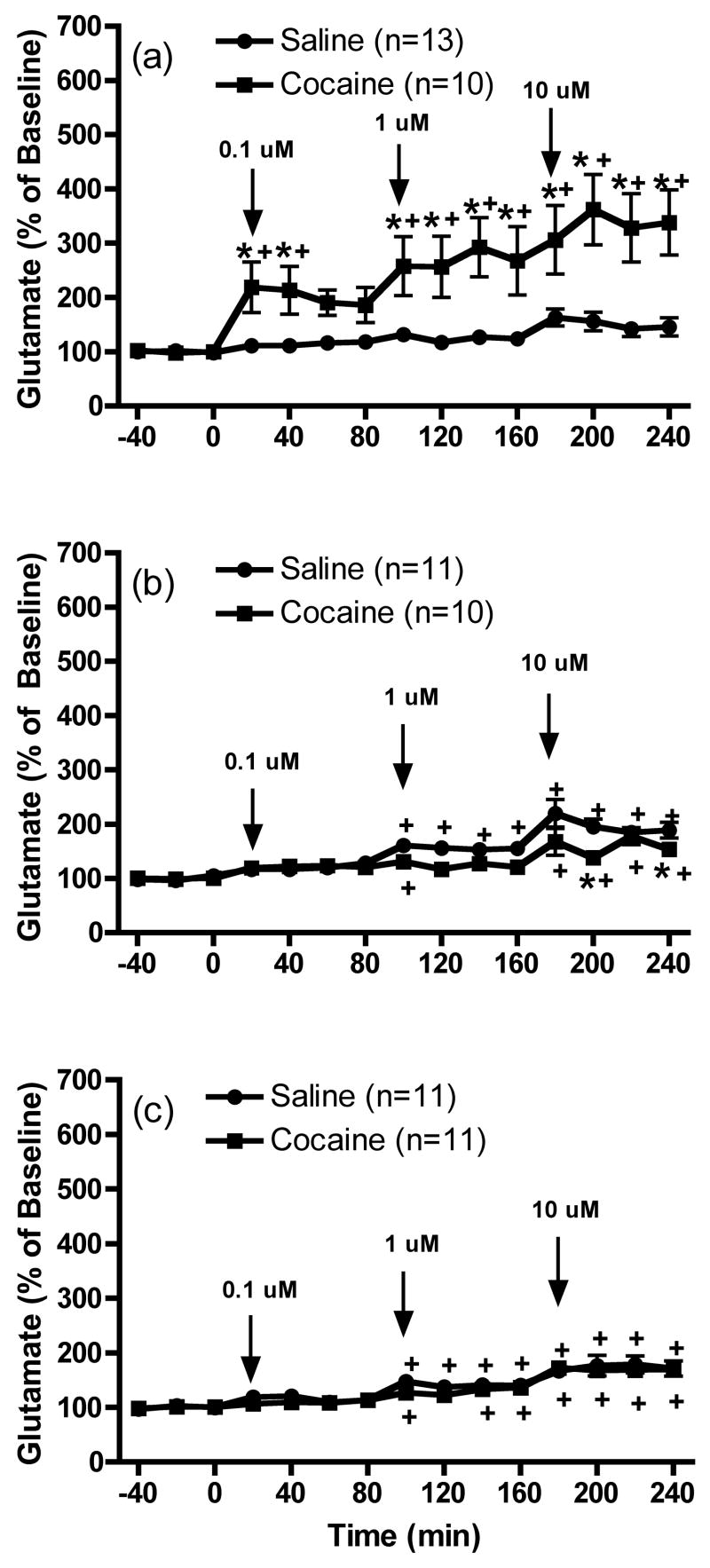
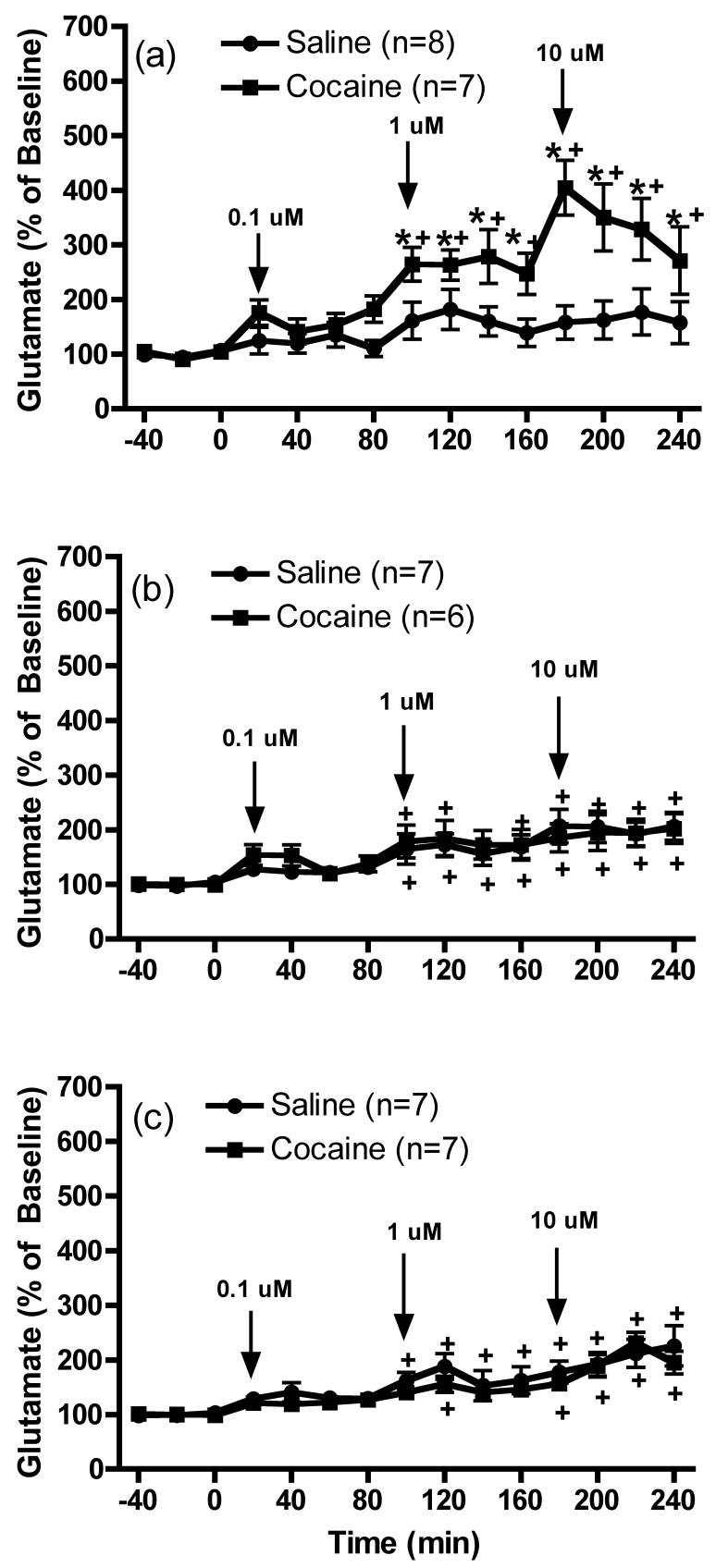
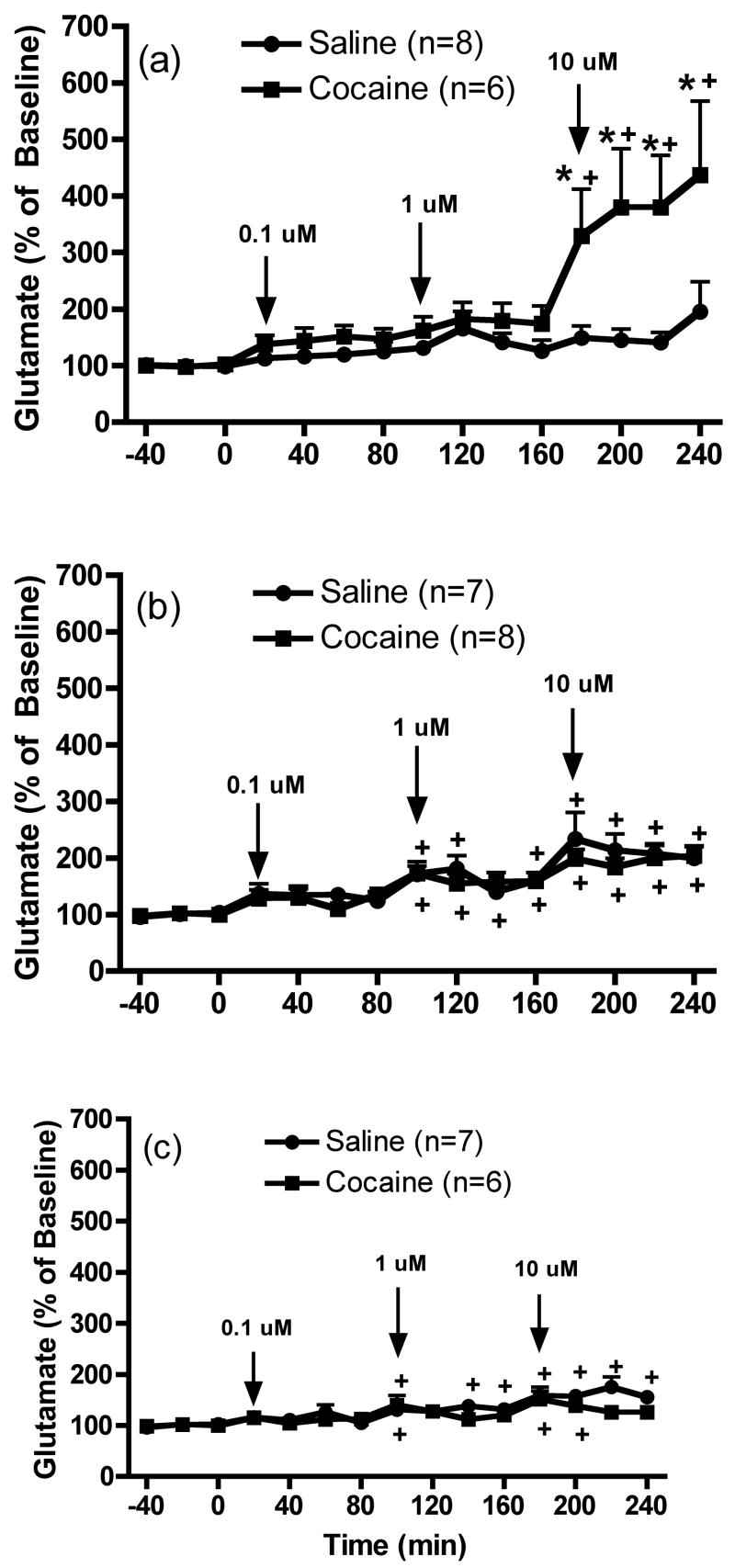
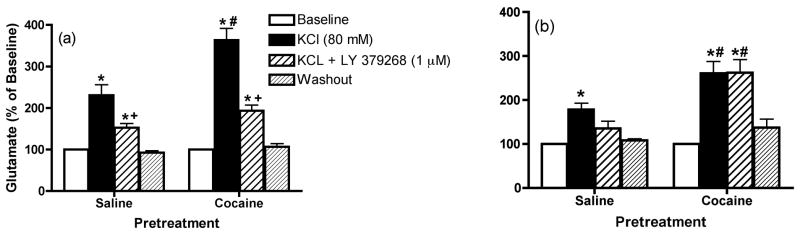
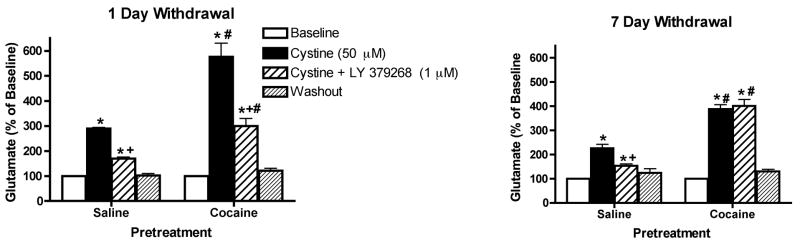
Repeated cocaine exposure enhances glutamatergic output from the medial prefrontal cortex to subcortical brain regions. Loss of inhibitory control of cortical pyramidal neurons may partly account for this augmented cortical glutamate output. Recent research indicated that repeated cocaine exposure reduced the ability of cortical Group II metabotropic glutamate receptors to modulate behavioral and neurochemical responses to cocaine. Thus, experiments described below examined whether repeated cocaine exposure alters metabotropic glutamate receptor regulation of mesocorticolimbic glutamatergic transmission using in vivo microdialysis. Infusion of the Group II metabotropic glutamate receptor antagonist LY341495 into the medial prefrontal cortex enhanced glutamate release in this region, the nucleus accumbens and the ventral tegmental area in sensitized animals, compared to controls, following short-term withdrawal but not after long-term withdrawal. Additional studies demonstrated that vesicular (K(+)-evoked) and non-vesicular (cystine-evoked) glutamate release in the medial prefrontal cortex was enhanced in sensitized animals, compared to controls, that resulted in part from a reduction in Group II metabotropic glutamate receptor modulation of these pools of glutamate. In summary, these findings indicate that the expression of sensitization to cocaine is correlated with an altered modulation of mesocorticolimbic glutamatergic transmission via reduction of Group II metabotropic glutamate receptor function.
Figures

References
-
- Baker DA, Shen HW. Cystine/glutamate exchange serves as the source for extracellular glutamate: modifications by repeated cocaine administration. Amino Acids. 2002;23:161–162. - PubMed
-
- Baker DA, McFarland K, Lake RW, Shen H, Tang XC, Toda S, Kalivas PW. Neuroadaptations in cystine-glutamate exchange underlie cocaine relapse. Nature Neurosci. 2003;6:743–749. - PubMed
-
- Beyer CE, Steketee JD. Cocaine sensitization: modulation by dopamine D2 receptors in the rat medial prefrontal cortex. Cereb Cortex. 2002;12:526–535. - PubMed
MeSH terms
Substances
Grants and funding
LinkOut - more resources
Full Text Sources
Medical
