


Clinical effort against secondhand smoke exposure: development of framework and intervention
- PMID: 18676523
- PMCID: PMC2774730
- DOI: 10.1542/peds.2008-0478
Clinical effort against secondhand smoke exposure: development of framework and intervention
Abstract
Objective: The purpose of this work was to describe a novel process and present results of formative research to develop a pediatric office intervention that uses available systems of care for addressing parental smoking.
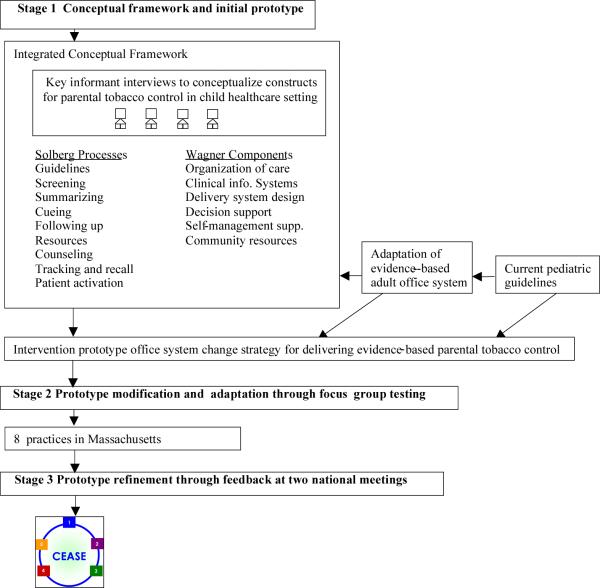
Methods: The scientific development of the intervention occurred in 3 stages. In stage 1, we designed an office system for parental tobacco control in the pediatric outpatient setting on the basis of complementary conceptual frameworks of preventive services delivery, conceptualized for the child health care setting through a process of key interviews with leaders in the field of implementing practice change; existing Public Health Service guidelines that had been shown effective in adult practices; and adaptation of an evidence-based adult office system for tobacco control. This was an iterative process that yielded a theoretically framed intervention prototype. In stage 2, we performed focus-group testing in pediatric practices with pediatricians, nurses, clinical assistants, and key office staff. Using qualitative methods, we adapted the intervention prototype on the basis of this feedback to include 5 key implementation steps for the child health care setting. In stage 3, we presented the intervention to breakout groups at 2 national meetings of pediatric practitioners for additional refinements.
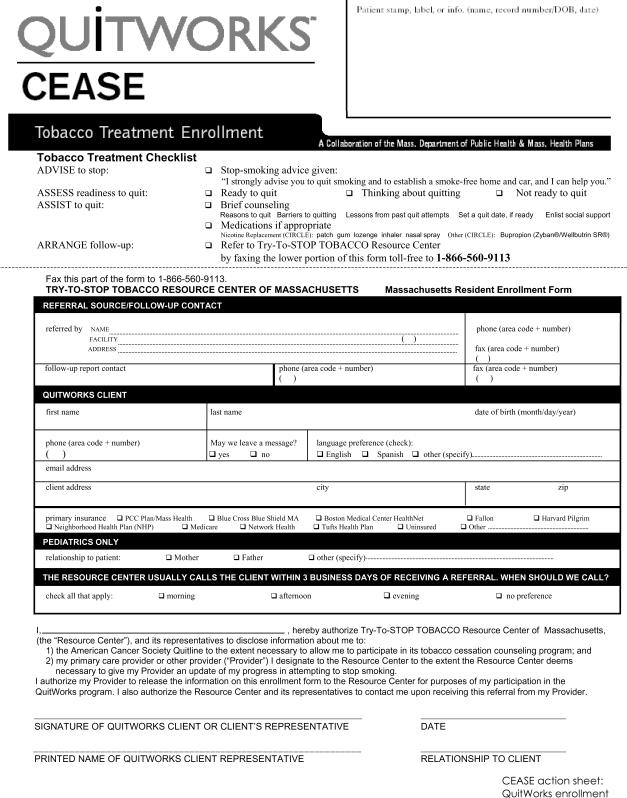
Results: The main result was a theoretically grounded intervention that was responsive to the barriers and suggestions raised in the focus groups and at the national meetings. The Clinical Effort Against Secondhand Smoke Exposure intervention was designed to be flexible and adaptable to the particular practices' staffing, resources, and physical configuration. Practice staff can choose materials relevant to their own particular systems of care (www.ceasetobacco.org).
Conclusions: Conceptually grounded and focus-group-tested strategies for parental tobacco control are now available for implementation in the pediatric outpatient setting. The tobacco-control intervention-development process might have particular relevance for other chronic pediatric conditions that have a strong evidence base and have available treatments or resources that are underused.
Figures
References
-
- US Department of Health and Human Services The Health Consequences of Involuntary Tobacco Smoke: A Report of the Surgeon General. 2006
-
- Kum-Nji P, Meloy L, Herrod HG. Environmental tobacco smoke exposure: prevalence and mechanisms of causation of infections in children. Pediatrics. 2006 May;117(5):1745–1754. - PubMed
-
- Winickoff JP, Berkowitz AB, Brooks K, et al. State-of-the-art interventions for office-based parental tobacco control. Pediatrics. 2005 Mar;115(3):750–760. - PubMed
-
- Pirkle JL, Flegal KM, Bernert JT, Brody DJ, Etzel RA, Maurer KR. Exposure of the US population to environmental tobacco smoke: the Third National Health and Nutrition Examination Survey, 1988 to 1991. JAMA. 1996;275(16):1233–1240. - PubMed
