


Maternal protein-energy supplementation does not affect adolescent blood pressure in The Gambia
- PMID: 18676982
- PMCID: PMC2639364
- DOI: 10.1093/ije/dyn156
Maternal protein-energy supplementation does not affect adolescent blood pressure in The Gambia
Abstract
Background: Birthweight, and by inference maternal nutrition during pregnancy, is thought to be an important determinant of offspring blood pressure but the evidence base for this in humans is lacking data from randomized controlled trials.
Methods: The offspring from a maternal prenatal protein-energy supplementation trial were enrolled into a follow-up study of chronic disease risk factors including blood pressure. Subjects were 11-17 years of age and blood pressure was measured in triplicate using an automated monitor (Omron 705IT). One-thousand two-hundred sixty seven individuals (71% of potential participants) were included in the analysis.
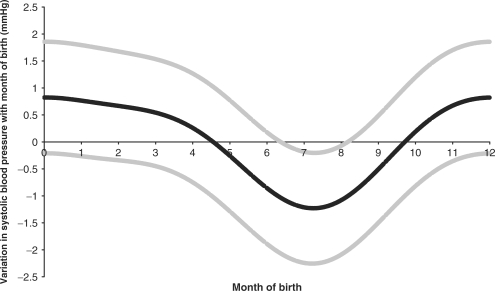
Results: There was no difference in blood pressure between those whose mothers had consumed protein-energy biscuits during pregnancy and those whose mothers had consumed the same supplement post-partum. For systolic blood pressure the intention-to-treat regression coefficient was 0.46 (95% CI: -1.12, 2.04). Mean systolic blood pressure for control children was 110.2 (SD +/- 9.3) mmHg and for intervention children was 110.8 (SD +/- 8.8) mmHg. Mean diastolic blood pressure for control children was 64.7 (SD +/- 7.7) mmHg and for intervention children was 64.6 (SD +/- 7.6) mmHg.
Conclusions: We have found no association between maternal prenatal protein-energy supplementation and offspring blood pressure in adolescence amongst rural Gambians. We found some evidence to suggest that offspring body composition may interact with the effect of maternal supplementation on blood pressure.
Figures


Comment in
-
Commentary: Can improving a mother's diet improve her children's cardiovascular health?Int J Epidemiol. 2009 Feb;38(1):127-8. doi: 10.1093/ije/dyn212. Epub 2008 Oct 24. Int J Epidemiol. 2009. PMID: 18952620 No abstract available.
References
-
- Barker DJP. Mothers, Babies and Health in Later Life. 2nd. Edinburgh: Churchill Livingstone; 1998.
-
- Law CM, Shiell AW. Is blood pressure inversely related to birth weight? The strength of evidence from a systematic review of the literature. J Hypertens. 1996;14:935–41. - PubMed
-
- Huxley RR, Shiell AW, Law CM. The role of size at birth and postnatal catch-up growth in determining systolic blood pressure: a systematic review of the literature. J Hypertens. 2000;18:815–31. - PubMed
-
- Adair L, Dahly D. Developmental determinants of blood pressure in adults. Annu Rev Nutr. 2005;25:407–34. - PubMed
-
- Huxley R, Neil A, Collins R. Unravelling the fetal origins hypothesis: is there really an inverse association between birthweight and subsequent blood pressure? Lancet. 2002;360:659–65. - PubMed
Publication types
MeSH terms
Substances
Grants and funding
LinkOut - more resources
Full Text Sources
Medical
