


Glycosylated polyacrylate nanoparticles by emulsion polymerization
- PMID: 18677404
- PMCID: PMC2084205
- DOI: 10.1016/j.carbpol.2007.02.027
Glycosylated polyacrylate nanoparticles by emulsion polymerization
Abstract
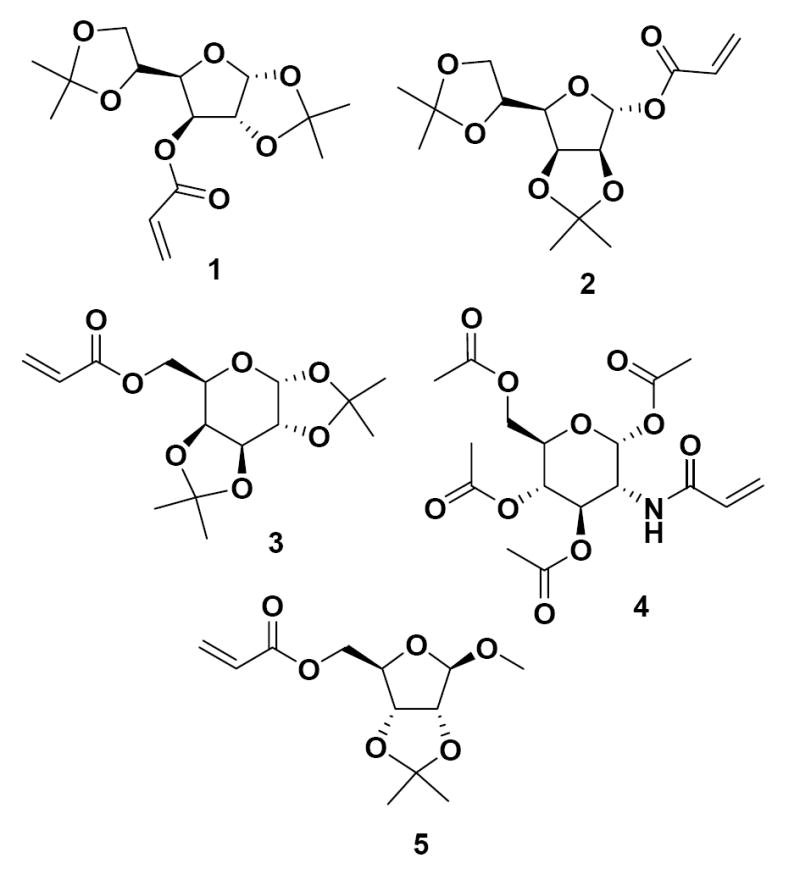
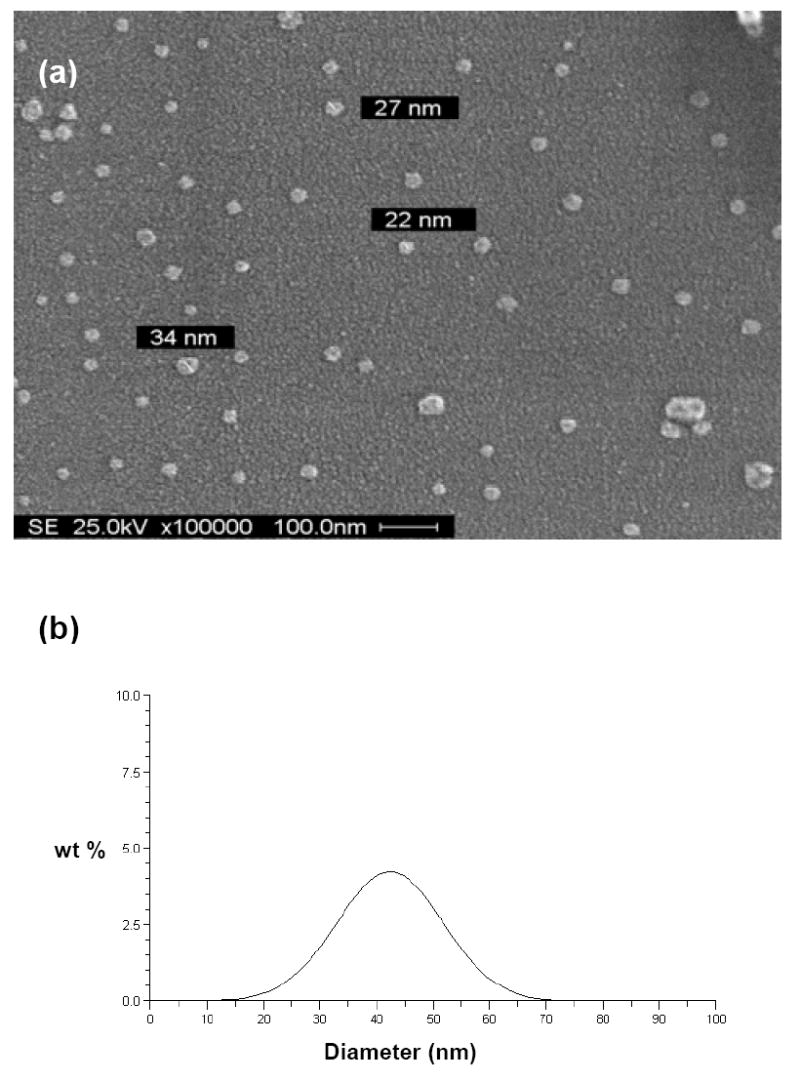
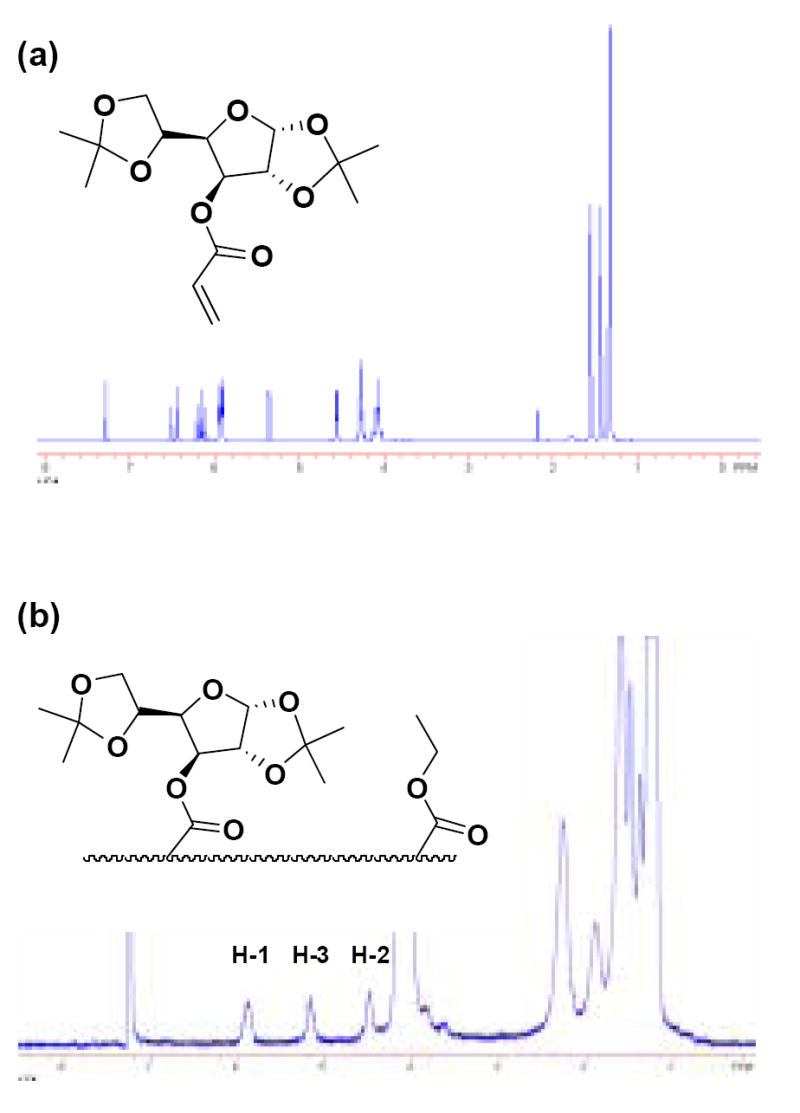
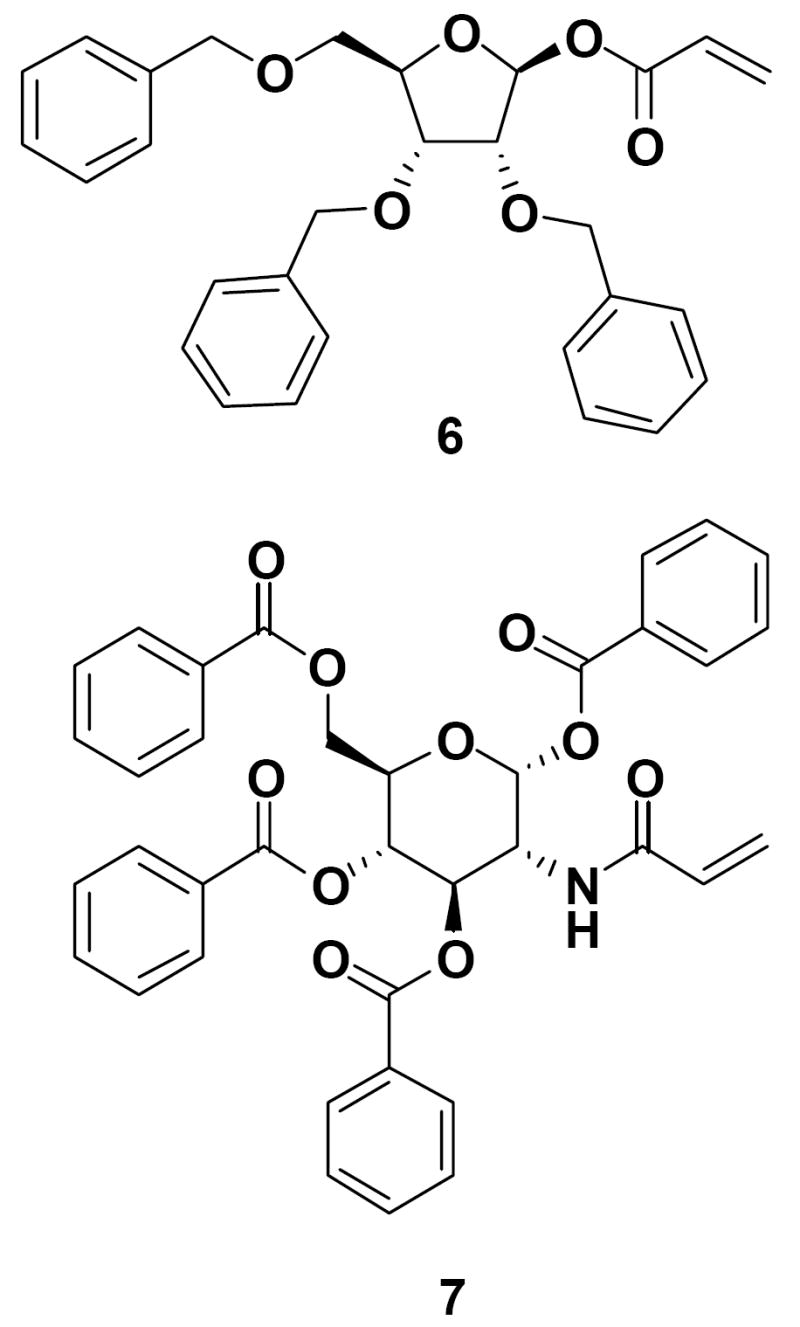
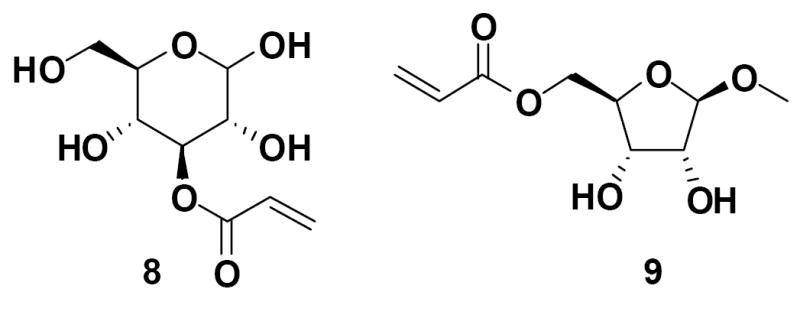
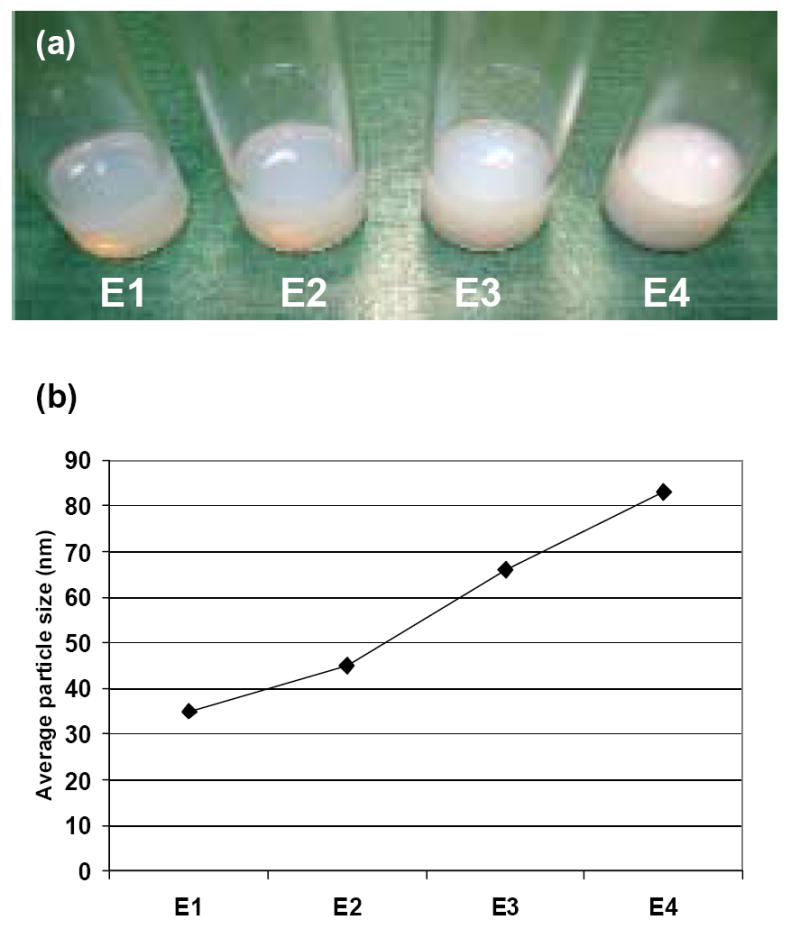
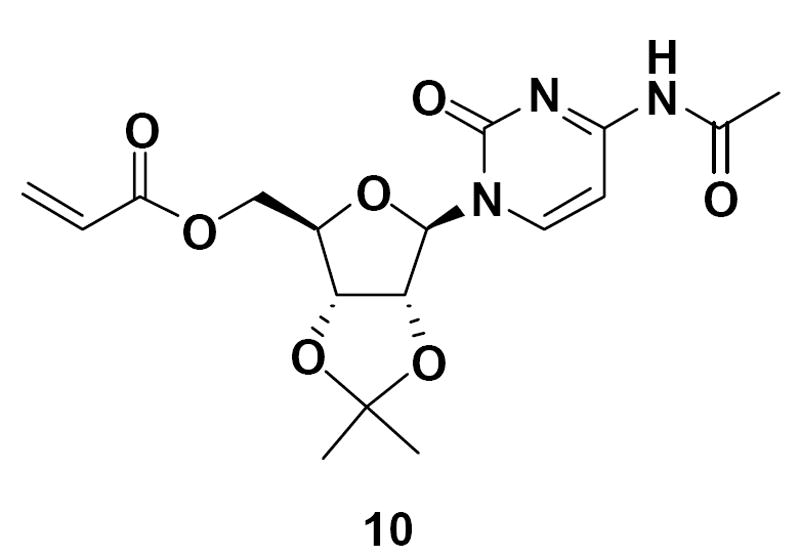
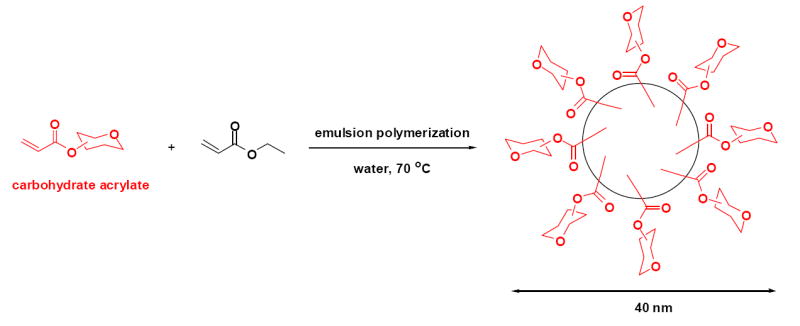
A selection of glycosylated polyacrylate nanoparticles has been prepared by radical-initiated emulsion polymerization in aqueous media. Using ethyl acrylate as a co-monomer, carbohydrate acrylates were incorporated into the poly(ethyl acrylate) framework to give stable emulsions of glyconanoparticles with an average particle size of around 40 nm. Using this technique a variety of glyconanoparticles were prepared from 3-O-acryloyl-1,2:5,6-di-O-isopropylidene-alpha-D-glucofuranose, 1-O-acryloyl-2,3:5,6-di-O-isopropylidene-alpha-D-mannofuranose, 6-O-acryloyl-1,2:3,4-di-O-isopropylidene-alpha-D-galactopyranose, 2-N-acryloyl-1,3,4,6-tetra-O-acetyl-beta-D-glucosamine, 5-O-acryloyl-2,3-isopropylidene-1-methoxy-beta-D-ribofuranose and 4-N-acetyl-5'-O-acryloyl-2',3'-O-isopropylidene cytidine. Scanning electron microscopy, dynamic light scattering and proton NMR analysis of the emulsions indicated essentially 100% incorporation of the carbohydrate acrylate monomer into the polymer with the exception of O-benzyl- and O-benzoyl-protected carbohydrate acrylates, which gave incomplete incorporation. Formation of larger glyconanoparticles of ~80nm with (unprotected) 3-O-acryloyl-D-glucose and 5-O-acryloyl-1-methoxy-beta-D-ribofuranose revealed the influence of free hydroxyl groups in the monomer on the particle size during polymerization, a feature which is also apparently dependent on the amount of carbohydrate in the matrix. This methodology allows for a new, simple route to the synthesis of polymeric glyconanoparticles with potential applications in targeted drug delivery and materials development.
Figures
References
-
- Barker R, Fletcher HG. 2,3,5-Tri-O-benzyl-D-ribosyl and -L-arabinosyl bromides. J Org Chem. 1961;26:4605–4609.
-
- Cho CS, Jeong YI, Ishihara T, Takei R, Park JU, Park KH, Maruyama A, Akaike T. Simple preparation of nanoparticles coated with carbohydrate-carrying polymers. Biomaterials. 1997;18:323–326. - PubMed
-
- Cho CS, Kobayashi A, Takei R, Ishihara T, Maruyama A, Akaike T. Receptor-mediated cell modulator delivery to hepatocyte using nanoparticles coated with carbohydrate-carrying polymers. Biomaterials. 2001;22:45–51. - PubMed
-
- Cooper MJ, Goody RS, Jones AS, Tittensor JR, Walker RT. Synthetic analogues of polynucleotides. Part VII. Further syntheses of 5’-O-acryloylnucleosides and copolymers of these with other acryloyl compounds. J Chem Soc C. 1971;19:3183–3187.
-
- Garcia-Martin MG, Jimenez-Hidalgo C, Al-Kass SSJ, Caraballo I, de Paz MV, Galbis JA. Synthesis and characterization of some new homo- and co-poly(vinylsaccharides). Some preliminary studies as drug delivery. Polymer. 2000;41:821–826.
Grants and funding
LinkOut - more resources
Full Text Sources
Other Literature Sources
