. 2008 Sep;118(9):3160-9.
doi: 10.1172/JCI34827.

Hepatic CB1 receptor is required for development of diet-induced steatosis, dyslipidemia, and insulin and leptin resistance in mice

Affiliations

Hepatic CB1 receptor is required for development of diet-induced steatosis, dyslipidemia, and insulin and leptin resistance in mice

Douglas Osei-Hyiaman et al. J Clin Invest. 2008 Sep.

Abstract

Diet-induced obesity is associated with fatty liver, insulin resistance, leptin resistance, and changes in plasma lipid profile. Endocannabinoids have been implicated in the development of these associated phenotypes, because mice deficient for the cannabinoid receptor CB1 (CB1-/-) do not display these changes in association with diet-induced obesity. The target tissues that mediate these effects, however, remain unknown. We therefore investigated the relative role of hepatic versus extrahepatic CB1 receptors in the metabolic consequences of a high-fat diet, using liver-specific CB1 knockout (LCB1-/-) mice. LCB1(-/-) mice fed a high-fat diet developed a similar degree of obesity as that of wild-type mice, but, similar to CB1(-/-) mice, had less steatosis, hyperglycemia, dyslipidemia, and insulin and leptin resistance than did wild-type mice fed a high-fat diet. CB1 agonist-induced increase in de novo hepatic lipogenesis and decrease in the activity of carnitine palmitoyltransferase-1 and total energy expenditure were absent in both CB1(-/-) and LCB1(-/-) mice. We conclude that endocannabinoid activation of hepatic CB1 receptors contributes to the diet-induced steatosis and associated hormonal and metabolic changes, but not to the increase in adiposity, observed with high-fat diet feeding. Theses studies suggest that peripheral CB1 receptors could be selectively targeted for the treatment of fatty liver, impaired glucose homeostasis, and dyslipidemia in order to minimize the neuropsychiatric side effects of nonselective CB1 blockade during treatment of obesity-associated conditions.


Figures
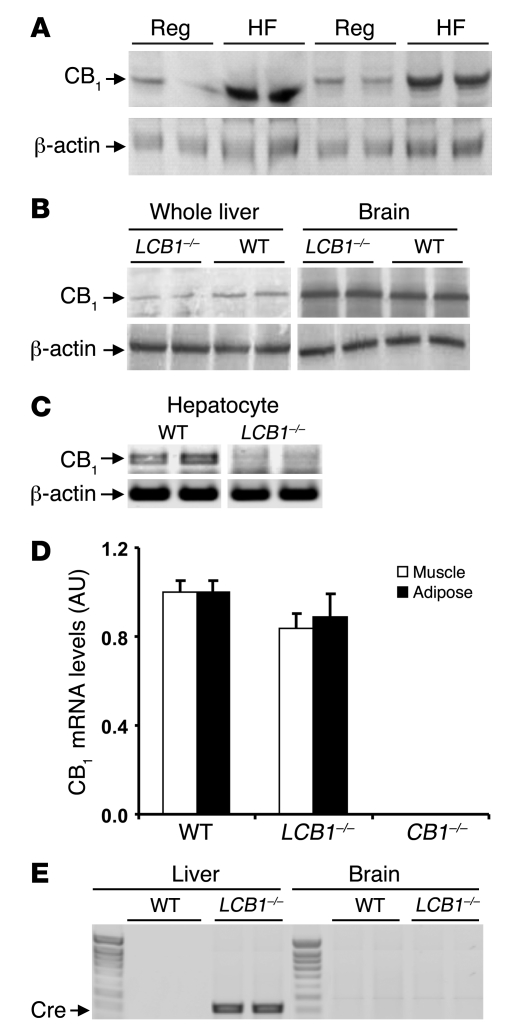
Figure 1
Figure 1. Upregulation of CB1 receptors by high-fat diet and selective deletion of CB1 receptors by hepatocyte-specific gene knockout in mouse hepatocytes.
(A) Short-term exposure to high-fat diet upregulates CB1 receptors in mouse hepatocytes. Mice were fed regular mouse chow (Reg) or a high-fat diet (HF) for 3 weeks, starting at 6–8 weeks of age. Hepatocytes from 4 mice per group were isolated, and cellular proteins were solubilized and fractionated by gel electrophoresis. CB1 receptor protein was visualized by Western blotting and quantified by densitometry (regular chow, 0.82 ± 0.09 AU; high-fat diet, 1.99 ± 0.41 AU; P < 0.05). Immunoblotting for β-actin was used as loading control. (B) CB1 receptor levels were normal in brain and greatly reduced in whole liver tissue from LCB1–/– mice compared with wild-type mice. Results of Western blots with 2 animals per group are shown. (C) CB1 receptor mRNA was absent in purified hepatocytes from LCB1–/– mice. Receptor mRNA was amplified using RT-PCR, with parallel amplification of β-actin mRNA as control. (D) Normal levels of CB1 receptor mRNA in adipose tissue and skeletal muscle of LCB1–/– mice. Receptor mRNA was quantified by real-time PCR from adipose tissue and soleus muscle of floxed/floxed, LCB1–/–, and CB1–/– mice. (E) Selective expression of cre in the liver of LCB1–/– mice. Cre mRNA expression was analyzed by RT-PCR in brain and liver of a wild-type mouse and an LCB1–/– mouse.
Figure 2
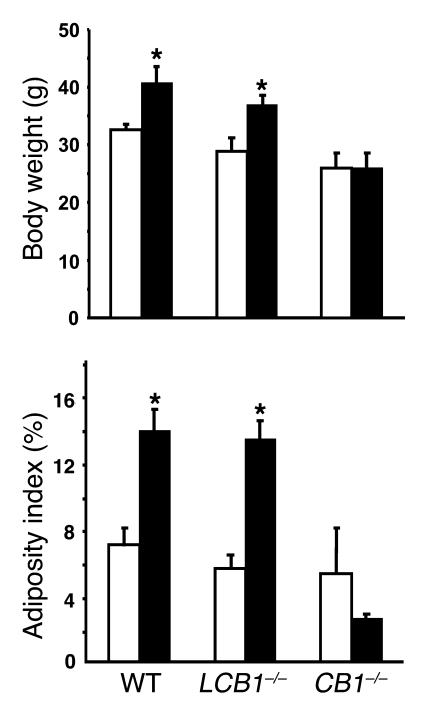
Figure 2. LCB1–/– mice are susceptible to diet-induced obesity.
Male and female 6- to 8-week-old wild-type, CB1–/–, and LCB1–/– mice were fed regular chow (white bars) or high-fat diet (black bars) for 14 weeks, as described in Methods. Body weight and adiposity index at the end of the 14-week period are shown (mean ± SEM; n = 8–12 per group). Adiposity index was determined as the percentage of the combined weight of inguinal, retroperitoneal, epididymal, and subcutaneous fat pads relative to body weight. *P < 0.05 versus corresponding group fed regular chow.
Figure 3
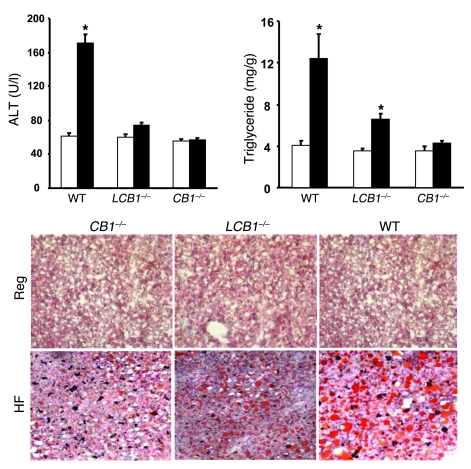
Figure 3. LCB1–/– mice are resistant to diet-induced steatosis.
Steatosis was assessed in the same groups of mice as in Figure 2 by measurement of hepatic triglyceride content of mice fed regular chow (white bars) or high-fat diet (black bars), and histologically by Oil Red O staining (representative sections). Hepatocellular damage was assessed by plasma ALT levels. *P < 0.05 versus corresponding group fed regular chow. n = 8 per group.
Figure 4
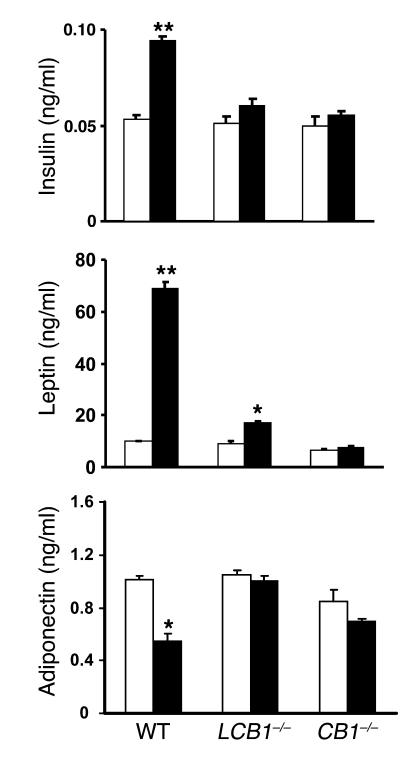
Figure 4. High-fat diet–induced hyperleptinemia, hyperinsulinemia, and decreased serum adiponectin levels are absent in CB1–/– and LCB1–/– mice fed the same high-fat diet.
Mice were fed regular chow (white bars) or a high-fat diet (black bars) for 14 weeks, at which time they were sacrificed and serum hormone levels were determined from trunk blood. *P < 0.05, **P < 0.01 versus corresponding group fed regular chow. n = 6–8 per group.
Figure 5
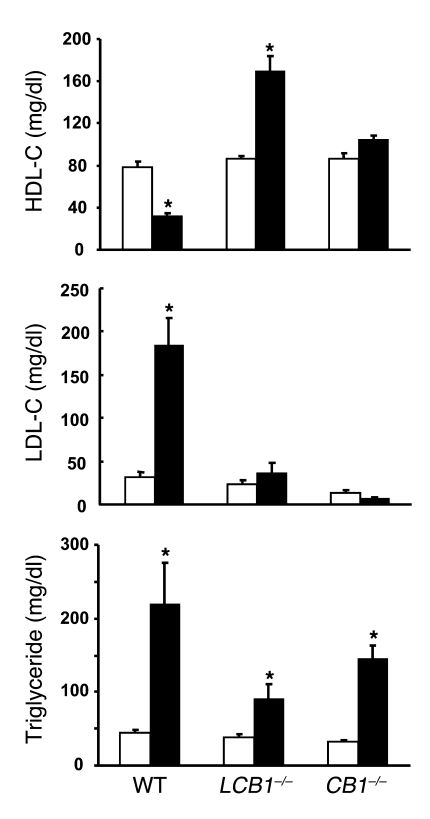
Figure 5. The high-fat diet–induced increases in serum triglyceride and LDL cholesterol (LDL-C) and decrease in HDL cholesterol (HDL-C) levels in wild-type mice are absent or attenuated in CB1–/– or LCB1–/– mice.
Serum lipid profile was determined in the same groups of mice as in Figure 4. White bars, regular chow; black bars, high-fat diet. *P < 0.05 versus corresponding control.
Figure 6
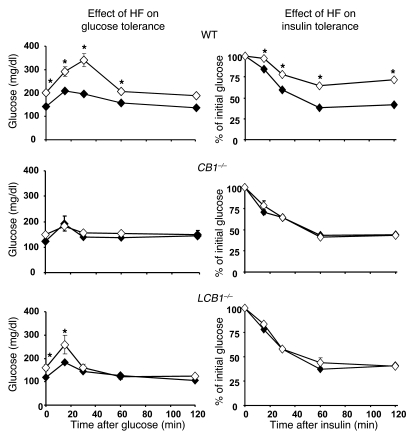
Figure 6. High-fat diet–induced glucose intolerance and insulin resistance in wild-type mice, as revealed by intraperitoneal glucose tolerance and insulin resistance tests, is absent in CB1–/– mice and attenuated in LCB1–/– mice.
Filled symbols, regular chow; open symbols, high-fat diet. Values are mean ± SEM from 4 mice (for points without error bars, the SEM is within the size of the symbol). *P < 0.05 versus corresponding group fed regular chow.
Figure 7
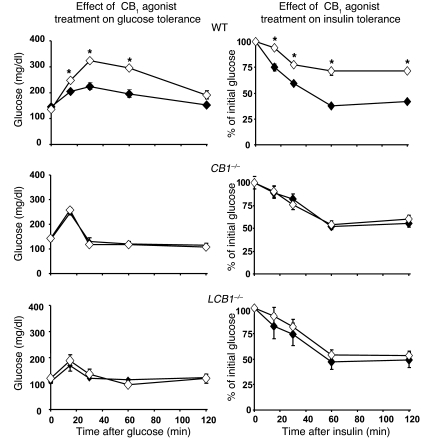
Figure 7. Acute treatment of regular chow–fed mice with a CB1 agonist induces glucose intolerance and insulin resistance in wild-type mice, but not in CB1–/– or LCB1–/– mice.
Mice were injected with vehicle (filled symbols) or 20 ng/g HU-210 i.p. (open symbols) 10 min prior to the i.p. injection of glucose. Values are mean ± SEM from 4 mice (for points without error bars, the SEM is within the size of the symbol). *P < 0.05 versus corresponding vehicle-treated control.
Figure 8
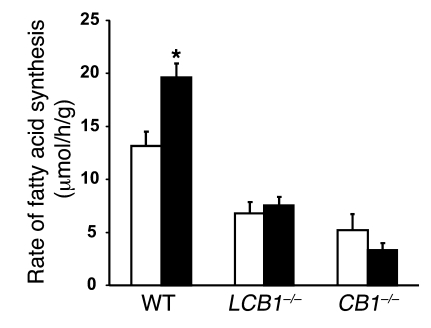
Figure 8. Effects of a CB1 agonist on the rate of de novo hepatic lipogenesis in mice fed regular diet.
Mice were injected with vehicle (white bars) or 20 ng/g HU-210 i.p. (black bars), and de novo lipogenesis was measured by the rate of incorporation of 3H2O into hepatic fatty acids, as described in Methods. Note that HU-210 increased lipogenesis in wild-type mice, but not in CB1–/– or LCB1–/– mice. *P < 0.05 versus corresponding vehicle-treated control.
Figure 9
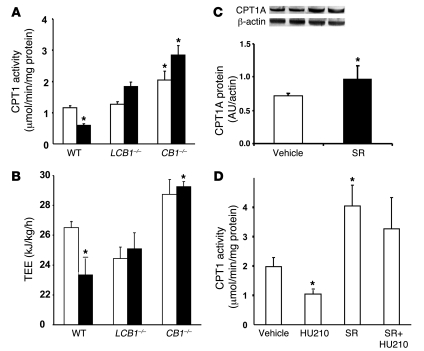
Figure 9. CB1 receptor regulation of hepatic fatty acid oxidation.
(A) Effect of diet on hepatic CPT1 activity. Mice fed regular chow (white bars) or high-fat diet for 14 weeks (black bars) were sacrificed, their livers were removed, and mitochondria were isolated for measurement of hepatic CPT1 activity, as described in Methods. (B) TEE of wild-type, CB1–/–, and LCB1–/– mice fed regular chow (white bars) or high-fat diet (black bars), measured by indirect calorimetry (n = 4–7 per group). (C) Chronic treatment of wild-type high-fat diet–fed mice with rimonabant (SR; 3 μg/g/d for 7 d, right 2 lanes) upregulated hepatic CPT1A protein levels, as shown by Western blotting. (D) Effect of the CB1 agonist HU-210, the CB1 antagonist rimonabant, or their combination on hepatic CPT1 activity in wild-type mice fed regular chow. n = 4 per group. *P < 0.05 versus regular chow–fed wild-type control or versus vehicle-treated control as appropriate.
Figure 10
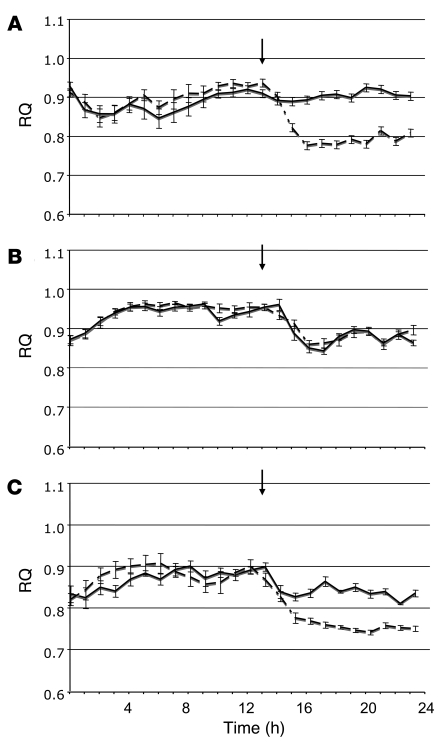
Figure 10. The effect of rimonabant on RQ in regular chow–fed mice, as monitored by indirect calorimetry.
In wild-type (A), CB1–/– (B), and LCB1–/– (C) mice, rimonabant (10 mg/kg i.p., dashed lines) or vehicle (solid lines) was injected at the end of the dark period (indicated by arrows), followed by removal of food from the cage. n = 8 per group. Values are mean ± SEM.

Comment in

References

    1. Di Marzo V., et al. Leptin-regulated hypothalamic endocannabinoids acting at CB1 receptors are involved in maintaining food intake. . Nature. . 2001;410:822–825. doi: 10.1038/35071088. - DOI - PubMed
    1. Jo Y.H., et al. Integration of endocannabinoid and leptin signaling in an appetite-related neural circuit. Neuron. . 2005;48:1055–1066. doi: 10.1016/j.neuron.2005.10.021. - DOI - PMC - PubMed
    1. Van Gaal L.F., et al. Effects of the cannabinoid-1 receptor blocker rimonabant on weight reduction and cardiovascular risk factors in overweight patients:1-year experience from the RIO-Europe study. Lancet. . 2005;365:1389–1397. doi: 10.1016/S0140-6736(05)66374-X. - DOI - PubMed
    1. Despres J.-P., et al. Effects of rimonabant on metabolic risk factors in overweight patients with dyslipidemia. N. Engl. J. Med. . 2005;353:2121–2134. doi: 10.1056/NEJMoa044537. - DOI - PubMed
    1. Pi-Sunyer F.X., et al. Effect of rimonabant, a cannabinoid-1 receptor blocker, on weight and cardiometabolic risk factors in overweight or obese patients. RIO-North America: a randomized controlled trial. JAMA. . 2006;295:761–775. doi: 10.1001/jama.295.7.761. - DOI - PubMed

Publication types