


Enhanced innate immune responsiveness to pulmonary Cryptococcus neoformans infection is associated with resistance to progressive infection
- PMID: 18678664
- PMCID: PMC2546841
- DOI: 10.1128/IAI.00341-08
Enhanced innate immune responsiveness to pulmonary Cryptococcus neoformans infection is associated with resistance to progressive infection
Abstract
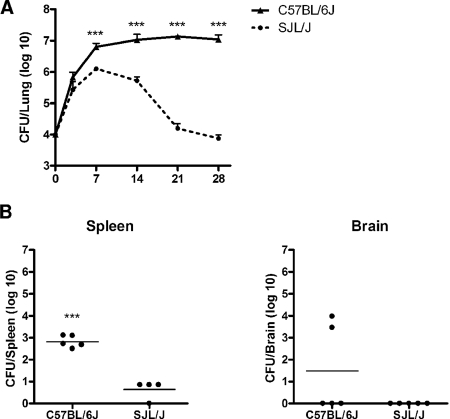
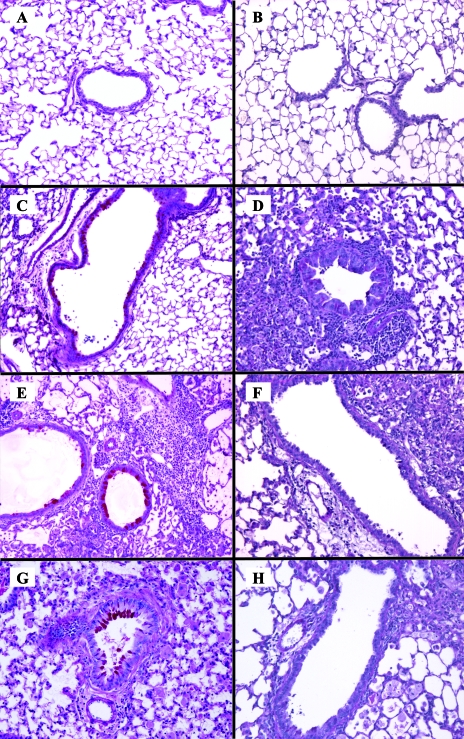
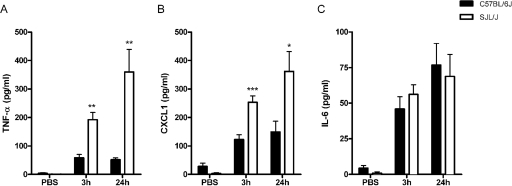
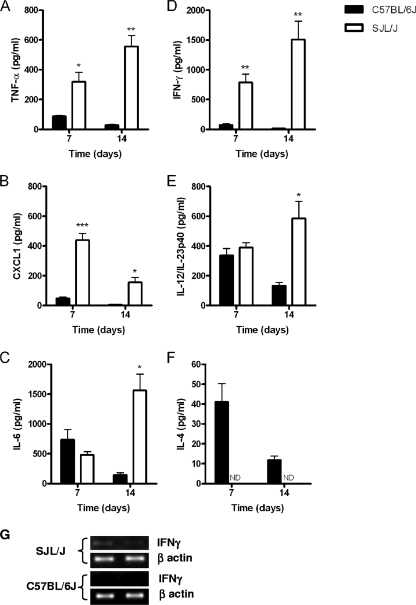
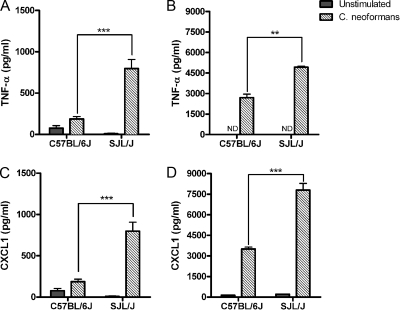
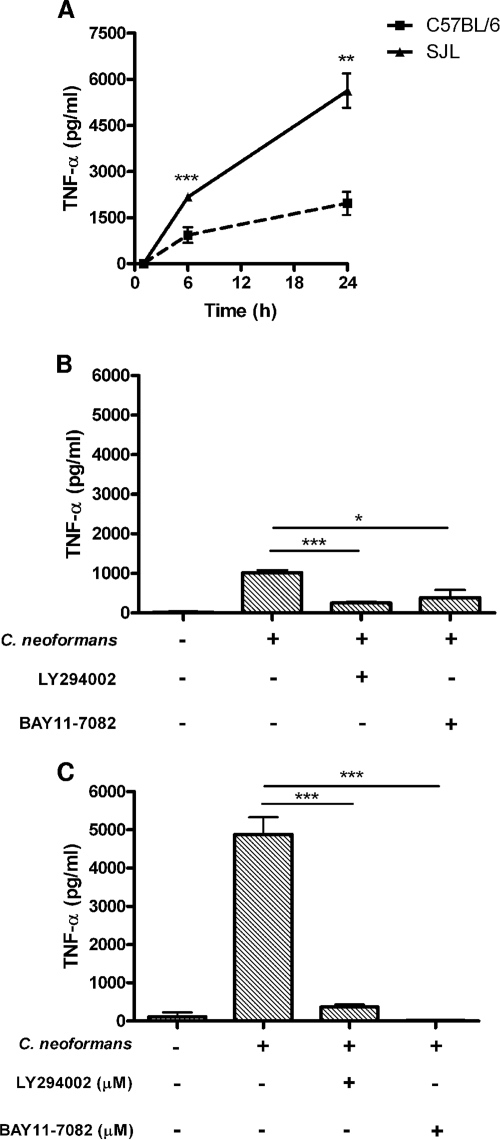
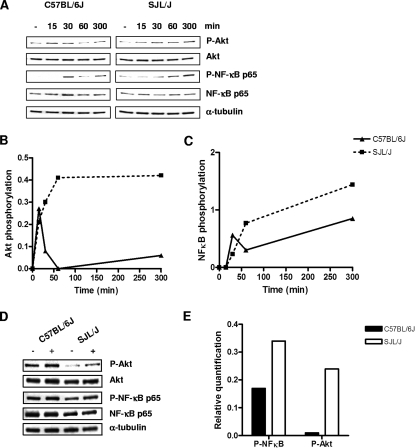
Genetically regulated mechanisms of host defense against Cryptococcus neoformans infection are not well understood. In this study, pulmonary infection with the moderately virulent C. neoformans strain 24067 was used to compare the host resistance phenotype of C57BL/6J with that of inbred mouse strain SJL/J. At 7 days or later after infection, C57BL/6J mice exhibited a significantly greater fungal burden in the lungs than SJL/J mice. Characterization of the pulmonary innate immune response at 3 h after cryptococcal infection revealed that resistant SJL/J mice exhibited significantly higher neutrophilia, with elevated levels of inflammatory cytokine tumor necrosis factor alpha (TNF-alpha) and keratinocyte-derived chemokine (KC)/CXCL1 in the airways, as well as increased whole-lung mRNA expression of chemokines KC/CXCL1, MIP-1alpha/CCL3, MIP-1beta/CCL4, MIP-2/CXCL2, and MCP-1/CCL2 and cytokines interleukin 1beta (IL-1beta) and IL-1Ra. At 7 and 14 days after infection, SJL/J mice maintained significantly higher levels of TNF-alpha and KC/CXCL1 in the airways and exhibited a Th1 response characterized by elevated levels of lung gamma interferon (IFN-gamma) and IL-12/IL-23p40, while C57BL/6J mice exhibited Th2 immunity as defined by eosinophilia and IL-4 production. Alveolar and resident peritoneal macrophages from SJL/J mice also secreted significantly greater amounts of TNF-alpha and KC/CXCL1 following in vitro stimulation with C. neoformans. Intracellular signaling analysis demonstrated that TNF-alpha and KC/CXCL1 production was regulated by NF-kappaB and phosphatidylinositol 3 kinase in both strains; however, SJL/J macrophages exhibited heightened and prolonged activation in response to C. neoformans infection compared to that of C57BL/6J. Taken together, these data demonstrate that an enhanced innate immune response against pulmonary C. neoformans infection in SJL/J mice is associated with natural resistance to progressive infection.
Figures
References
-
- Abadi, J., and L. Pirofski. 1999. Antibodies reactive with the cryptococcal capsular polysaccharide glucuronoxylomannan are present in sera from children with and without human immunodeficiency virus infection. J. Infect. Dis. 180915-919. - PubMed
-
- Arora, S., Y. Hernandez, J. R. Erb-Downward, R. A. McDonald, G. B. Toews, and G. B. Huffnagle. 2005. Role of IFN-gamma in regulating T2 immunity and the development of alternatively activated macrophages during allergic bronchopulmonary mycosis. J. Immunol. 1746346-6356. - PubMed
-
- Biondo, C., A. Midiri, L. Messina, F. Tomasello, G. Garufi, M. R. Catania, M. Bombaci, C. Beninati, G. Teti, and G. Mancuso. 2005. MyD88 and TLR2, but not TLR4, are required for host defense against Cryptococcus neoformans. Eur. J. Immunol. 35870-878. - PubMed
Publication types
MeSH terms
Substances
LinkOut - more resources
Full Text Sources
Molecular Biology Databases
Miscellaneous
