


Motor scores on the functional independence measure after pediatric spinal cord injury
- PMID: 18679405
- PMCID: PMC2718680
- DOI: 10.1038/sc.2008.94
Motor scores on the functional independence measure after pediatric spinal cord injury
Abstract
Study design: Retrospective descriptive analysis.
Objectives: The purpose of this study was to report the functional ability of children with spinal cord injury (SCI) as recorded on motor items of the functional independence measure (FIM) and to examine the factors associated with FIM motor admission and post-discharge gain scores.
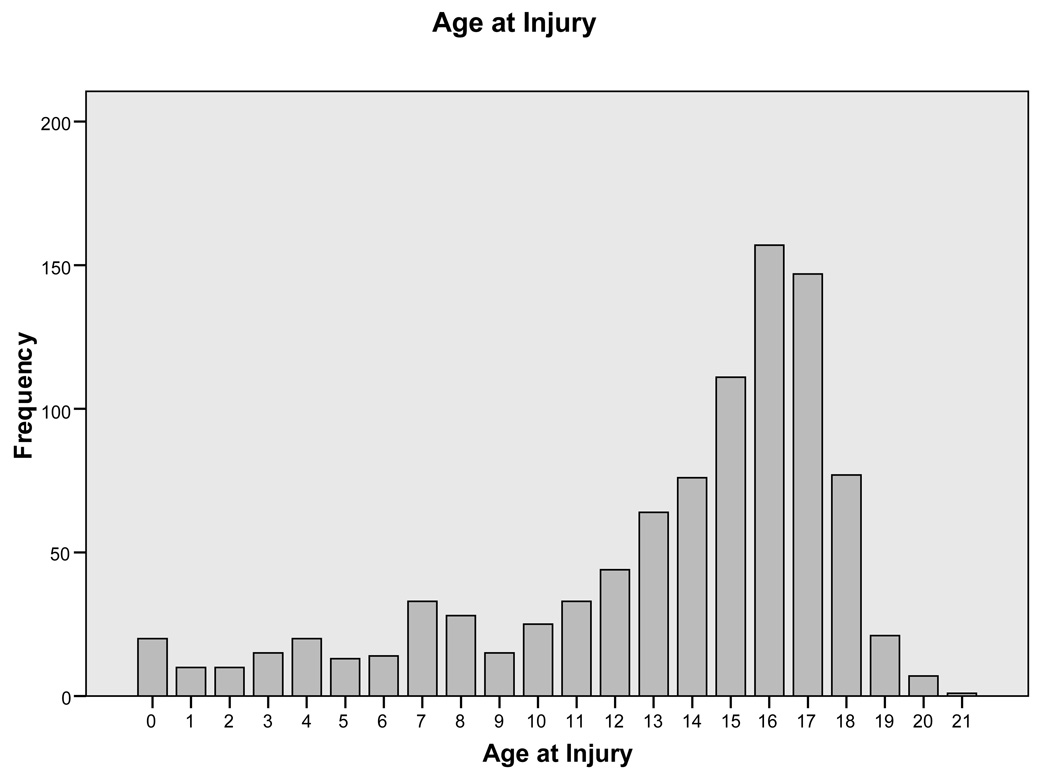
Methods: Scores on FIM motor items were analyzed from 941 children (age range: 0-21 years; mean: 13 years 4 months; s.d.: 4 years 8 months) admitted in acute-to-chronic time periods post-SCI to Shriners Hospitals for Children (USA). FIM motor scores at admission and gains at discharge were examined along with neurological level, completeness of injury, age, etiology of injury, and length of time between injury and admission and admission and discharge.
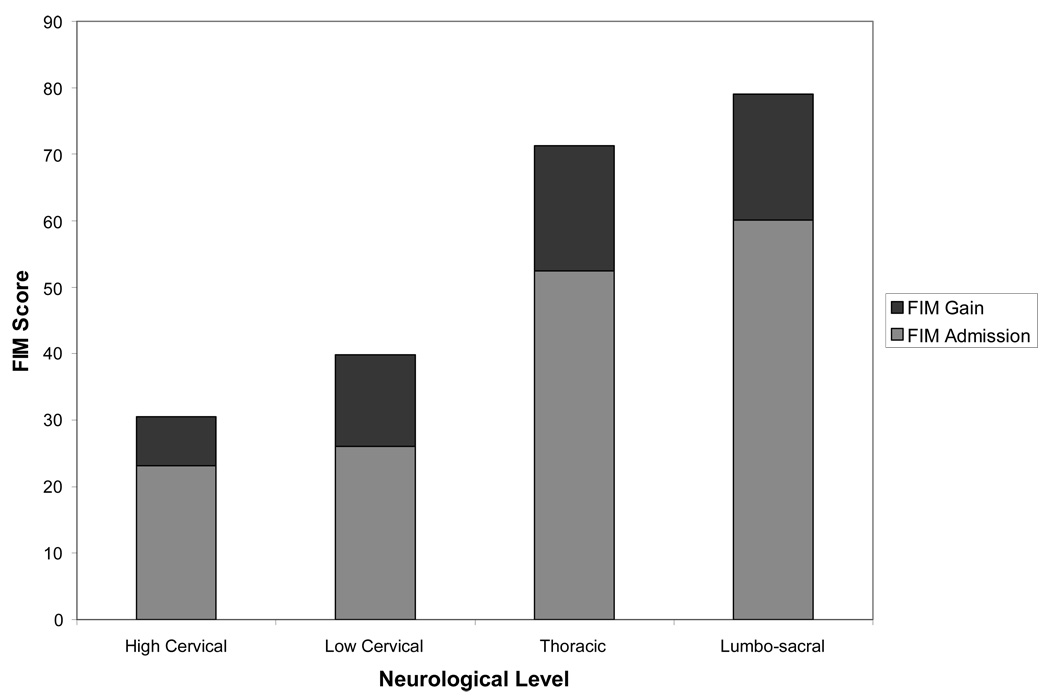
Results: The FIM motor scores at admission were negatively correlated with age, neurological level and completeness of injury. Gain in FIM motor scores was significant across neurological levels, and was associated with lower admission FIM motor scores, lower neurological level, incomplete injury, traumatic injury and less time between injury and admission.
Conclusions: The motor function of children after pediatric SCI depends on neurological level and completeness of injury, among other factors. FIM motor scores can improve with intervention even several years after the injury.
Figures
References
-
- Hamilton MG, Myles ST. Pediatric spinal injury: review of 174 hospital admissions. J Neurosurg. 1992;77:700–704. - PubMed
-
- Nobunaga AI, Go BK, Karunas RB. Recent demographic and injury trends in people served by the Model Spinal Cord Injury Care Systems. Arch Phys Med Rehabil. 1999;80:1372–1382. - PubMed
-
- DeVivo MJ, Vogel LC. Epidemiology of spinal cord injury in children and adolescents. J Spinal Cord Med. 2004;27(S-1):S4–S10. - PubMed
-
- Jackson AB, Dijkers M, DeVivo MJ, Poczatek RB. A demographic profile of new traumatic spinal cord injuries: change and stability over 30 years. Arch Phys Med Rehabil. 2004;85:1740–1748. - PubMed
-
- Vogel LC, DeVivo MJ. Etiology and demographics. In: Betz RR, Mulcahey MJ, editors. The Child with a Spinal Cord Injury. Rosemont, IL: American Academy of Orthopaedic Surgeons; 1996. pp. 3–12.
