


Circulating and hepatic Fas expression in HCV-induced chronic liver disease and hepatocellular carcinoma
- PMID: 18679533
- PMCID: PMC2491664
Circulating and hepatic Fas expression in HCV-induced chronic liver disease and hepatocellular carcinoma
Abstract
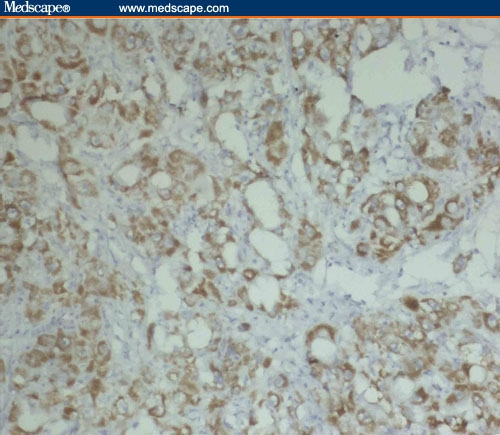
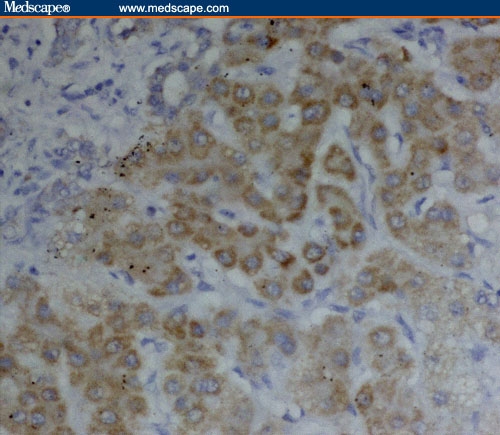
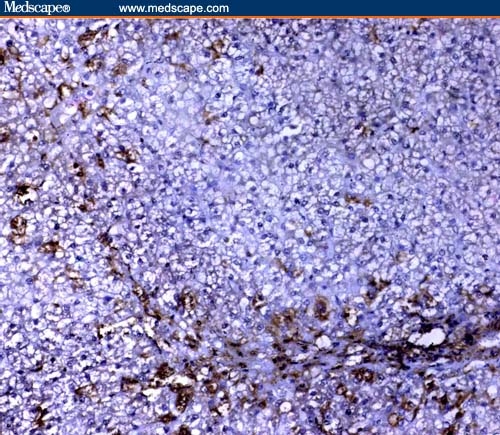
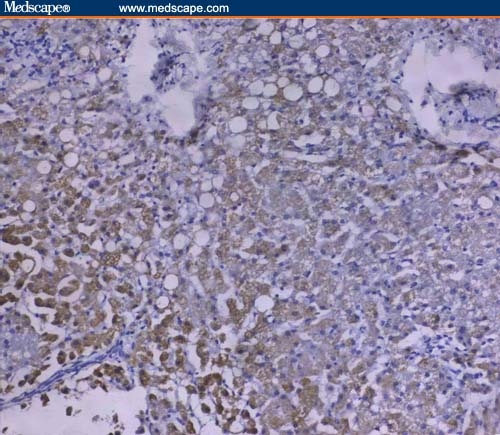
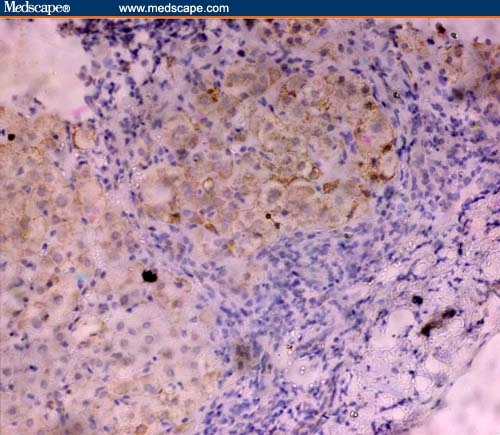
Apoptosis is central for control and elimination of viral infections. In chronic hepatitis C virus (HCV) infection, enhanced hepatocyte apoptosis and upregulation of the death-inducing ligands CD95/Fas occur. This study aimed to study the role of serum soluble Fas and hepatic Fas expression as early predictors of advancement of chronic hepatitis C disease. The current study included 50 cases of chronic hepatitis C (CHC) (and negative hepatitis B virus infection), 30 cases of liver cirrhosis (LC) and HCV, and 20 cases of hepatocellular carcinoma (HCC) and HCV admitted to Theodor Bilharz Research Institute, Giza, Egypt. Fifteen wedge liver biopsies, taken during laparoscopic cholecystectomy, were included in the study as normal controls. Assessment of serum soluble Fas level (sFas) and other laboratory investigations, including liver function tests, serologic markers for viral hepatitis, and serum alpha-fetoprotein level (alpha-FP), were determined for all cases. Histopathologic study and immunohistochemistry using monoclonal antibody for CD95 were also done. The sFas was significantly increased in CHC, LC, and HCC cases compared with normal controls (P < .01). The increase of sFas in HCC was also significantly higher than that of CHC (P < .01). However, positive hepatic expression of Fas antigen was higher in CHC than LC with no significant difference; meanwhile, it was significantly lower in HCC (P < .01) compared with CHC. In conclusion, circulating and hepatic Fas expression in chronic hepatitis C infection illustrate the mechanism of liver injury caused by death receptors throughout the multistep process of fibrosis/carcinogenesis. Not only the higher degree of hepatic fibrosis, but also the lower expression of Fas protein, are correlated with the increased incidence of HCC.
Figures
References
-
- Barth H, Ulsenheimer A, Pape GR. Presentation of hepatitis C virus-like particles by human dendritic cells. Blood. 2005;105:3605–3614. - PubMed
-
- Shin JY, Hur W, Wang JS, et al. HCV core protein promotes liver fibrogenesis via up-regulation of CTGF with TGF-beta1. Exp Mol Med. 2005;37:138–145. - PubMed
-
- Schinoni MI, Parana R. Apoptosis and progression of hepatic fibrosis in liver diseases. Acta Gastroenterol Latinoam. 2006;36:211–217. - PubMed
-
- Suda T, Takashi T, Goldstein R, Nagata S. Molecular cloning and expression of the Fas ligand, a novel member of the tumor necrosis factor family. Cell. 1993;75:1169–1178. - PubMed
Publication types
MeSH terms
Substances
LinkOut - more resources
Full Text Sources
Medical
Research Materials
Miscellaneous