doi: 10.1371/journal.pmed.0050169.
Assessing antimalarial efficacy in a time of change to artemisinin-based combination therapies: the role of Médecins Sans Frontières
Affiliations
- PMID: 18684011
- PMCID: PMC2494566
- DOI: 10.1371/journal.pmed.0050169
Item in Clipboard
Assessing antimalarial efficacy in a time of change to artemisinin-based combination therapies: the role of Médecins Sans Frontières
PLoS Med.
.
Abstract
Jean-Paul Guthmann and colleagues describe the output of MSF's work in antimalarial efficacy assessment during the last decade.
Conflict of interest statement
Figures
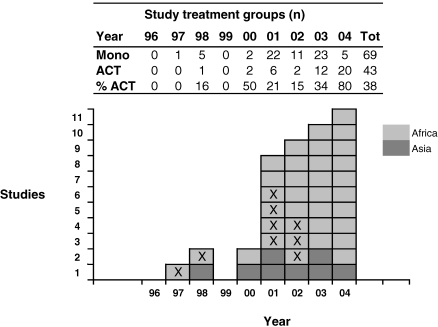
Cells with X represent studies of 14-day follow-up or less; empty cells represent studies of 28-day follow-up or more. Mono = monotherapies.
References
-
- Trape JF. The public health impact of chloroquine resistance in Africa. Am J Trop Med Hyg. 2001;64 (1–2 Suppl):12–17. - PubMed
-
- Zucker JR, Ruebush TK, II, Obonyo C, Otieno J, Campbell C. The mortality consequences of the continued use of chloroquine in Africa: Experience in Siaya, Western Kenya. Am J Trop Med Hyg. 2003;68:386–390. - PubMed
-
- White NJ, Nosten F, Looareesuwan S, Watkins WM, Marsh K, et al. Averting a malaria disaster. Lancet. 1999;353:1965–1967. - PubMed
-
- World Health Organization. Assessment of therapeutic efficacy of antimalarial drugs for uncomplicated falciparum malaria in areas with intense transmission. 1996. Available: http://www.who.int/drugresistance/malaria/en/Assessment_malaria_96.pdf. Accessed 7 July 2008.
-
- World Health Organization. Assessment and monitoring of antimalarial drug efficacy for the treatment of uncomplicated falciparum malaria. 2003. Available: http://www.who.int/malaria/docs/ProtocolWHO.pdf. Accessed 7 July 2008.
Publication types
MeSH terms
Substances
Grants and funding
LinkOut - more resources
Full Text Sources
Miscellaneous