


Comprehensive proteomics of Methylobacterium extorquens AM1 metabolism under single carbon and nonmethylotrophic conditions
- PMID: 18686303
- PMCID: PMC2707879
- DOI: 10.1002/pmic.200800152
Comprehensive proteomics of Methylobacterium extorquens AM1 metabolism under single carbon and nonmethylotrophic conditions
Abstract
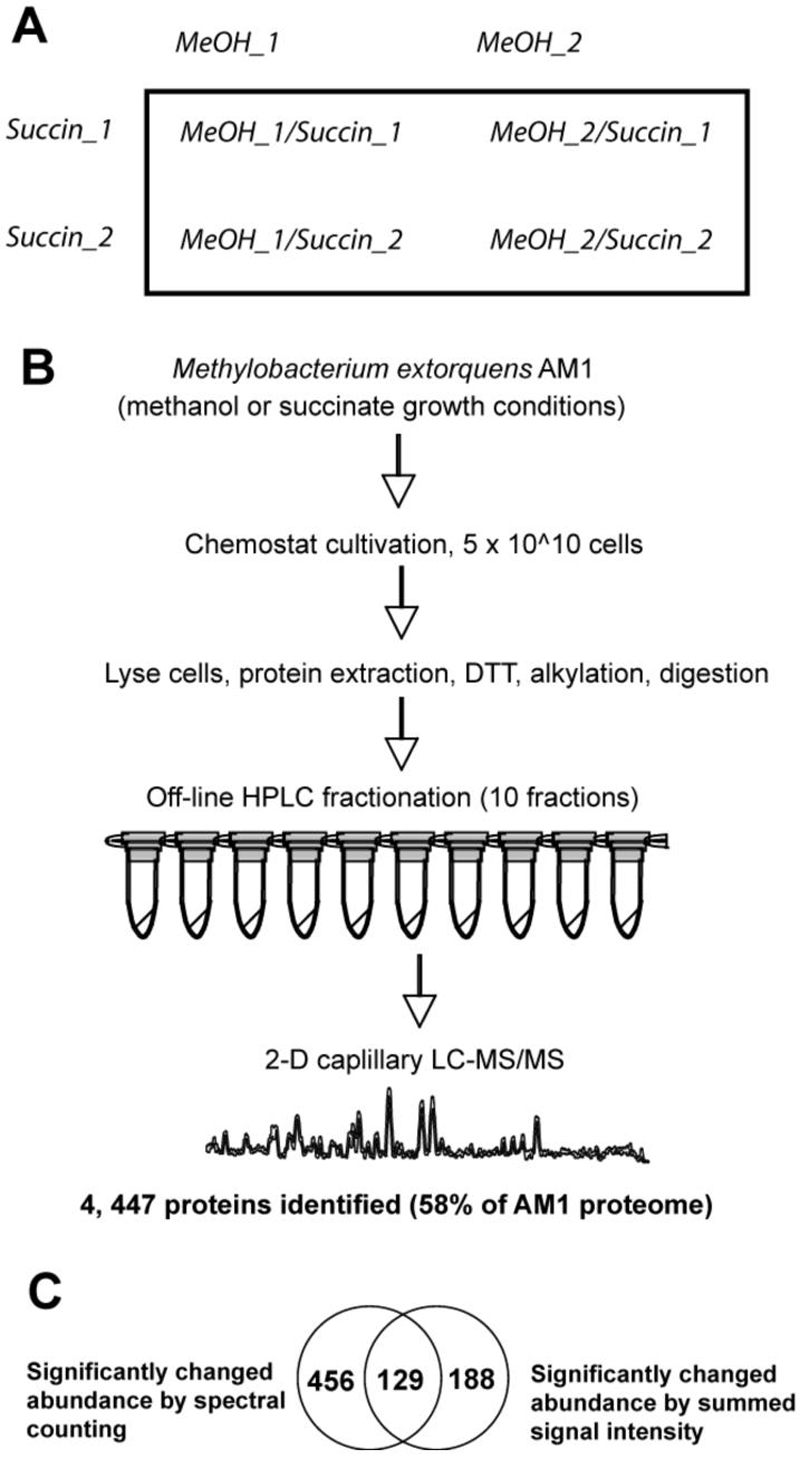
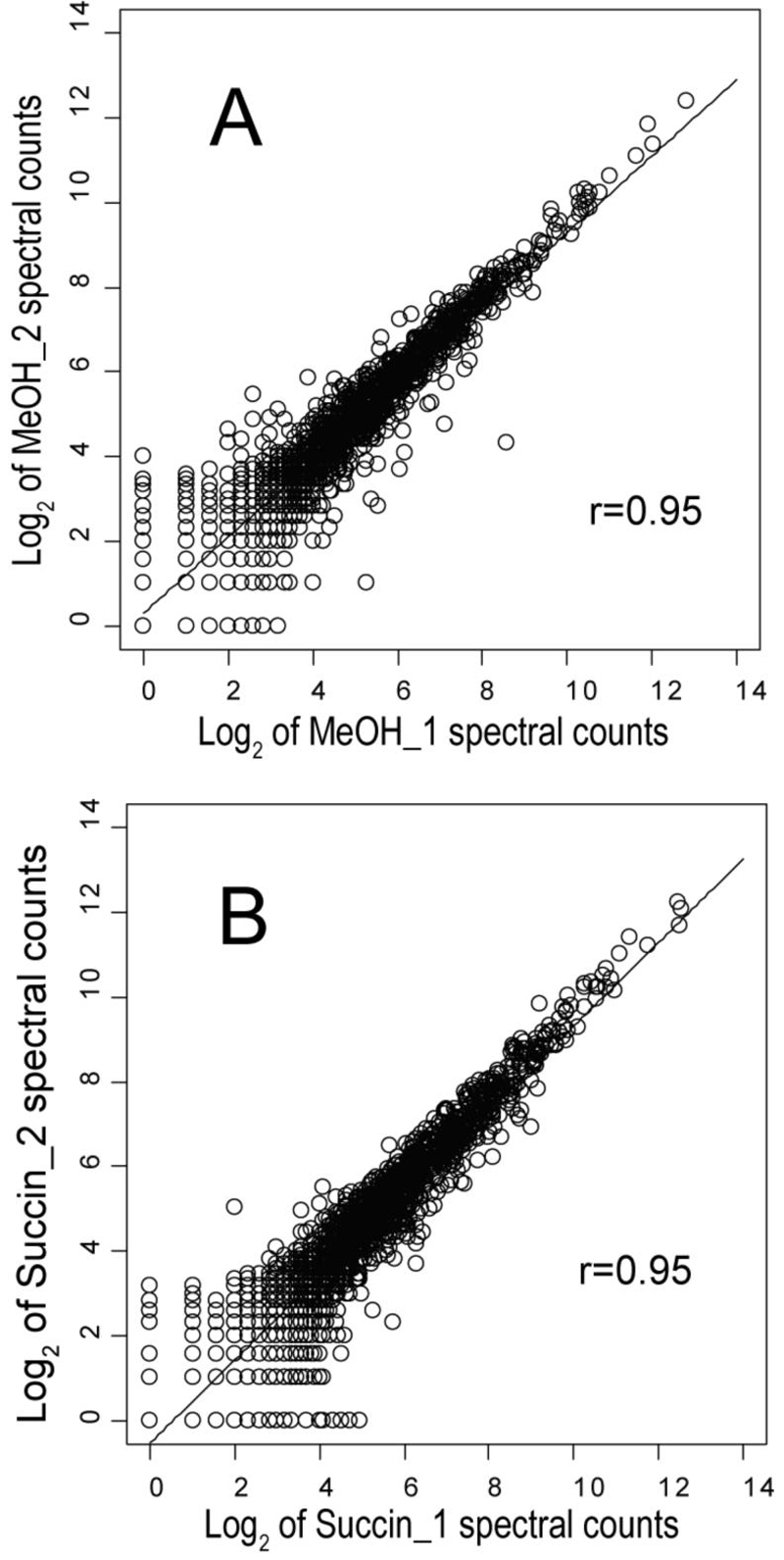
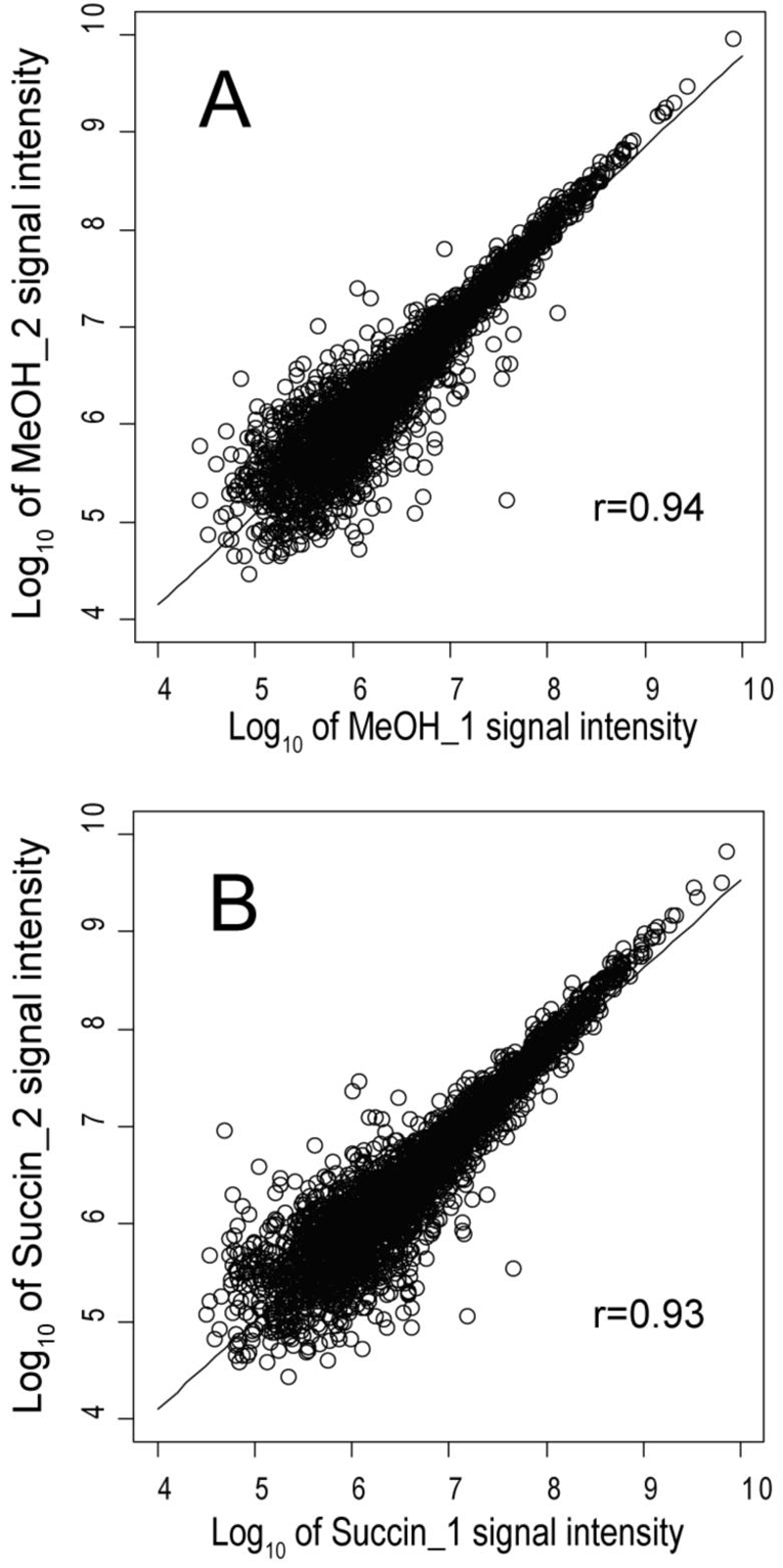
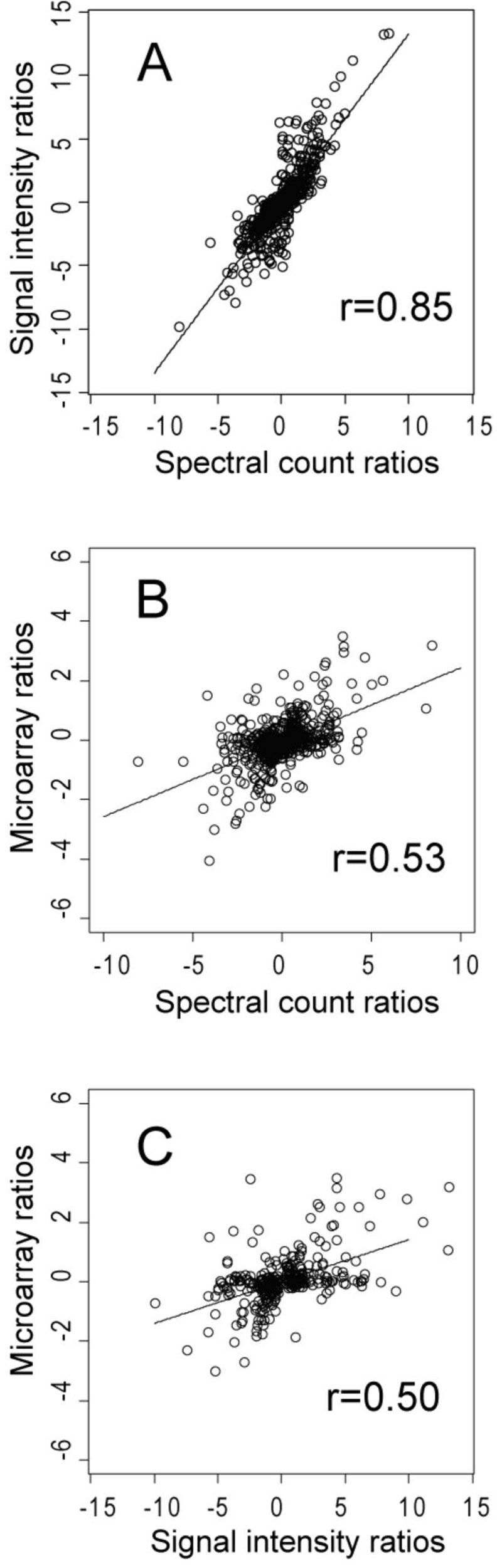
In order to validate a gel free quantitative proteomics assay for the model methylotrophic bacterium Methylobacterium extorquens AM1, we examined the M. extorquens AM1 proteome under single carbon (methanol) and multicarbon (succinate) growth, conditions that have been studied for decades and for which extensive corroborative data have been compiled. In total, 4447 proteins from a database containing 7556 putative ORFs from M. extorquens AM1 could be identified with two or more peptide sequences, corresponding to a qualitative proteome coverage of 58%. Statistically significant nonzero (log(2) scale) differential abundance ratios of methanol/succinate could be detected for 317 proteins using summed ion intensity measurements and 585 proteins using spectral counting, at a q-value cut-off of 0.01, a measure of false discovery rate. The results were compared to recent microarray studies performed under equivalent chemostat conditions. The M. extorquens AM1 studies demonstrated the feasibility of scaling up the multidimensional capillary HPLC MS/MS approach to a prokaryotic organism with a proteome more than three times the size of microbes we have investigated previously, while maintaining a high degree of proteome coverage and reliable quantitative abundance ratios.
Figures
References
-
- Vorholt JA. Cofactor-dependent pathways of formaldehyde oxidation in methylotrophic bacteria. Arch. Microbiol. 2002;178:239–249. - PubMed
-
- Anthony C. The Biochemistry of Methylotrophs. Academic Press; New York: 1982.
-
- Lidstrom ME. In: Methane and Methanol Utilizers. Murrell JC, Dalton H, editors. Plenum; New York: 1992. pp. 183–206.
-
- Taylor IJ, Anthony C. A biochemical basis for obligate methylotrophy: Properties of a mutant of Pseudomonas AM1 lacking 2-oxoglutarate dehydrogenase. J. Gen. Microbiol. 1976;93:259–265. - PubMed
-
- Lidstrom ME. In: The Prokaryotes. 3rd edition. Stackebrandt E, editor. Springer; New York: 2001. pp. 223–244.
Publication types
MeSH terms
Substances
Grants and funding
LinkOut - more resources
Full Text Sources
