


The intermediate-conductance calcium-activated potassium channel KCa3.1 contributes to atherogenesis in mice and humans
- PMID: 18688283
- PMCID: PMC2496961
- DOI: 10.1172/JCI30836
The intermediate-conductance calcium-activated potassium channel KCa3.1 contributes to atherogenesis in mice and humans
Abstract
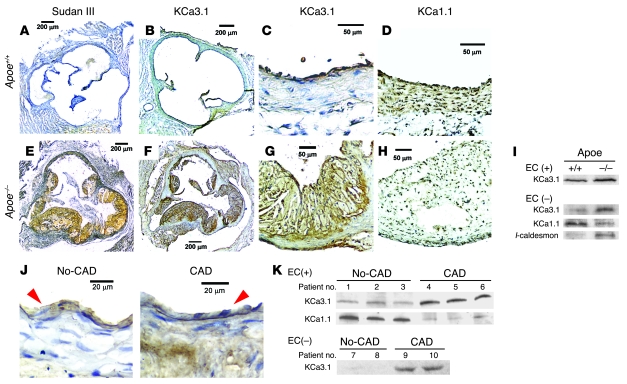
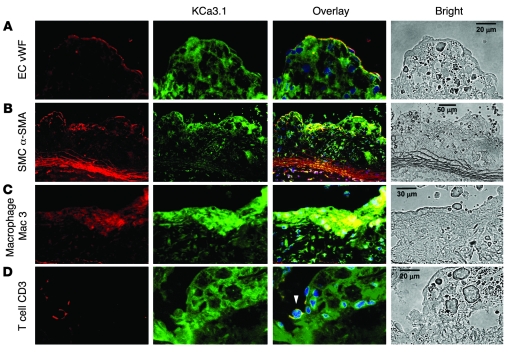
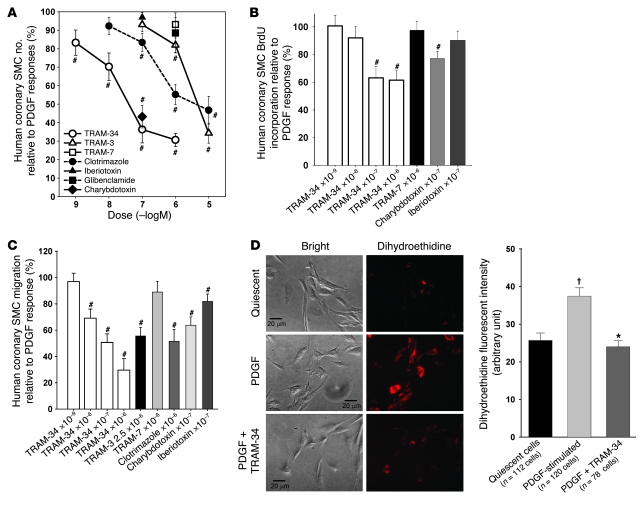
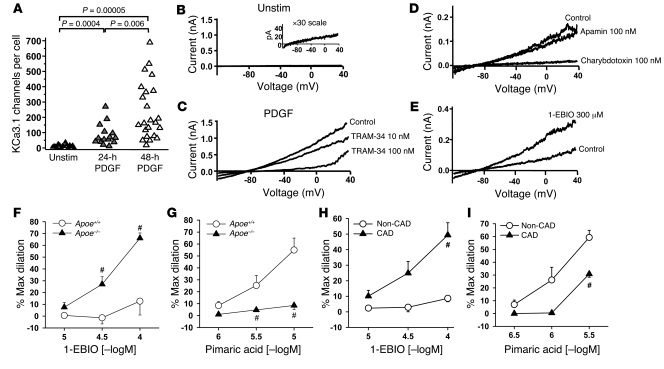
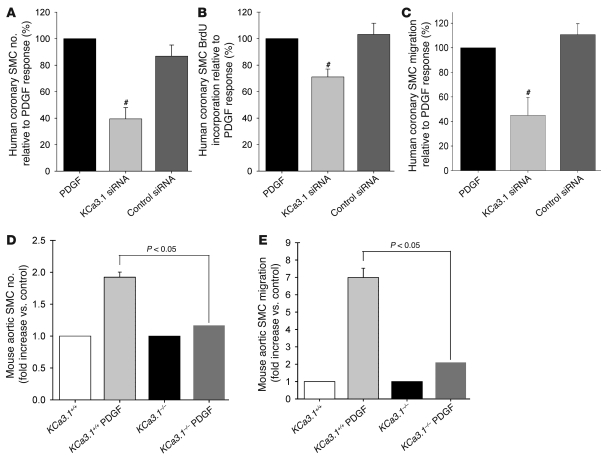
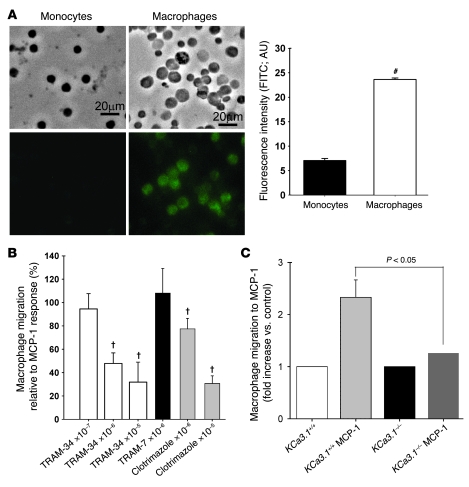
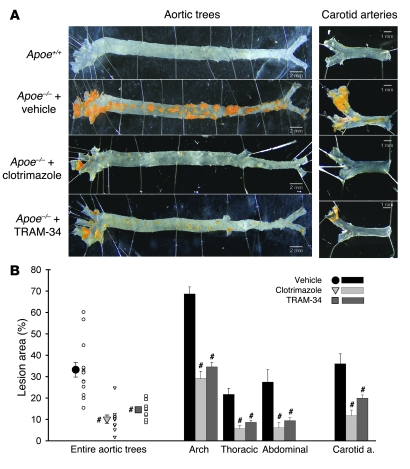
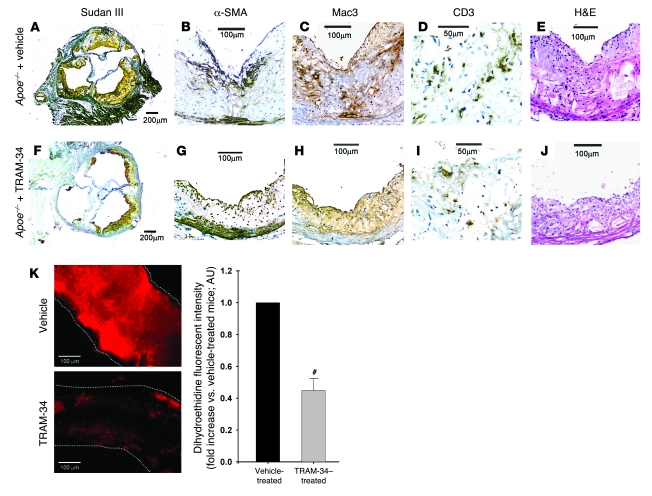
Atherosclerosis remains a major cause of death in the developed world despite the success of therapies that lower cholesterol and BP. The intermediate-conductance calcium-activated potassium channel KCa3.1 is expressed in multiple cell types implicated in atherogenesis, and pharmacological blockade of this channel inhibits VSMC and lymphocyte activation in rats and mice. We found that coronary vessels from patients with coronary artery disease expressed elevated levels of KCa3.1. In Apoe(-/-) mice, a genetic model of atherosclerosis, KCa3.1 expression was elevated in the VSMCs, macrophages, and T lymphocytes that infiltrated atherosclerotic lesions. Selective pharmacological blockade and gene silencing of KCa3.1 suppressed proliferation, migration, and oxidative stress of human VSMCs. Furthermore, VSMC proliferation and macrophage activation were reduced in KCa3.1(-/-) mice. In vivo therapy with 2 KCa3.1 blockers, TRAM-34 and clotrimazole, significantly reduced the development of atherosclerosis in aortas of Apoe(-/-) mice by suppressing VSMC proliferation and migration into plaques, decreasing infiltration of plaques by macrophages and T lymphocytes, and reducing oxidative stress. Therapeutic concentrations of TRAM-34 in mice caused no discernible toxicity after repeated dosing and did not compromise the immune response to influenza virus. These data suggest that KCa3.1 blockers represent a promising therapeutic strategy for atherosclerosis.
Figures
References
-
- Neylon C.B., Lang R.J., Fu Y., Bobik A., Reinhart P.H. Molecular cloning and characterization of the intermediate-conductance Ca2+-activated K+ channel in vascular smooth muscle: relationship between KCa channel diversity and smooth muscle cell function. . Circ. Res. 1999;85:e33–e43. - PubMed
Publication types
MeSH terms
Substances
Grants and funding
- R01 DE09692/DE/NIDCR NIH HHS/United States
- R37 DE008921/DE/NIDCR NIH HHS/United States
- R01 DE009692/DE/NIDCR NIH HHS/United States
- P01 HL068769/HL/NHLBI NIH HHS/United States
- R01 NS48252/NS/NINDS NIH HHS/United States
- P50 HL65203/HL/NHLBI NIH HHS/United States
- P50 HL065203/HL/NHLBI NIH HHS/United States
- R01 NS048252/NS/NINDS NIH HHS/United States
- P01 HL68769-02/HL/NHLBI NIH HHS/United States
- P01 HL059996/HL/NHLBI NIH HHS/United States
- R01 GM076063/GM/NIGMS NIH HHS/United States
- P01 HL59996/HL/NHLBI NIH HHS/United States
- R01 HL094971/HL/NHLBI NIH HHS/United States
- R37 DE08921/DE/NIDCR NIH HHS/United States
- R01 HL080173/HL/NHLBI NIH HHS/United States
LinkOut - more resources
Full Text Sources
Other Literature Sources
Medical
Molecular Biology Databases
Miscellaneous
