


Paradigm shifts in the cell biology of STAT signaling
- PMID: 18691663
- PMCID: PMC2597702
- DOI: 10.1016/j.semcdb.2008.07.003
Paradigm shifts in the cell biology of STAT signaling
Abstract
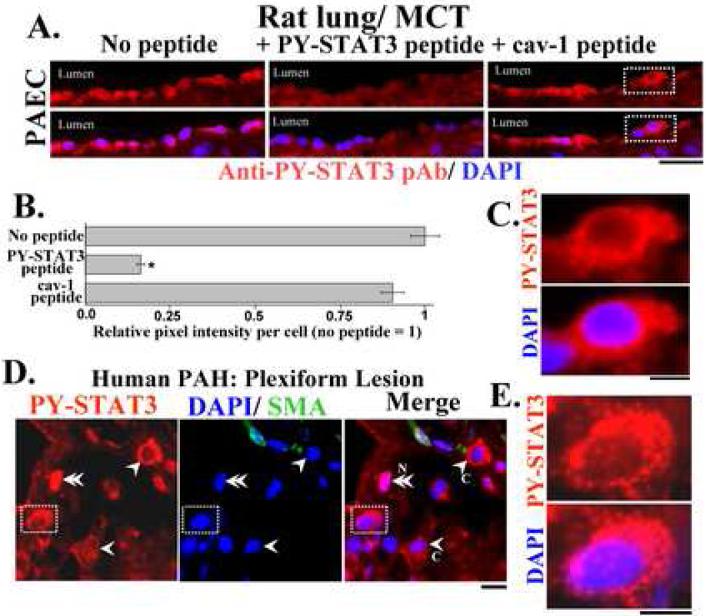
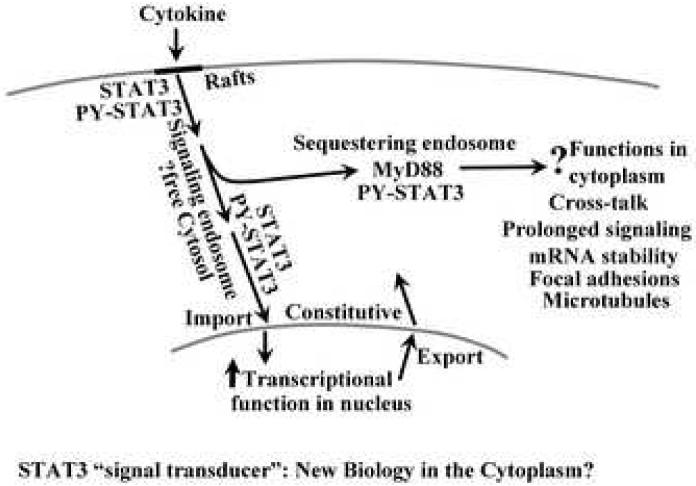
In recent years several of the key tenets of the original cytokine-STAT-signaling paradigm had to be revised. First, the notion that nonphosphorylated "inactive" STATs are present in the cytoplasm as free monomers which dimerized only subsequent to Tyr-phosphorylation has been replaced by the understanding that nonphosphorylated STATs in the cytoplasm exist largely as dimers and high molecular mass "statosome" complexes. Second, the notion that phosphorylation, either of Tyr or Ser residues or both, in STAT species is required for transcriptional activation has been replaced by the realization that nonphosphorylated STATs can be transcriptionally active albeit with respect to sets of target genes distinct from phosphorylated STATs. Third, the notion that it is the activation by phosphorylation of STATs at the plasma membrane that then leads to their import into the nucleus has been replaced by the recognition that even nonphosphorylated STATs shuttle between the cytoplasm and nucleus at all times in a constitutive manner. Fourth, the notion that the trans-cytoplasmic transit of STATs from the plasma membrane to the nuclear import machinery takes place exclusively as a free cytosolic process has been replaced by the understanding that at least a portion of this trans-cytoplasmic transit is mediated via membrane-associated caveolar and endocytic trafficking (the "signaling endosome" hypothesis). Fifth, the targeting and sequestration of activated STAT3 to long-lived endosomes in the cytoplasm requires consideration of STAT3-mediated "signal transduction" from the plasma membrane to cytoplasmic membrane destinations potentially for function(s) in the cytoplasm. Indeed, in tissue sections many discrete histologic cell types display PY-STAT3 almost exclusively in the cytoplasm with little, if any, in the nucleus. New challenges include determining the structural bases for the recruitment of nonphosphorylated dimeric STAT species to the cytosolic face of membranes including at the cytoplasmic tails of respective receptor complexes, the conformational changes subsequent to phosphorylation and the structural bases for the targeting and functions of STAT proteins within the cytoplasm per se.
Figures




References
-
- Darnell JE, Kerr IM, Stark GR. Jak-STAT pathways and transcriptional activation in response to IFNs and other extracellular signaling proteins. Science. 1994;264:1415–21. - PubMed
-
- Levy DE, Darnell JE. Stats: transcriptional control and biological impact. Nat Rev Mol Cell Biol. 2002;3:651–62. - PubMed
-
- Mertens C, Darnell JE. Snapshot: JAK-STAT signaling. Cell. 2007;131:612. - PubMed
-
- Sehgal PB, Levy DE, Hirano T, editors. Signal Transducers and Activators of Transcription. Activation and Biology, Kluwer Academic Press; Dordrecht, The Netherlands: 2003. pp. 1–746.
-
- Shuai K, Horvath CM, Huang LH, Qureshi SA, Cowburn D, Darnell JE., Jr Interferon activation of the transcription factor Stat91 involves dimerization through SH-2 phosphotyrosyl peptide interactions. Cell. 1994;76:821–8. - PubMed
Publication types
MeSH terms
Substances
Grants and funding
LinkOut - more resources
Full Text Sources
Other Literature Sources
Miscellaneous
