


Therapy-related myeloid leukemia
- PMID: 18692692
- PMCID: PMC2600445
- DOI: 10.1053/j.seminoncol.2008.04.012
Therapy-related myeloid leukemia
Abstract
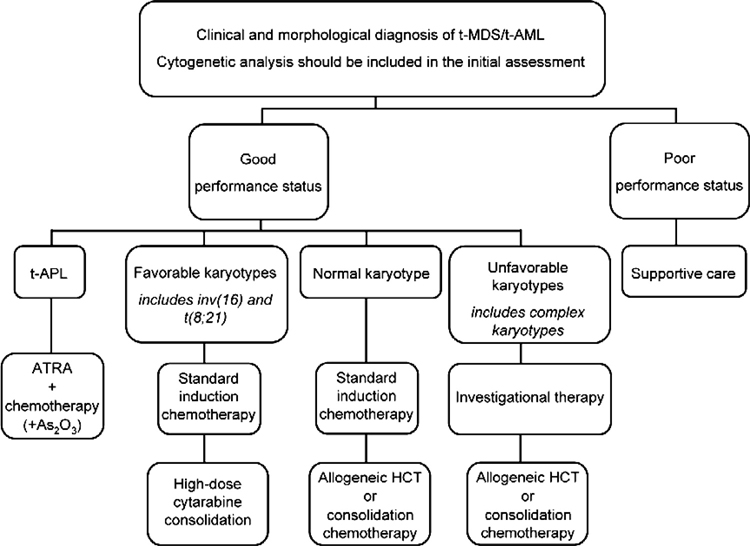
Therapy-related myelodysplastic syndrome and acute myeloid leukemia (t-MDS/t-AML) are thought to be the direct consequence of mutational events induced by chemotherapy, radiation therapy, immunosuppressive therapy, or a combination of these modalities, given for a pre-existing condition. The outcomes for these patients have been poor historically compared to people who develop de novo AML. The spectrum of cytogenetic abnormalities in t-AML is similar to de novo AML, but the frequency of unfavorable cytogenetics, such as a complex karyotype or deletion or loss of chromosomes 5 and/or 7, is considerably higher in t-AML. Survival varies according to cytogenetic risk group in t-AML patients, with better outcomes being observed in those with favorable-risk karyotypes. Treatment recommendations should be based on performance status and karyotype. A deeper understanding of the factors that predispose patients to the development of therapy-related myeloid leukemia would help clinicians monitor patients more carefully after treatment for a primary condition. Ultimately, this knowledge could influence initial treatment strategies with the goal of decreasing the incidence of this serious complication.
Conflict of interest statement
There no relevant conflicts of interest for either author.
Figures
References
-
- Godley LA, Larson RA. The syndrome of therapy-related myelodysplasia and myeloid leukemia. In: Bennett JM, editor. The myelodysplastic syndromes: pathobiology and clinical management. New York: Marcel Dekker, Inc.; 2002. pp. 139–176.
-
- Offman J, Opelz G, Doehler B, et al. Defective DNA mismatch repair in acute myeloid leukemia/myelodysplastic syndrome after organ transplantation. Blood. 2004;104:822–828. - PubMed
-
- Rowley JD, Olney HJ. International workshop on the relationship of prior therapy to balanced chromosome aberrations in therapy-related myelodysplastic syndromes and acute leukemia: overview report. Genes Chromosomes Cancer. 2002;33:331–345. - PubMed
-
- Smith SM, Le Beau MM, Huo D, et al. Clinical-cytogenetic associations in 306 patients with therapy-related myelodysplasia and myeloid leukemia: the University of Chicago series. Blood. 2003;102:43–52. - PubMed
-
- Brunning RD, Matutes E, Flandrin G, et al. Acute myeloid leukaemias and myelodysplastic syndromes, therapy related. In: Jaffe ES, Harris NL, Stein H, et al., editors. World Health Organization Classification of Tumours: Pathology and Genetics of Tumours of Haematopoietic and Lymphoid Tissues. Lyon: IARC Press; 2001. pp. 89–91.
Publication types
MeSH terms
Substances
Grants and funding
LinkOut - more resources
Full Text Sources
Medical
Research Materials
Miscellaneous
