


Platelet factor 4 mediates inflammation in experimental cerebral malaria
- PMID: 18692777
- PMCID: PMC2603442
- DOI: 10.1016/j.chom.2008.07.003
Platelet factor 4 mediates inflammation in experimental cerebral malaria
Abstract
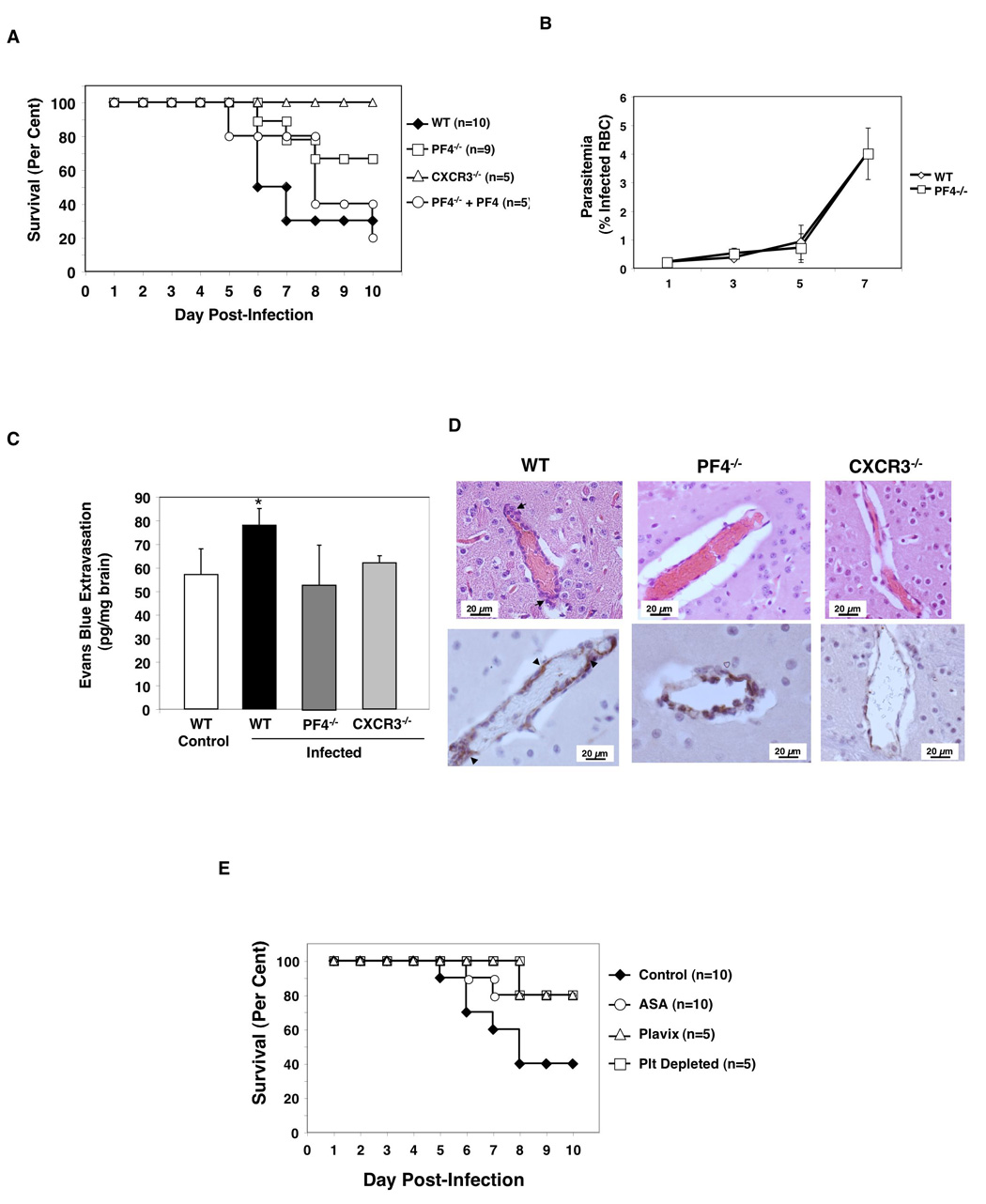
Cerebral malaria (CM) is a major complication of Plasmodium falciparum infection in children. The pathogenesis of CM involves vascular inflammation, immune stimulation, and obstruction of cerebral capillaries. Platelets have a prominent role in both immune responses and vascular obstruction. We now demonstrate that the platelet-derived chemokine, platelet factor 4 (PF4)/CXCL4, promotes the development of experimental cerebral malaria (ECM). Plasmodium-infected red blood cells (RBCs) activated platelets independently of vascular effects, resulting in increased plasma PF4. PF4 or chemokine receptor CXCR3 null mice had less severe ECM, including decreased T cell recruitment to the brain, and platelet depletion or aspirin treatment reduced the development of ECM. We conclude that Plasmodium-infected RBCs can directly activate platelets, and platelet-derived PF4 then contributes to immune activation and T cell trafficking as part of the pathogenesis of ECM.
Figures



References
-
- Boehlen F, Clemetson KJ. Platelet chemokines and their receptors: what is their relevance to platelet storage and transfusion practice? Transfus Med. 2001;11:403–417. - PubMed
-
- Chakravorty SJ, Craig A. The role of ICAM-1 in Plasmodium falciparum cytoadherence. Eur J Cell Biol. 2005;84:15–27. - PubMed
-
- Eslin DE, Zhang C, Samuels KJ, Rauova L, Zhai L, Niewiarowski S, Cines DB, Poncz M, Kowalska MA. Transgenic mice studies demonstrate a role for platelet factor 4 in thrombosis: dissociation between anticoagulant and antithrombotic effect of heparin. Blood. 2004;104:3173–3180. - PubMed
Publication types
MeSH terms
Substances
Grants and funding
LinkOut - more resources
Full Text Sources
Other Literature Sources
Miscellaneous
