


Duration of nocturnal hypoglycemia before seizures
- PMID: 18694975
- PMCID: PMC2571056
- DOI: 10.2337/dc08-0863
Duration of nocturnal hypoglycemia before seizures
Abstract
Objective: Despite a high incidence of nocturnal hypoglycemia documented by the use of continuous glucose monitoring (CGM), there are no reports in the literature of nocturnal hypoglycemic seizures while a patient is wearing a CGM device.
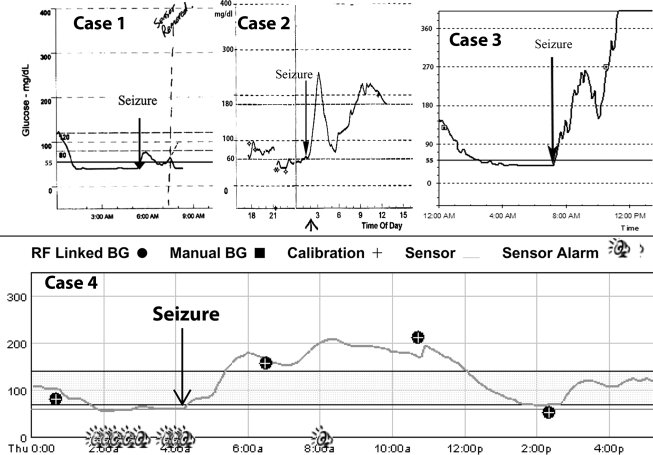
Research design and methods: In this article, we describe four such cases and assess the duration of nocturnal hypoglycemia before the seizure.
Results: In the cases where patients had a nocturnal hypoglycemic seizure while wearing a CGM device, sensor hypoglycemia (<60 mg/dl) was documented on the CGM record for 2.25-4 h before seizure activity.
Conclusions: Even with a subcutaneous glucose lag of 18 min when compared with blood glucose measurements, glucose sensors have time to provide clinically meaningful alarms. Current nocturnal hypoglycemic alarms need to be improved, however, since patients can sleep through the current alarm systems.
Figures
References
-
- Group DR: The effect of intensive treatment of diabetes on the development and progression of long-term complications in insulin-dependent diabetes mellitus. N Engl J Med 329:977–986, 1993 - PubMed
-
- Davis EA, Keating B, Byrne GC, Russell M, Jones TW: Hypoglycemia: incidence and clinical predictors in a large population-based sample of children and adolescents with IDDM. Diabetes Care 20:22–25, 1997 - PubMed
-
- Sovik O, Thordarson H: Dead-in-bed syndrome in young diabetic patients. Diabetes Care 22(Suppl. 2):B40–B42, 1999 - PubMed
-
- Jones TW, Porter P, Sherwin RS, Davis EA, O'Leary P, Fraser F, Byrne G, Stick S, Tamborlane WV: Decreased epinephrine responses to hypoglycemia during sleep. N Engl J Med 338:1657–1662, 1998 - PubMed
-
- Boyne MS, Silver DM, Kaplan J, Saudek CD: Timing of changes in interstitial and venous blood glucose measured with a continuous subcutaneous glucose sensor. Diabetes 52:2790–2794, 2003 - PubMed
