


Mechanisms underlying altered mood and cardiovascular dysfunction: the value of neurobiological and behavioral research with animal models
- PMID: 18703084
- PMCID: PMC2593749
- DOI: 10.1016/j.neubiorev.2008.07.004
Mechanisms underlying altered mood and cardiovascular dysfunction: the value of neurobiological and behavioral research with animal models
Abstract
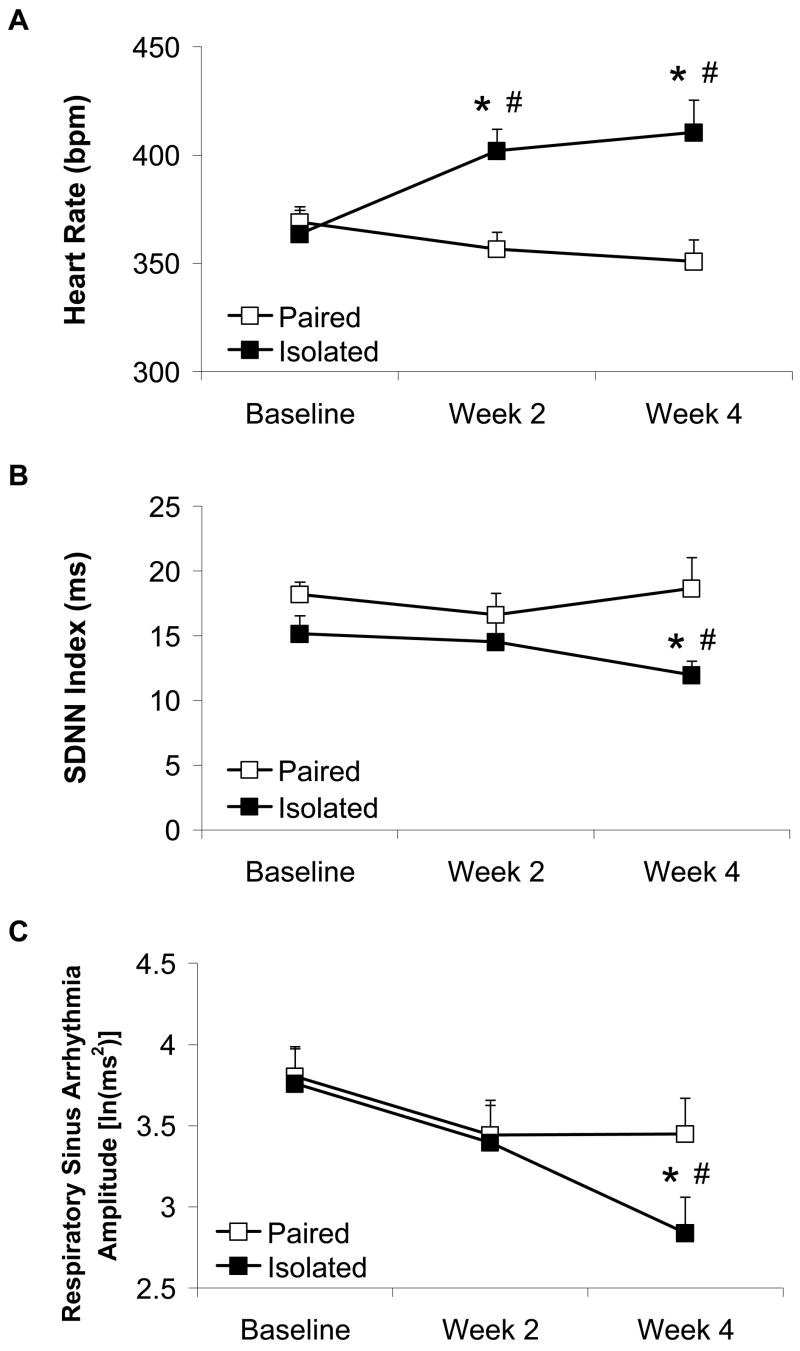
A bidirectional association between mood disorders and cardiovascular diseases has been described in humans, yet the precise neurobiological mechanisms that underlie this association are not fully understood. This article is focused on neurobiological processes and mediators in mood and cardiovascular disorders, with an emphasis on common mechanisms including stressor reactivity, neuroendocrine and neurohumoral changes, immune alterations, autonomic and cardiovascular dysregulation, and central neurotransmitter and neuropeptide dysfunction. A discussion of the utility of experimental investigations with rodent models, including those in rats and prairie voles (Microtus ochrogaster), is presented. Specific studies using these models are reviewed, focusing on the analysis of behavioral, physiological and neural mechanisms underlying depressive disorders and cardiovascular disease. Considered in combination with studies using human samples, the investigation of mechanisms underlying depressive behaviors and cardiovascular regulation using animal models will enhance our understanding of the association of depression and cardiovascular disease, and will promote the development of improved interventions for individuals with these detrimental disorders.
Figures
References
-
- Adell A, Garcia-Marquez C, Armario A, Gelpi E. Chronic stress increases serotonin and noradrenaline in rat brain and sensitizes their responses to a further acute stress. J Neurochem. 1988;50:1678–1681. - PubMed
-
- Agelink MW, Majewski T, Wurthmann C, Postert T, Linka T, Rotterdam S, Klieser E. Autonomic neurocardiac function in patients with major depression and effects of antihypertensive treatment with nefazodone. J Affect Disord. 2001;62:187–198. - PubMed
-
- American Psychiatric Association. Diagnostic and statistical manual of mental disorders. 4. American Psychiatric Association; Washington, DC: 2000. text revision.
-
- Anisman H, Matheson K. Stress, depression, and anhedonia: caveats concerning animal models. Neurosci Biobehav Rev. 2005;29:525–546. - PubMed
-
- Arletti R, Bertolini A. Oxytocin acts as an antidepressant in two animal models of depression. Life Sci. 1987;41:1725–1730. - PubMed
Publication types
MeSH terms
Substances
Grants and funding
- R01 HL057472/HL/NHLBI NIH HHS/United States
- T32 HL007121/HL/NHLBI NIH HHS/United States
- MH72935/MH/NIMH NIH HHS/United States
- R01 MH072935/MH/NIMH NIH HHS/United States
- MH73233/MH/NIMH NIH HHS/United States
- P01 HL014388/HL/NHLBI NIH HHS/United States
- R01 MH058448/MH/NIMH NIH HHS/United States
- HL14388/HL/NHLBI NIH HHS/United States
- MH67446/MH/NIMH NIH HHS/United States
- HL57472/HL/NHLBI NIH HHS/United States
- R21 MH077581/MH/NIMH NIH HHS/United States
- R01 NS034153/NS/NINDS NIH HHS/United States
- MH77581/MH/NIMH NIH HHS/United States
- R21 MH067446/MH/NIMH NIH HHS/United States
- MH65839/MH/NIMH NIH HHS/United States
- F31 MH065839/MH/NIMH NIH HHS/United States
- F32 MH073233/MH/NIMH NIH HHS/United States
LinkOut - more resources
Full Text Sources
Medical
