Delayed and accelerated aging share common longevity assurance mechanisms
- PMID: 18704162
- PMCID: PMC2493043
- DOI: 10.1371/journal.pgen.1000161
Delayed and accelerated aging share common longevity assurance mechanisms
Abstract
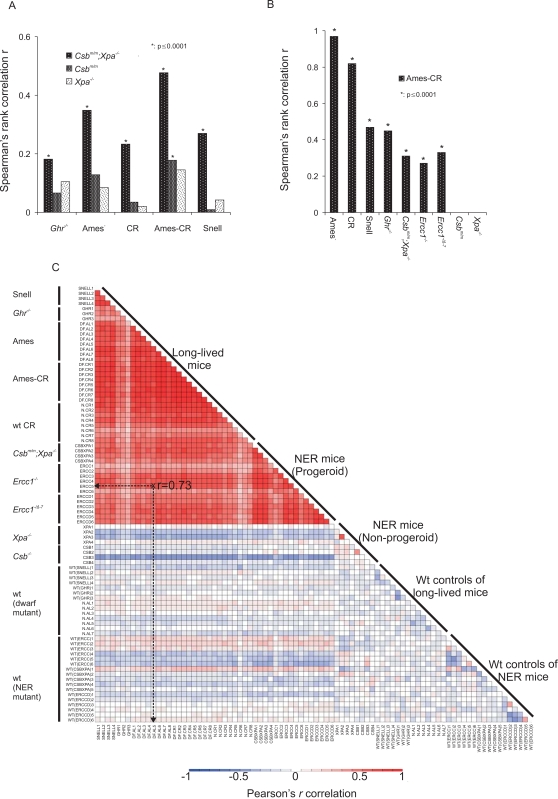
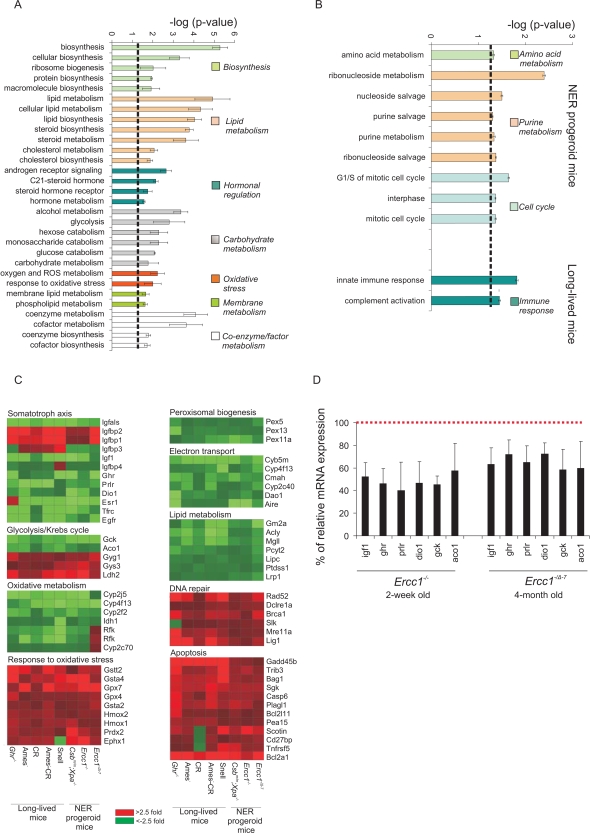
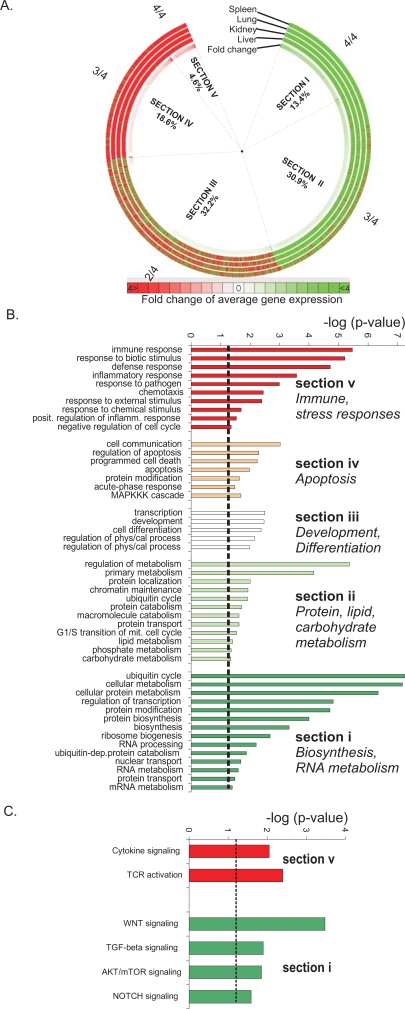
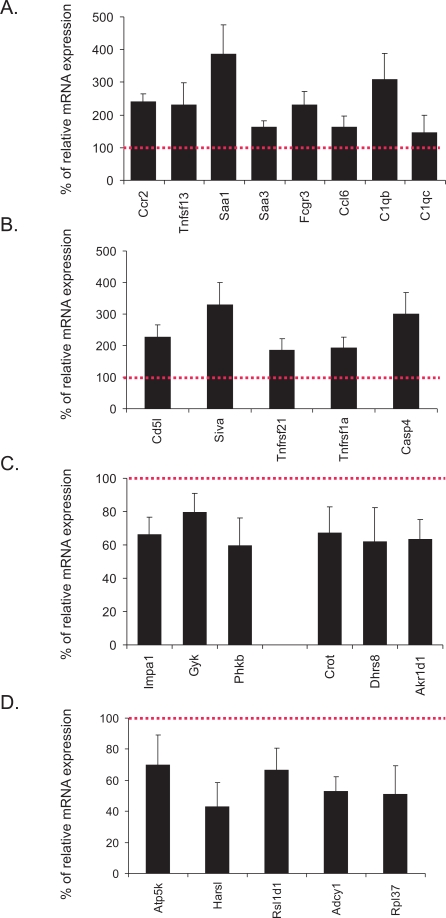
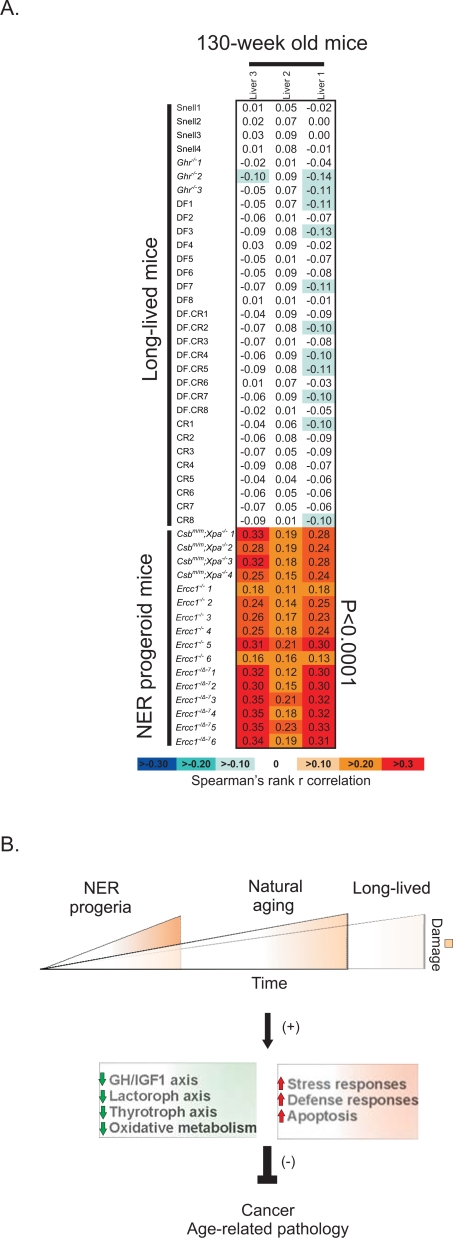
Mutant dwarf and calorie-restricted mice benefit from healthy aging and unusually long lifespan. In contrast, mouse models for DNA repair-deficient progeroid syndromes age and die prematurely. To identify mechanisms that regulate mammalian longevity, we quantified the parallels between the genome-wide liver expression profiles of mice with those two extremes of lifespan. Contrary to expectation, we find significant, genome-wide expression associations between the progeroid and long-lived mice. Subsequent analysis of significantly over-represented biological processes revealed suppression of the endocrine and energy pathways with increased stress responses in both delayed and premature aging. To test the relevance of these processes in natural aging, we compared the transcriptomes of liver, lung, kidney, and spleen over the entire murine adult lifespan and subsequently confirmed these findings on an independent aging cohort. The majority of genes showed similar expression changes in all four organs, indicating a systemic transcriptional response with aging. This systemic response included the same biological processes that are triggered in progeroid and long-lived mice. However, on a genome-wide scale, transcriptomes of naturally aged mice showed a strong association to progeroid but not to long-lived mice. Thus, endocrine and metabolic changes are indicative of "survival" responses to genotoxic stress or starvation, whereas genome-wide associations in gene expression with natural aging are indicative of biological age, which may thus delineate pro- and anti-aging effects of treatments aimed at health-span extension.
Conflict of interest statement
The authors have declared that no competing interests exist.
Figures
References
-
- Hasty P, Campisi J, Hoeijmakers J, van Steeg H, Vijg J. Aging and genome maintenance: lessons from the mouse? Science. 2003;299:1355–1359. - PubMed
-
- Hoeijmakers JH. Genome maintenance mechanisms for preventing cancer. Nature. 2001;411:366–374. - PubMed
-
- de Boer J, Andressoo JO, de Wit J, Huijmans J, Beems RB, et al. Premature aging in mice deficient in DNA repair and transcription. Science. 2002;296:1276–1279. - PubMed
-
- Martin GM. Genetic modulation of senescent phenotypes in Homo sapiens. Cell. 2005;120:523–532. - PubMed
-
- Martin GM, Oshima J. Lessons from human progeroid syndromes. Nature. 2000;408:263–266. - PubMed
Publication types
MeSH terms
Grants and funding
LinkOut - more resources
Full Text Sources
Other Literature Sources
Molecular Biology Databases