


MCP-1-deficient mice show reduced neuroinflammatory responses and increased peripheral inflammatory responses to peripheral endotoxin insult
- PMID: 18706086
- PMCID: PMC2527558
- DOI: 10.1186/1742-2094-5-35
MCP-1-deficient mice show reduced neuroinflammatory responses and increased peripheral inflammatory responses to peripheral endotoxin insult
Abstract
Background: An endotoxin insult mimics a severe peripheral infection and recent evidence suggests that a single exposure can cause long-term cognitive deficits. A peripheral injection of LPS results in production of pro-inflammatory cytokines, such as IL-1beta and TNF-alpha, in the brain and periphery and these cytokines mediate many effects of the acute phase response including activation of the HPA axis. The chemokine MCP-1 is highly expressed during endotoxemia and although much is known about the importance of MCP-1 in peripheral inflammatory responses to LPS, information about MCP-1 and CNS responses to peripheral LPS is lacking.
Methods: C57Bl/6 mice were administered LPS by intraperitoneal (i.p.) injection, serum and brains were collected at several time points, and the time course of MCP-1 protein up-regulation was measured. To examine the role of MCP-1 in activation of the brain during acute systemic inflammation, we injected MCP-1 knockout (MCP-1-/-) or control C57Bl/6 (MCP-1+/+) mice with LPS i.p. and measured the levels of selected cytokines and chemokines in serum and brain extracts 6 hours later. Activated microglia were examined by CD45 immunohistochemistry, and serum corticosterone and ACTH levels were measured by enzyme immunoassay.
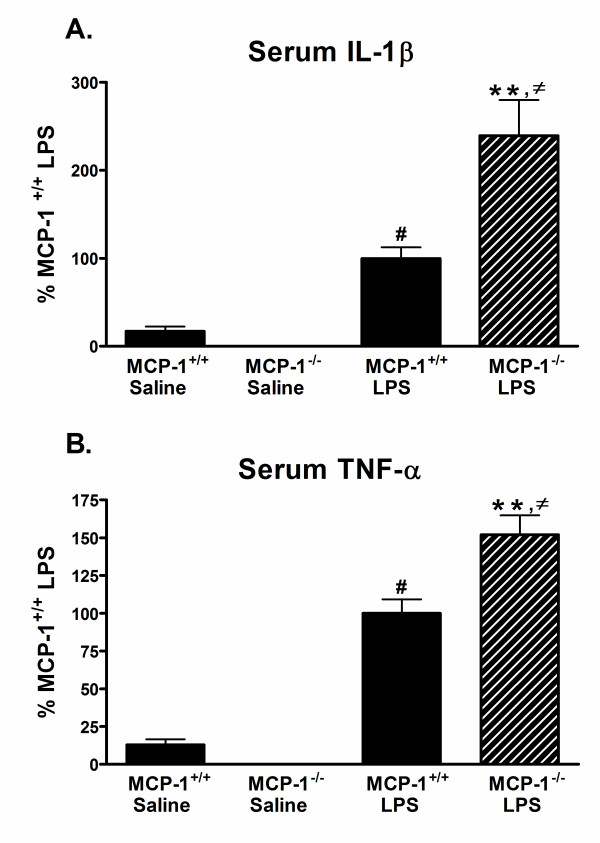
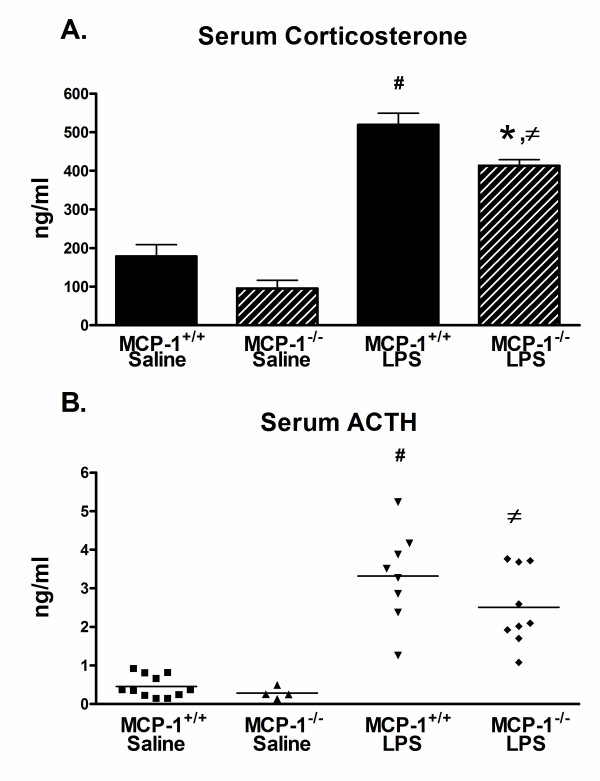
Results: We report that LPS injection induces a robust increase in MCP-1 protein levels in serum and brain, with peak brain levels reached at 6 hrs after LPS administration. MCP-1-/- mice injected with LPS showed higher levels of serum IL-1beta and TNF-alpha compared to LPS-treated MCP-1+/+ mice. In contrast, these MCP-1-/- mice showed significantly lower inductions of brain pro-inflammatory cytokines and chemokines, fewer activated microglia, and a reduction in serum corticosterone levels.
Conclusion: MCP-1-/- mice have decreased brain inflammation after a peripheral LPS insult, despite an exaggerated peripheral response. These data demonstrate an important role for MCP-1 in regulation of brain inflammation after peripheral endotoxemia.
Figures



References
-
- Beishuizen A, Thijs LG. Endotoxin and the hypothalamo-pituitary-adrenal (HPA) axis. Journal of endotoxin research. 2003;9:3–24. - PubMed
Publication types
MeSH terms
Substances
Grants and funding
LinkOut - more resources
Full Text Sources
Other Literature Sources
Research Materials
Miscellaneous
