


Ovarian hormones inhibit fat intake under binge-type conditions in ovariectomized rats
- PMID: 18706435
- PMCID: PMC2841003
- DOI: 10.1016/j.physbeh.2008.07.021
Ovarian hormones inhibit fat intake under binge-type conditions in ovariectomized rats
Abstract
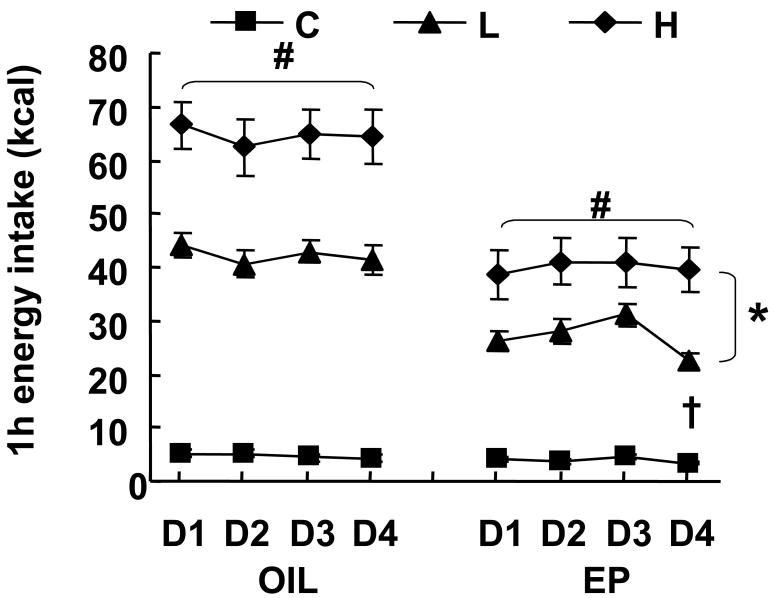
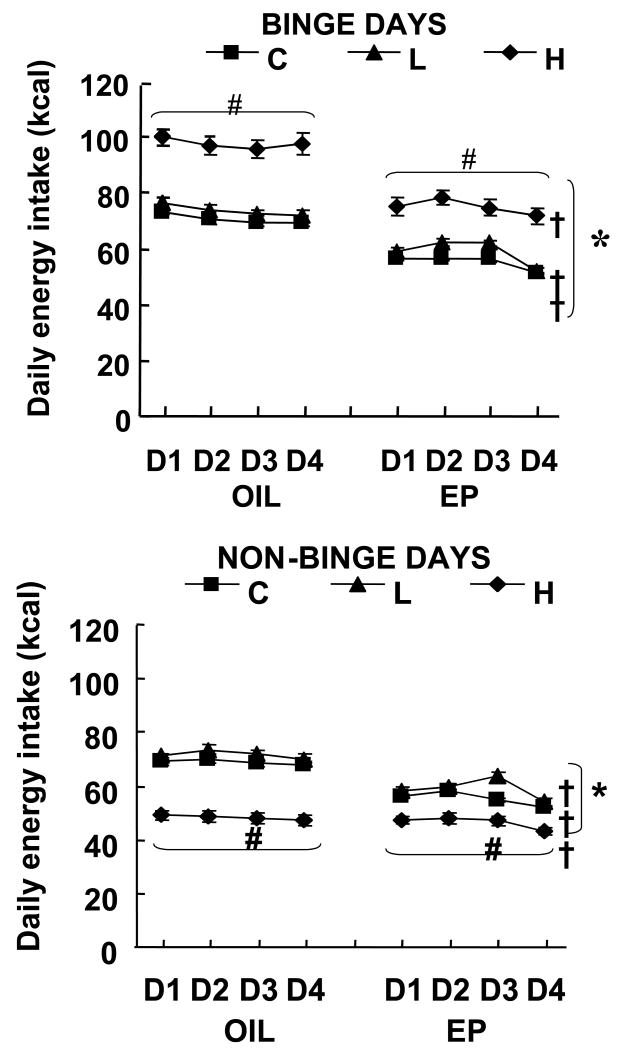
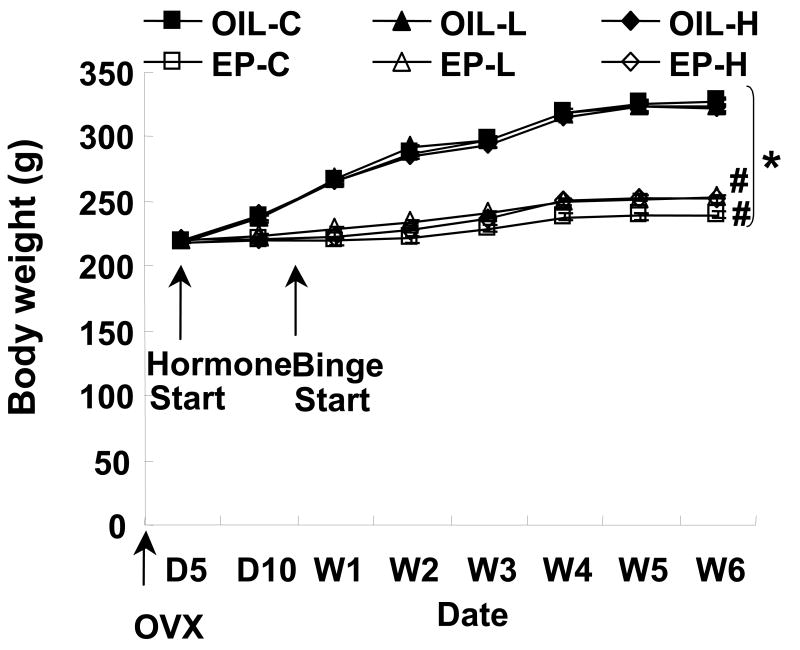
Binge eating is more common in females than in males. This study investigated the effects of ovarian hormones on binge-eating behavior in a diet-related rat model. Six groups of ovariectomized Sprague-Dawley rats were used (n=13/group). All rats had continuous access to chow and water throughout the study. One half of the rats were injected every fourth day with estradiol benzoate (2 microg/100 microl sesame oil) and progesterone (500 microg/100 microl sesame oil); the other half received only the sesame oil vehicle. Three feeding protocols were tested in each hormone injection condition: (1) chow only: no additional dietary fat access; (2) low-restriction: 1-h fat access every day; (3) high-restriction: 1-h fat access on Monday, Wednesday, and Friday. As previously reported in intact male and female rats, the high-restriction groups exhibited binge-like increases in 1-h energy intake during fat access. The major new finding of this study is that 1-h energy intake was tonically, but not cyclically, reduced in the hormone-treated high-restriction (binge) rats. Specifically, both low- and high-restriction hormone-treated rats consumed significantly less energy than did the oil-treated rats during the 1-h fat period (p<0.0001) and overall (p<0.0001), indicating a tonic inhibition of eating. However, food intake during the 1-h fat access period was also cyclically reduced in the hormone-treated low-restriction rats, but not in the hormone-treated high-restriction rats. These results indicate that the normal cyclic inhibitory influence of ovarian hormones on eating, but not their normal tonic inhibitory influence, is disrupted by conditions leading to binge-type eating.
Figures
References
-
- American Psychiatric Association. Diagnostic and Statistical Manual of Mental Disorders. Fourth. Washington, DC: American Psychiatric Association; 2000.
-
- Basdevant A, Pouillon M, Lahlou N, Le Barzic M, Brillant M, Guy-Grand B. Prevalence of binge eating disorder in different populations of French women. Int J Eat Disord. 1995;18:309–315. - PubMed
-
- Gotestam KG, Agras WS. General population-based epidemiological study of eating disorders in Norway. Int J Eat Disord. 1995;18:119–126. - PubMed
-
- Spitzer RL, Yanovski S, Wadden T, Wing R, Marcus MD, Stunkard A, Devlin M, Mitchell J, Hasin D, Horne RL. Binge eating disorder: its further validation in a multisite study. Int J Eat Disord. 1993;13:137–153. - PubMed
Publication types
MeSH terms
Substances
Grants and funding
LinkOut - more resources
Full Text Sources
Medical
Research Materials
